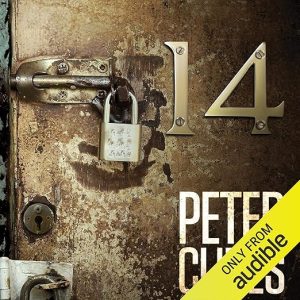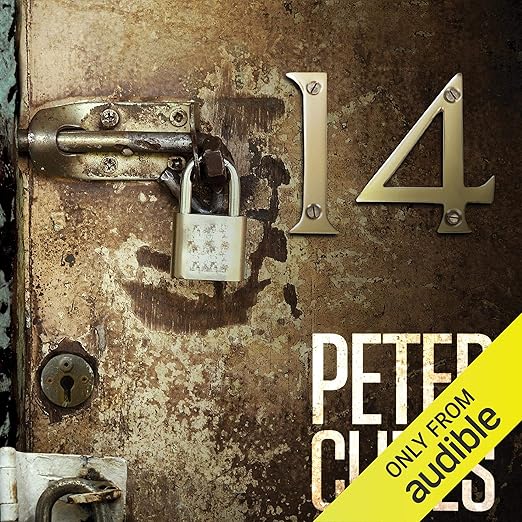
Peter Clines executes one of the more satisfying genre sleights of hand available to science fiction writers with this audiobook, disguising what becomes a profound piece of cosmic science fiction as a Los Angeles apartment mystery. Nate's new building on Cahuenga has low rent, friendly managers, and some genuinely odd features: padlocked doors that lead nowhere, light switches wired to nothing, cockroaches that seem genetically improbable. The premise sounds like urban comedy. The execution, across twelve hours and thirty-four minutes of Ray Porter's narration, is something else entirely.
Porter's casting here is close to ideal. He plays Nate with the specific flavor of defeated optimism the character requires, a guy who hates his job, has no girlfriend, and no particular plans for the future, but who is constitutionally incapable of leaving a mystery alone. Porter also manages the ensemble of building residents with enough vocal differentiation to keep Mandy, Veek, Xela, and Tim distinct without resorting to caricature. The steady, slightly wry quality of his narration keeps you trusting the construction even when the pace is deliberate, which is exactly the right instinct for a novel that is building toward something specific.
The central pleasure of this novel is the ratcheting quality of its revelation. Each piece of information Nate and his neighbors uncover about the building adds to a pattern that gradually becomes unmistakable, and Clines structures his clues with a discipline that separates genuinely good puzzle fiction from the kind that simply withholds information until the end. One reviewer noted that the detective work kept the dramatic tension going to the very last pages while the human dynamics provided entertainment that science fiction often skips entirely. That balance is real and carefully maintained.
The Audie Award nomination for science fiction in 2013 gives prospective listeners useful positioning. This is a recognized entry in the genre, not just a thriller with science fiction elements appended. Clines was already known from his Ex-Heroes series, a superhero-versus-zombies franchise described by one reviewer as silly, over-the-top, and self-referential in the best possible ways. His approach in 14 is tonally different, quieter and more structurally ambitious, and the reviewer who came from Ex-Heroes found the pivot impressive. The sf-geek references woven throughout add texture that rewards genre-literate listeners without being required for comprehension.
What Makes 14 Worth Hearing
The novel earns its genre identity in layers. Listeners who come expecting a straightforward mystery will not feel deceived, but they will need to adjust their expectations around the midpoint as the nature of the building's mysteries becomes clearer and the scale expands. Clines earns this expansion through the character work he does in the first half: the friendship that develops among the tenants feels organic rather than functional, and when the stakes rise the reader cares about these people specifically rather than abstractly.
The Los Angeles setting also earns its keep. Clines uses the specific texture of the city's rental market, the low-rent building that shouldn't be low-rent, the property managers who are just a little too accommodating, the neighbors who have been there too long without explaining why, to ground the mystery in something immediately recognizable before it becomes something else entirely. Listeners familiar with the particular anxiety of finding affordable housing in a major city will find the early chapters more charged than they might expect from a genre setup.
One reviewer with some ambivalence about the ending still placed Clines firmly on their authors-to-watch list after finishing the book, which captures something accurate about how the novel operates. The experience of reading it, or in this case listening to it, is more satisfying than any single element might suggest in isolation. Porter's consistent presence across the full runtime is a significant part of that: he holds the tonal range together in a way that a less skilled narrator would not manage, keeping the comedy and the dread in productive tension rather than letting either dominate prematurely.
Things to Know Before Starting 14
The deliberate first act requires patience. Clines is seeding the ground, and almost everything introduced early pays off later, but the momentum is slow by design. Listeners who need immediate plot propulsion may find the opening chapters require trust that the eventual return justifies the investment. The building's physical space is described with enough consistency that you develop a reliable mental map, which matters when the revelations arrive and spatial relationships begin to carry symbolic weight.
The ending divides readers, and prospective listeners should know going in that Clines commits fully to his premise rather than offering a realistic out. If you spend the first half expecting a grounded explanation, you will be surprised by the direction the novel ultimately takes. If you let the genre signals accumulate without resistance, the conclusion lands with real force. Porter delivers the final sequences with the gravity they require, and his reading of the closing pages is among the audiobook's strongest moments.
Who Peter Clines Is Writing For
Listeners who enjoy the intersection of cosmic horror and urban fiction will find exactly what they are looking for here. Fans of mystery fiction who enjoy ensemble casts working together toward a shared problem will find the format satisfying, provided they are open to a science fiction resolution that reframes everything that came before. Those who need narratives to move quickly from the first chapter may struggle with the deliberately paced setup. Newcomers to Peter Clines can pick this audiobook up without any prior familiarity with his other work, though knowing the Ex-Heroes series adds an extra layer of appreciation for how different his approaches can be while remaining distinctly his own in sensibility and tone.
In Brief
- Narration: Ray Porter is ideally cast, bringing Nate's self-deprecating everyman voice to life while managing the tonal shift from apartment comedy to cosmic dread with precise control.
- Themes: Cosmic horror beneath ordinary life, ensemble problem-solving, the ordinary concealing the extraordinary
- Mood: Slow-burn paranoia that tips suddenly into awe
- Verdict: Peter Clines buries something genuinely enormous inside a story about cheap rent and bad jobs, and Ray Porter's performance makes the slow revelation feel inevitable rather than contrived.
Good to Know
Do I need to read the Ex-Heroes series before listening to this audiobook?
No. 14 is a standalone novel with no plot connection to the Ex-Heroes books. Fans of Clines' other work will recognize stylistic fingerprints, but new listeners can begin here without any prior context and experience the full arc of the mystery.
How does Ray Porter handle the tonal shift from apartment comedy to cosmic horror in this audiobook?
Porter manages the transition smoothly by keeping Nate's voice grounded and wryly observational throughout. He does not telegraph the horror early, which is exactly the right call, and when the scale of the revelation expands his delivery shifts register without feeling discontinuous from what came before.