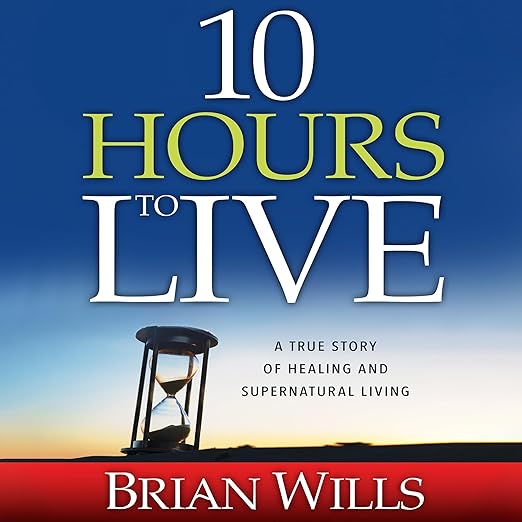
Key Details
- Voice: Andrew Cole keeps a measured, sincere register that lets the testimony's own stakes carry the emotional weight instead of dramatizing them.
- Big ideas: faith healing, cancer survival, Word of Faith Christian testimony
- Atmosphere: Earnest and devotional, built for repeat listening rather than a single pass
- Worth it?: A strong match for listeners already inside a charismatic healing framework, less so for anyone wanting a secular or medically grounded illness memoir.
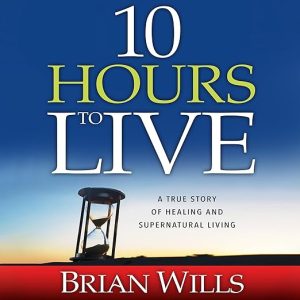
Ten hours to live was the prognosis one doctor gave Brian Wills, then just twenty-two, after diagnosing Burkitt's lymphoma, among the fastest-growing cancers known to medicine, and this audiobook opens with that exact sentence still hanging in the room. In just three days, the tumor went from roughly golf-ball width to a nine-inch mass, a detail specific enough that it sets the tone for everything that follows: this is not a soft-focus inspirational memoir; it is a blow-by-blow account of a body and a faith both under extreme pressure at once. Wills survived, and what he narrates here, in a book built as much as testimony as memoir, is the physical and spiritual fight that got him from that ten-hour prognosis to the other side of it.
Cole Trusts the Facts to Carry Their Weight
Wills structures the book less like a traditional survival memoir and more like a testimony wrapped around a practical framework. Interspersed with the narrative of his diagnosis and recovery are direct instructional threads: how to overcome what feels like a hopeless circumstance, how to apply what he calls God's Word for healing, how to build faith for the miraculous, how to find joy inside suffering, how to receive comfort during trial. The book presents these as tools that worked for him specifically inside a Word of Faith healing framework, and it does not hedge on that framing. Whether a listener finds this clarifying or overly prescriptive will depend heavily on how much theological common ground they bring into the listen, but the throughline between story and instruction is deliberate and consistently maintained rather than tacked on.
Andrew Cole narrates without a well-known prior credit to point to, so the fairest way to judge him is on how well the register fits the material rather than on an established reputation. Testimony narration lives or dies on restraint: a reader who oversells the drama of a tumor growing to nine inches in three days risks tipping sincere testimony into melodrama, while a reader who underplays it flattens genuinely high stakes. Cole keeps to a measured, sincere delivery that trusts the facts of the story to carry their own weight, which is the right choice for a book built to be believed rather than performed.
A Small Anthology of Testimony
The specificity is what keeps this from reading as generic inspirational fare. A doctor's exact words, an exact tumor measurement, an exact three-day timeline: these are the kind of concrete stakes that testimony writing depends on, and Wills leans into them rather than smoothing them into vaguer, more marketable uplift. The book also widens past his own story. Beyond his own recovery, 10 Hours to Live includes accounts of other people who describe their own healing, which turns the book into something closer to a small anthology of testimony than a single-subject memoir, useful for a listener who wants more than one data point before deciding what they believe.
Reviewers describe using the book as an ongoing resource rather than a one-time listen. One reviewer, Snap in the Ville, describes returning to it again and again as a kind of reference, which fits the book's dual structure as both story and toolkit. Bearbaby71's review makes a similar point more specifically, describing the book as useful for anyone currently facing illness themselves or supporting someone who is, framing it less as entertainment and more as something closer to a companion resource for a hard season. That practical, repeat-use framing is worth knowing going in, since it changes what kind of listening experience to expect.
A closer look at that five-part framework from the synopsis is worth the time too, since the order isn't arbitrary. It moves from crisis management, getting through the worst of the diagnosis, toward something closer to an ongoing spiritual discipline by the final steps, which mirrors how Wills describes his own experience unfolding rather than imposing a tidy structure retroactively onto a messy recovery. Treating the miraculous as something to build toward, rather than something that simply happens to you, is a specific theological move worth noticing on its own terms, distinct from a more passive waiting posture some healing narratives default to. It gives the listener something resembling instructions rather than pure inspiration, which fits how practically-minded the reviewer testimonies attached to this title sound.
The Real Suspense Is How He Interprets It
This is unambiguously a Word of Faith-adjacent Christian healing account, and it presents its central claims, that faith and specific spoken declarations can produce miraculous physical healing, as settled fact rather than one perspective among several. Listeners outside that theological tradition, or listeners who have prayed hard through a serious illness and not gotten the outcome Wills describes, may find the framing uncomfortable rather than encouraging. The book is testimony, not medical guidance, and it does not really engage with why healing doesn't always happen the way it describes, worth knowing before pressing play if that tension matters to you.
At five hours and three minutes, the audiobook is compact for a book doing double duty as narrative and instructional guide, which means the practical sections move briskly rather than lingering. Listeners who want the instructional material to function as a slow, meditative devotional may want to pair it with note-taking or a second listen, since the pacing here favors momentum over pause.
Worth flagging too: the title borrows its urgency directly from a real medical prognosis, but by the time a listener presses play, the ending is already known; Wills obviously survived to write it. That dramatic irony runs through most illness memoir, yet it's worth naming since it changes how tension actually works here. The suspense isn't whether Wills lives; it's how he interprets what happened to him, which rewards a listener more interested in meaning-making than plot uncertainty.
A Companion Voice for a Frightening Diagnosis
Readers already inside a charismatic or Word of Faith Christian framework, or anyone drawn to healing testimony as a genre, will find exactly what the title promises: a specific, high-stakes account of survival framed entirely through faith. It works well for prayer groups, chaplaincy settings, or anyone supporting a loved one through a frightening diagnosis and looking for a companion voice rather than a clinical resource. The instructional throughline also makes it genuinely re-listenable in a way a straight memoir wouldn't be, which matches how at least one reviewer says she actually uses it.
Anyone hoping for a more clinical or medically grounded account of cancer survival, or a memoir that sits with doubt rather than resolving into certainty, should look elsewhere first. The book commits fully to its theological framework from the opening prognosis onward, and that commitment is the whole point of it, not a flaw to be corrected, but it does mean the audience is narrower than the dramatic opening line might suggest.
Does the 10 Hours to Live audiobook cover Brian Wills' recovery in medical detail, or is it framed entirely through faith?
It's framed almost entirely through faith. Medical facts appear, the Burkitt's lymphoma diagnosis and the tumor's growth rate among them, but the book interprets Wills' recovery as an outcome of prayer and scriptural application rather than walking through clinical treatment decisions.
Are the other healing testimonies mentioned in the synopsis included in the audiobook itself, or just referenced?
They're included. Beyond Wills' own story, the book incorporates accounts from other people describing their own healing experiences, giving it a broader testimony-anthology feel alongside the central memoir.
How long is the 10 Hours to Live audiobook?
It runs 5 hours and 3 minutes, on the shorter side for a memoir that also functions as an instructional guide.