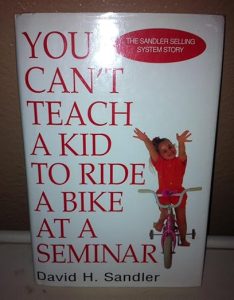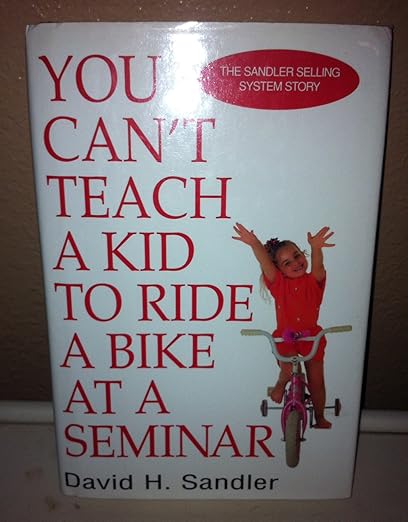
David H. Sandler built a sales methodology around an insight that most sales training of his era was working against: people love to buy, but they resist being sold. You Can't Teach a Kid to Ride a Bike at a Seminar - the title's argument applied to the audiobook itself - makes the case that sales performance is a skill built through practice and repetition, not through absorbing principles that evaporate without implementation. This audiobook, narrated by Sean Pratt and running just under nine hours, delivers the Sandler Selling System with the same practical emphasis that defined Sandler's original work and has made it one of the more durable sales frameworks of the past several decades.
The Sandler system emphasizes a quicker decision cycle, more communication between seller and buyer, and a systematic framework for discussing and addressing customer objections. These aren't abstract management principles; they're behavioral scripts designed to change what happens in actual sales conversations. Pratt's narration suits this purpose precisely - clear, organized, unambiguous about where one concept ends and the next begins, and free of the motivational performance that makes some sales audiobooks exhausting to listen to for extended periods.
First, the Big Picture
The central Sandler insight, articulated across this audiobook, is that traditional selling positions the salesperson as the active party pushing toward a close. Sandler's system reverses the dynamic: the seller's job is to create conditions where the buyer convinces themselves, drawing on their own information and point of view to arrive at the need for what's being offered. This shift from presenting features and overcoming objections to asking questions that surface the buyer's own motivations is not new to contemporary sales thinking - Sandler's influence is visible in everything from challenger selling frameworks to consultative methodologies developed since. What makes this audiobook valuable is encountering the original architecture of that idea, rather than a descendant version that has been adapted until the source is no longer visible.
One reviewer calls it a must-have for anyone trying to engage in marketing and selling, emphasizing why traditional selling methods are no longer adequate for buyers who are more informed and more resistant than previous generations. Another notes it as a useful volume as part of series, which is accurate: this book rewards being treated as the foundation of broader engagement with Sandler training rather than a substitute for practice and application.
What Makes You Can't Teach a Kid to Ride a Bike at a Seminar Worth Hearing
The Sandler system's durability comes from its psychological grounding. The methodology works from an understanding of how buyers make decisions under social pressure, and why conventional sales moves - unsolicited feature lists, aggressive closing techniques, objection-handling scripts that feel like argument - activate buyer resistance rather than buyer readiness. Sandler builds an alternative behavioral system designed to eliminate the adversarial dynamic from the sales relationship and replace it with a process that serves both parties' actual interests.
For anyone in sales who has felt the friction of working against the buyer's natural resistance rather than with their actual motivation, the framework offers a coherent alternative worth exploring seriously. The audiobook's nearly nine-hour runtime gives Sandler enough space to cover the methodology systematically - from initial prospect qualification through the structured sales conversation framework to the specific techniques for shortening the decision cycle without applying pressure that produces false closes rather than genuine commitments. Pratt's narration makes this volume manageable across multiple listening sessions without losing organizational clarity.
A Few Reservations
The Sandler system has been widely adopted, adapted, and extended since this book was first published. Listeners already familiar with consultative or challenger sales methodologies will recognize the DNA in approaches they may already use. The original framework can feel foundational rather than cutting-edge to anyone who has been formally trained in modern sales methodology - which is not a criticism of the content but honest context for where it sits in the current landscape of sales training resources.
The title's core argument - that skills require practice rather than seminar attendance to actually change behavior - applies to the audiobook itself. Sandler's system is not passive knowledge; it's a behavioral script that requires rehearsal and adjustment to real conversations before it changes outcomes. The audiobook is a starting point for implementation rather than a substitute for it. Reviewing the core techniques with a specific upcoming sales conversation in mind will produce more lasting value than passive listening alone, which is precisely the point the title makes about seminars.
Who Should Pick Up You Can't Teach a Kid to Ride a Bike at a Seminar
This audiobook suits salespeople who feel stuck in the conventional push-and-overcome dynamic and want a systematic alternative framework that works with buyer psychology rather than against it. It's also valuable for managers building or retraining sales teams who need a coherent philosophical foundation rather than a collection of disconnected tactical tips. Listeners new to formal sales methodology will find the Sandler framework one of the clearer entry points to buyer-psychology-based selling available in audiobook form. Those with extensive Sandler training already will recognize the source material and may find the broader methodology discussions more useful than the tactical sections they've already practiced to the point of automaticity. The core insight that people love to buy but hate to be sold - and that effective selling works from that reality rather than against it - is as applicable now as it was when Sandler first developed his system, which is precisely why the methodology has generated its own training organization and expanded well beyond this originating text.
Key Details
- Narrator: Sean Pratt brings professional clarity to David Sandler's sales methodology, keeping the instructional material organized and accessible across nearly nine hours without allowing the pace to drag.
- Subjects: Buyer psychology, systematic objection handling, active versus passive selling
- Tone: Direct and practical, with the no-nonsense energy of a sales training session that respects your time
- Bottom line: A focused introduction to the Sandler Selling System that remains relevant for anyone who needs to rethink the relationship between buyer decision-making and seller behavior.
Is this audiobook suitable for someone new to sales or does it assume prior experience?
The Sandler Selling System is presented systematically enough for someone without prior sales training to follow. Sandler builds from first principles about buyer psychology rather than assuming familiarity with other methodologies, which makes the audiobook a workable entry point even for those early in their sales careers.
How does Sean Pratt's narration handle the instructional nature of this audiobook?
Pratt delivers the material with professional clarity and consistent pacing, which suits instructional content well. He keeps the methodology's distinct components organized and doesn't allow the nearly nine-hour runtime to lose focus. The narration is functional rather than performative, which is the right approach for a business methodology book.
Does this audiobook still hold up or has the Sandler method been superseded by newer sales frameworks?
The Sandler methodology's core insight - that buyers resist being sold and that effective selling works with buyer psychology rather than against it - remains foundational to most contemporary consultative and challenger sales approaches. Listeners will recognize the DNA of the Sandler system in many methods developed since. The original framework remains useful as both a starting point and a reference.
Is this a standalone audiobook or part of a broader Sandler training program?
The audiobook functions as a standalone introduction to the Sandler Selling System. One reviewer notes it works as part of series, meaning it pairs well with other Sandler material and formal training rather than replacing it. The book's own title acknowledges that reading or listening is not equivalent to practiced application - it's the framework, not the skill itself.