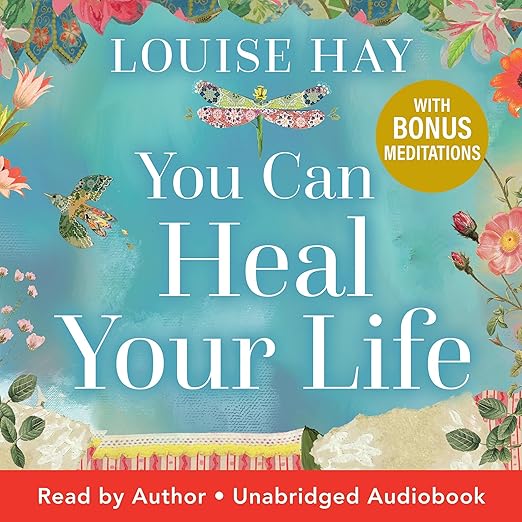
Louise Hay first published You Can Heal Your Life in 1984, and four decades later this audiobook edition marks the anniversary in her own voice, wrapped around newly produced bonus material: remastered morning and evening meditations, extended sleep affirmations, and a downloadable Heal Your Body reference list. The core teaching hasn't changed. Thoughts, beliefs, and affirmations shape well-being, and Hay's own recordings carry that argument in a way a hired narrator simply couldn't.
Forty Years Later, the Core Teaching Hasn't Changed
This is one of the foundational texts of the modern affirmations movement, and the synopsis's claim that it continues to inspire and uplift millions of readers worldwide is at least consistent with how long the book has stayed in print and how often it gets revisited in new editions. The core thesis, that mind, body, and spirit are connected and that self-worth and forgiveness are prerequisites for healing, gets restated here with real conviction rather than rote repetition.
The anniversary bonus material is a genuine value-add specifically because of the audio format. Meditation tracks and affirmation tracks are inherently audio-native content, arguably better suited to listening than reading in the first place, and the downloadable Heal Your Body list extends the book's reference value well past a single listen-through, into something closer to an ongoing practice tool.
The synopsis credits the original book with having profoundly shifted our understanding of the connection between mind, body, and spirit since its 1984 publication, a claim about cultural influence rather than something this review can independently verify, but one at least consistent with how many editions and adaptations the work has gone through in the decades since. Whatever a listener's personal view of the underlying philosophy, the book's staying power in the self-help space is hard to dispute.
It's worth being clear about what an anniversary edition means here in practical terms. This isn't a rewritten or updated text so much as the original work presented with new audio-specific additions layered around it, which matters for longtime readers deciding whether the content itself has meaningfully changed or whether the main draw is the bonus material and Hay's own narration carrying it forward.
Morning and Evening Tracks for Repeat Listening
Hearing Hay narrate her own philosophy carries weight that a hired narrator reciting the same affirmations couldn't replicate. Reviewer Amazon User calls it 'a wealth of wisdom' and says simply, 'I refer to it often,' which speaks directly to the book's long-term reference use rather than a single emotional impression. Reviewer melissa l mitchell echoes that practical value more briefly, describing it as 'very informative and helpful.'
The format supports a specific listening pattern that differs from most audiobooks. Many listeners return repeatedly to particular sections, especially the morning and evening meditations, rather than listening straight through once and moving on. This functions closer to an ongoing daily practice than a story with a beginning and an end, and the anniversary bonus tracks lean directly into that repeat-listening use case.
Hay's influence on later affirmation and manifestation content, well beyond her own books, is substantial enough that listeners familiar with more recent self-help trends may recognize ideas here as originating sources rather than derivative echoes. Understanding that lineage adds context for why this specific book, rather than any of its many imitators, remains the reference point four decades on.
The bonus material is split deliberately by time of day, with morning and evening meditations serving different purposes: one setting an intentional tone to start the day, the other, paired with the extended sleep affirmations, aimed at winding down at night. That structure gives listeners two genuinely distinct entry points into the audiobook depending on when they're pressing play, rather than a single undifferentiated block of content.
The Heal Your Body List Is Awkward by Ear
This sits squarely in the affirmations and New Thought tradition, and it's worth being clear-eyed about that. Claims about thoughts and beliefs contributing to physical illness, including the Heal Your Body list of probable causes, reflect a belief system rather than clinical medical science. Listeners should engage with that framework on its own terms rather than mistake it for an evidence-based health resource.
Some reviews attached to this listing reference an illustrated print edition featuring new artwork, a feature specific to that physical format rather than something the audio delivers. The real value in this edition sits in Hay's own voice and the meditation and affirmation bonus tracks, not in any visual component, so listeners drawn in by mentions of illustration should know that's a separate product feature.
The synopsis notes the anniversary edition specifically celebrates forty years of impact, and that milestone framing shapes the tone throughout, more celebratory retrospective than a neutral restatement of the original material. Listeners expecting a stripped-down, purely functional self-help audiobook should know this edition leans into commemorating its own legacy almost as much as delivering the core teaching itself.
The included downloadable PDF is worth actually retrieving rather than skipping, since the Heal Your Body list, connecting specific ailments to probable emotional causes and suggested new thought patterns, functions as a reference tool that's awkward to use purely by ear. Listeners planning to return to specific entries later, rather than absorbing the whole list in one sitting, will get more out of having the PDF open alongside the audio.
The book's approach to specific illness, connecting conditions to emotional causes, will land very differently depending on a listener's own health history. Someone currently managing a serious diagnosis may find the framework either genuinely empowering or, depending on temperament, uncomfortably close to implying self-blame, and it's worth going in aware of that range of possible reactions rather than assuming the material will land the same way for everyone.
Daily Practice Builders Get the Most From Bonuses
Longtime fans of Hay's work revisiting a classic in expanded form, newcomers to affirmation-based self-help curious about the book that helped popularize the genre, and listeners specifically wanting guided meditation and affirmation tracks alongside the core text are all well served by this edition.
Listeners building a daily affirmation or meditation practice specifically, not just readers curious about Hay's ideas in the abstract, are especially well served by the anniversary edition's bonus tracks, which are designed for exactly that kind of repeated, practical use.
Skeptics who want their self-help grounded strictly in clinical or evidence-based frameworks may find the mind-causes-illness premise a difficult sell, and this edition works best for listeners already open to, or at least curious about, that worldview rather than approaching it from a position of clinical skepticism.
The Short Version
- Read by: Louise Hay narrates her own philosophy, and that authorship gives the affirmation and meditation sections a conviction a hired narrator couldn't fully replicate.
- At its heart: mind-body-spirit connection, self-worth and forgiveness, affirmation as daily practice
- Vibe: Soothing and devotional
- Short version: A meaningful listen for anyone open to affirmation-based self-help, especially fans revisiting the original in this expanded anniversary form.
Does the You Can Heal Your Life audiobook include the bonus meditations mentioned in the anniversary edition?
Yes, this edition adds remastered morning and evening meditations along with extended sleep affirmations, produced specifically for this fortieth-anniversary release rather than carried over unchanged from the original.
Is this audiobook narrated by Louise Hay herself?
Yes, the narration is credited to Hay directly, which matters for affirmation-based content, since her own voice carries the material's conviction in a way a hired narrator reciting the same words wouldn't.
Do I need the print edition to get the Heal Your Body list, or is it included with the audiobook?
The audiobook includes a downloadable PDF containing the Heal Your Body list of probable causes and new thought patterns, so the reference material is available without needing a separate print copy.
Is You Can Heal Your Life audiobook based on scientific research or a spiritual belief system?
It's grounded in the New Thought and affirmations tradition rather than clinical science, treating thoughts and beliefs as connected to physical health, so listeners should approach it as a belief system rather than a medical resource.