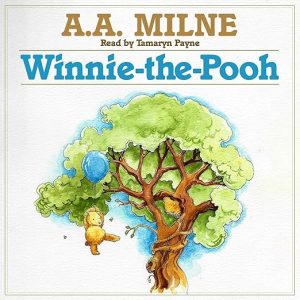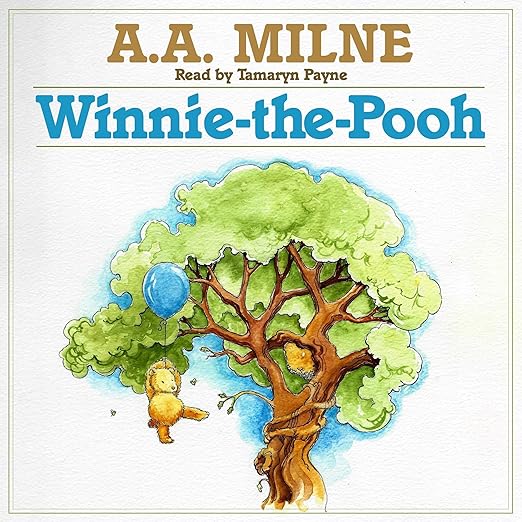
The Hundred Acre Wood gets a genuinely well-suited audiobook treatment here, and the short version of my verdict is this: if you're choosing among editions of Winnie-the-Pooh for a young listener, this one belongs near the top of the list. ONE Audiobooks built this production around A.A. Milne's original text rather than an adaptation, and narrator Tamaryn Payne reads it with an unhurried, faintly formal warmth that suits Milne's own voice far better than a bouncier, more cartoonish read would.
Narrators Handpicked Instead of Cast for Fame
What makes this particular audiobook worth singling out is fidelity to source. A lot of children's Pooh adaptations streamline Milne's prose into something punchier and more modern; this production keeps the original text's actual rhythm, the slightly digressive narrator asides, the dry humor that was always aimed as much at accompanying adults as at children. The synopsis promises lessons in loyalty, care, kindness, and understanding delivered through Pooh, Eeyore, Piglet, and Tigger's adventures, and the audiobook earns that promise less through moralizing than through simply letting the characters be exactly as flawed and specific as Milne wrote them: Eeyore's gloom, Piglet's nervousness, Tigger's chaos, each treated with genuine affection rather than turned into a simplified lesson.
ONE Audiobooks frames its whole catalog around matching classic titles with, in the synopsis's own words, narrators handpicked to give these works 'an unmatched listening experience,' and Payne's casting here backs that claim up. This isn't a starry celebrity-narrator production leaning on name recognition; it's a considered match between a specific narrator's register and a specific book's tone, which is a more reliable predictor of quality than casting alone usually is. For a text this frequently adapted, badly and well, that specificity of casting is exactly what separates a forgettable version from one worth actually seeking out.
Milne wrote the original Winnie-the-Pooh stories nearly a century ago, and part of what makes a faithful audio edition worth caring about is how well that specific, old-fashioned prose style survives being read aloud rather than silently. Children's writing has changed considerably since the 1920s, shorter sentences, punchier pacing, less authorial digression, and a lot of legacy classics feel genuinely dated in a modern read-aloud context. Milne's prose holds up better than most of his contemporaries specifically because so much of its humor lives in tone and understatement rather than in slapstick incident, exactly the kind of humor Payne's restrained narration is built to carry.
Payne Trusts the Text, Never Manufactures Voices
Payne's approach is literary rather than theatrical, which is the right call for Milne. She doesn't manufacture cartoon voices for each character or lean on exaggerated inflection to signal jokes; the humor is already fully present in the text's own construction, sentences that undercut themselves, a narrator voice that gently contradicts what a character just claimed, and Payne trusts that material enough to let it land through pacing and tone rather than performance. That restraint is a real skill. Overplaying Pooh's naivety or Eeyore's misery is the easy, common mistake in adaptations aimed at young audiences, and Payne consistently avoids it here.
Reviewer Bruce describes revisiting this material as a 'nostalgic return to the magical realm of childhood,' and finds the tales 'brimming with warmth, cleverness, and profound insight,' a description that captures why Milne's century-old stories still work as well in audio as they did on the page. That multi-generational pull, appealing equally to an adult listening for nostalgia and a child hearing the stories cold, is a big part of Winnie-the-Pooh's staying power, and Payne's straightforward, unforced reading style leaves plenty of room for both kinds of listeners to find their own way into it.
ONE Audiobooks has built a specific niche around exactly this kind of classic-literature production, and knowing that context helps calibrate expectations: this isn't a major studio's flagship celebrity-narrated release, it's a smaller, specialist catalog clearly built by people who care about matching classic texts to well-suited narrators rather than chasing name recognition. For listeners who've had mixed experiences with classic children's literature audiobooks elsewhere, overly cartoonish, oddly paced, or clearly rushed, that specialist positioning is a reasonable signal of quality worth factoring in.
Each Chapter Resets, Built for Repeat Listening
At two hours and forty-seven minutes, this covers the classic Hundred Acre Wood stories in a single, manageable sitting or a few bedtime installments, but it's worth being clear about scope: this is the original Winnie-the-Pooh material, not an expanded universe including every later Milne sequel or every Disney-adjacent addition to the franchise. Listeners specifically looking for The House at Pooh Corner's additional stories, including Tigger's introduction, should confirm whether that's bundled here or sold as a separate listen, since the synopsis describes the core cast and setting without itemizing every chapter included.
Several of the reviews attached to this listing lean heavily on the printed and illustrated editions specifically, praising physical qualities that obviously don't carry over into an audio format. That's a reminder worth flagging plainly: the warmth and nostalgia those reviewers describe absolutely applies to the audiobook too, since it's the same Milne text underneath, but anyone drawn in by comments about page quality or a particular illustrated look should understand those specific comments are about a different edition than the one being reviewed here.
Structurally, this is episodic rather than a single continuous plot, a series of self-contained adventures in the Hundred Acre Wood rather than one throughline story building to a climax. That makes it easy to dip in and out of for bedtime listening, stopping after any given episode without leaving a cliffhanger, but listeners expecting a novel-style narrative arc across the full runtime should recalibrate that expectation. Each chapter essentially resets, a feature for repeat, out-of-order listening and a minor limitation for anyone hoping the individual episodes build toward something bigger by the end.
A Single-Narrator Reading Skips the Full-Cast Treatment
Parents and caregivers looking for a bedtime-friendly classic that holds up to repeat listening are the clearest audience, and the unhurried pacing makes this genuinely suitable for younger listeners without talking down to them. Adults with fond memories of the books are just as legitimate an audience on their own terms; nothing about this production requires a child in the room to justify pressing play, and the humor lands as well, arguably better, for a listener old enough to catch Milne's driest jokes.
Flashy sound design or a full-cast dramatization is not what this offers, since it's a single-narrator, text-faithful reading rather than an elaborately produced radio-style adaptation, so listeners hoping for that heavier production style should look toward a dramatized edition instead. Completists chasing every Milne story across both story collections should also double check exactly which tales are bundled into this particular listing before assuming full series coverage.
At a Glance
- Narration: Tamaryn Payne reads with unhurried, literary warmth that trusts Milne's own prose to carry the humor rather than performing it.
- Themes: friendship, childhood imagination, gentle life lessons through animal characters
- Mood: Cozy and nostalgic, gentle rather than showy
- Verdict: A well-matched, faithful audiobook edition of a classic, strong for bedtime listening and adult nostalgia alike.