Fifteen percent of retail shelf space redirected toward Black-owned brands started as a single social media post from Aurora James in the aftermath of George Floyd's murder in 2020. That post became the Fifteen Percent Pledge, and by the time this audiobook memoir was recorded, more than two dozen major retailers had signed on, moving fourteen billion dollars in annual revenue toward Black and BIPOC-owned businesses. Wildflower traces how James got from a teenage modeling career that damaged her self-image to founding an award-winning sustainable fashion label out of a flea market stall, and eventually to reshaping how American retail thinks about who gets shelf space at all.
Street Racing, Rock Bottom, and a Modeling Critique
James narrates her own story, and the memoir does not flinch from the rougher chapters: dropping out of high school, an arrest for street racing, and what the synopsis calls hitting rock bottom before she found her footing in the fashion industry. That candor extends to her critique of modeling itself, an industry she describes as objectifying women's bodies and commodifying race even as it gave her an early foothold. The throughline is less a rags-to-riches arc than a story about redirecting a personal setback into a structural argument about economic equality, which gives the memoir a sharper political edge than a typical founder's origin story.
Two Different Books Called Wildflower
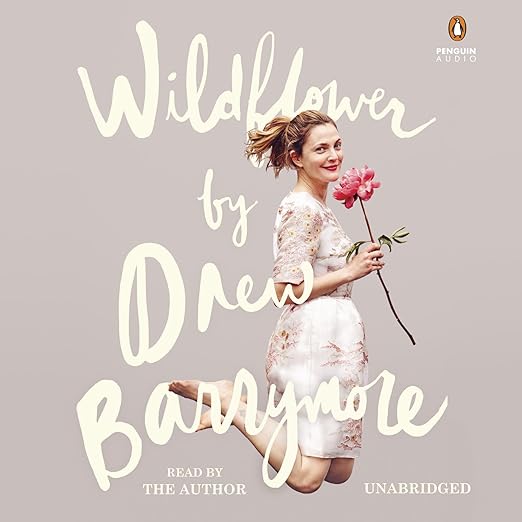
One detail worth flagging for anyone cross-referencing outside reviews before buying: some reader reviews attached to this title's online listing actually describe a different, unrelated celebrity memoir that happens to share the exact same one-word title. It's a genuine mix-up, since two well-known books are both called Wildflower, and it's worth knowing so a listener doesn't go in expecting the wrong author's story. Judged on its own synopsis and credentials, James's book carries real institutional weight: Bloomberg and Harper's Bazaar both named it a best book of the year, and People magazine called it, in their words, empowering and inspirational.
The company at the center of James's origin story, though not named directly in the synopsis, is widely known as Brother Vellies, her sustainable footwear and accessories label built around traditional African design techniques and artisan partnerships. That detail matters for context: this is not a memoir about breaking into an existing fashion house, but about building an entirely independent label from a flea market stall into an internationally recognized brand, a meaningfully different and harder story than the more common celebrity-designer narrative.
Self-Narration Adds Weight to Being Underestimated
Self-narration matters more here than in a typical business memoir, because so much of the book's authority rests on James's specific, lived experience of being underestimated, first as a model whose body was scrutinized, later as a Black entrepreneur pitching to rooms that assumed she didn't belong there. Hearing her tell it directly, rather than through a professional narrator's interpretation, keeps that specificity intact. At just over seven hours, the audiobook also moves at a reasonable clip for a memoir covering this much ground, from an early modeling career through founding an African-design-inspired sustainable fashion label to a national advocacy campaign.
A Wildflower Grows Without Cultivation
Rupi Kaur, the bestselling poet behind milk and honey, blurbed the book directly, saying it teaches that against all odds, we can overcome, with community and sisterhood at its center. That's a meaningful endorsement from inside a similar literary lane, personal writing that doubles as cultural commentary, and it signals the book is aiming for more than a standard founder-memoir readership.
The title itself rewards a second look. A wildflower grows without cultivation, often in disturbed or marginal ground where nothing else takes root, a fitting metaphor for a memoir explicitly about thriving outside the industry's traditional gatekeeping structures. James did not follow a conventional fashion-school-to-runway path, and the title seems to lean into that self-sufficiency directly rather than softening it into something more generically inspirational.
Closer to Policy Than to Runway Glamour
Listeners expecting a conventional fashion-industry memoir, heavy on runway anecdotes and celebrity name-dropping, should recalibrate; the emphasis here sits much closer to economic policy and racial equity than to the glamour side of the fashion world. The Fifteen Percent Pledge material, in particular, reads more like an advocacy case study than a personal reflection, which is a strength for readers drawn in by that mission but could feel like a tonal shift for anyone expecting a purely glossy memoir.
The rating base is respectable but not enormous, 157 ratings at last count, so this hasn't yet built the kind of sprawling review ecosystem that makes it easy to gauge audience consensus on pacing or narration specifically. Given the reviews mismatch already flagged, a listener genuinely curious about how this specific audiobook performs should weight the numeric rating more heavily than any review text attached to the listing.
Real Lessons About Scaling, Not Just Persistence
Listeners familiar with other founder-activist memoirs, business narratives that double as social commentary, will recognize the genre's typical shape here: personal hardship, an unconventional entry point into an industry, and eventually a mission that outgrows the original business itself. James's memoir follows that arc closely, a strength for readers who enjoy the genre but one that offers few structural surprises for anyone who has already read several similar books.
Listeners specifically interested in entrepreneurship will find real practical value beyond the inspirational framing: the synopsis traces a specific arc from an initial flea market stall to an internationally recognized, award-winning label, implying real lessons about scaling a business with limited resources embedded inside the personal narrative. James built relationships with African artisans and traditional design techniques as a core brand differentiator rather than an afterthought, and that specific business model, sourcing and craftsmanship as identity, offers something more concrete than the usual founder-memoir platitudes about persistence and vision.
Mission-Driven Readers, Not Gossip Seekers
This suits listeners drawn to entrepreneurship memoirs with real social stakes, in the neighborhood of readers who enjoyed books by founders who built a mission-driven company out of a personal grievance. Anyone following the Fifteen Percent Pledge's actual retail impact, or curious about the sustainable, African-design-forward fashion movement James helped popularize, will find the origin story genuinely illuminating rather than a victory-lap retelling.
The book also functions as a useful case study for anyone studying how a single, well-timed social media post can catalyze a genuine institutional shift; the Fifteen Percent Pledge's growth from one post to a formal commitment from dozens of major retailers is a specific, traceable arc that listeners interested in modern activism and corporate accountability will find concretely instructive rather than abstractly motivational.
Listeners hunting for a lighter, gossip-forward celebrity memoir, or those who came looking for a different Wildflower entirely given the title mix-up already mentioned, should double-check the author's name before buying. This is a mission-first memoir, and it wears that seriousness openly rather than softening it for entertainment value.
Common Questions
Does Aurora James narrate her own audiobook?
Yes, and her direct, unpolished delivery reinforces the memoir's personal authority.
Is this audiobook more of a fashion-industry memoir or a social-justice book?
It leans closer to economic advocacy and personal reckoning than to glamorous fashion-world anecdotes.