Quick Take
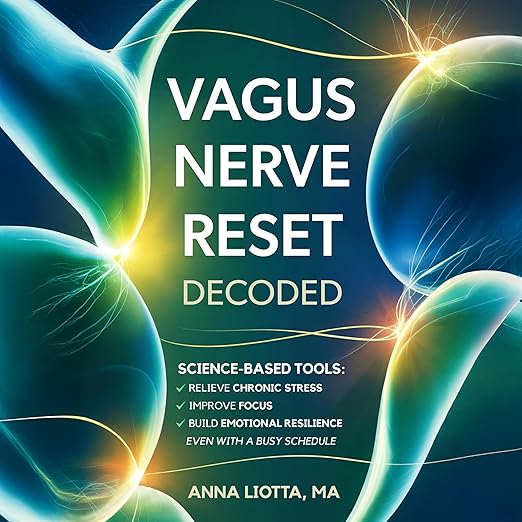
- Narration: Anna Liotta self-narrates with warmth and clinical confidence, making the neuroscience feel conversational rather than clinical, the self-narration is genuinely an asset here.
- Themes: Nervous system regulation, polyvagal theory, stress recovery
- Mood: Calm and empowering, science grounded but accessible
- Verdict: A practical, self-narrated guide that delivers on its promise of micro-practices rooted in real neuroscience, best suited to high-achievers who want tools, not routines.
I started this one on a Tuesday afternoon when I had already answered too many emails, sat through two back-to-back video calls, and found myself staring at the wall between tasks without actually recovering from any of them. That particular flavor of exhaustion, busy but depleted, technically resting but not actually resetting, is exactly the state this book is designed to address. By the time Anna Liotta explained what the vagus nerve actually does and why most of us are walking around with it chronically suppressed, I was already reaching for a notepad.
What struck me immediately is how different this feels from the usual wellness audiobook. Liotta is not selling a lifestyle. She is explaining a mechanism, and the mechanism happens to be fascinating: the vagus nerve as the body’s primary brake pedal, the parasympathetic on-switch we have largely forgotten how to press. The polyvagal theory framework, developed by Stephen Porges, underpins the whole program, and Liotta handles the science with unusual transparency. She does not dumb it down so far that it loses its explanatory power.
Over 50 Tools, None of Them Precious
The most useful thing about this audiobook is that it does not ask you to overhaul your life. The fifty-plus micro-practices Liotta offers range from specific breathing patterns and cold water exposure to humming, chanting, and social connection, all of which have documented effects on vagal tone. The brevity is the point. One reviewer described the tools as things you can use anywhere, and that is accurate. I tried the physiological sigh technique during a commute. I tried cold water splashing on a particularly stressful work morning. Neither required a yoga mat or a subscription.
Liotta is also refreshingly honest about what these practices can and cannot do. She does not claim you will cure chronic illness or dissolve trauma with three deep breaths. The framing around trauma healing is careful, she presents breath, cold exposure, and mindfulness as entry points into a larger healing process, not silver bullets. That restraint earns trust.
When the Author Is the Narrator
Self-narration is a gamble in health and wellness audiobooks. Liotta’s background as a speaker and business strategist means she has genuine platform experience, and it shows. Her pacing is assured, her emphasis lands in the right places, and she conveys genuine conviction without tipping into evangelical. One reviewer specifically mentioned the warm, relatable guidance alongside the science, and that warmth is much easier to feel through her own voice than it would be through a hired narrator reading the same words. There are moments when her coaching register comes through, the slight uplift at the end of an instruction, the deliberate pause before a key point, and for this material, those moments work.
What the Science Actually Supports
The polyvagal theory framework is legitimate and widely cited, though it is worth noting that some of its applications in wellness spaces remain contested at the research margins. Liotta does not overstate. She draws on HeartMath research, studies on cold water immersion and vagal activation, and established findings from mindfulness neuroscience without misrepresenting correlation as causation. For a popular health audiobook, that is a higher standard than most. The gut-brain connection sections are particularly well handled, tying together research on the gut’s own neural network and why vagal tone affects digestion, immune response, and emotional regulation simultaneously.
At five hours and forty-six minutes, the runtime is exactly right for the content. This is not a book that benefits from padding. The 28 chapters move briskly, each one building on the last without overstaying its welcome. If you are the kind of person who wants to listen once, absorb the framework, and then return to specific chapters when a particular tool is relevant, the structure accommodates that perfectly.
Who Will Get the Most From This
The high achiever audience is real and specific. Reviewers citing performance optimization backgrounds, stress management expertise, and extended burnout histories all describe the same thing: a framework that finally made their chronic exhaustion legible rather than just aspirational. If you have already read into breathwork or meditation and want the neurological explanation underneath those practices, this book will satisfy that itch. If you are a complete beginner to nervous system concepts, it is also accessible, Liotta explains polyvagal theory from the ground up without assuming prior knowledge.
Who might want to skip it: those looking for a clinical workbook with data logs and sleep tracking are better served elsewhere. And if you need a deeply narrative, memoir-driven wellness read, the instructional register here will not satisfy that appetite.
Frequently Asked Questions
Does the audiobook version include the written tools and exercises, or do you need the print book alongside it?
The audio covers all fifty-plus practices verbally, and Liotta describes each technique in enough detail to use immediately. There is no separate print companion required for this title, the audio stands on its own for the core program.
Is polyvagal theory explained from scratch, or does this assume you already know the framework?
Liotta builds the polyvagal framework from the beginning. She explains the three states, ventral vagal (safe and social), sympathetic (fight or flight), and dorsal vagal (shutdown), clearly enough that listeners with no prior exposure will follow without difficulty.
How does this compare to other vagus nerve audiobooks currently available?
This title stands out for the density of actionable practices relative to its runtime, and for Liotta’s restraint around trauma claims. Many vagus nerve books in this space make broader promises; this one stays closer to what the research actually demonstrates.
Is this suitable for someone dealing with diagnosed anxiety or PTSD, or is it more of a general wellness tool?
Liotta frames the book as a wellness tool that complements professional care rather than replaces it. She addresses nervous system dysregulation from stress and trauma, but does not position this as clinical treatment. For diagnosed anxiety or PTSD, it is best used alongside, not instead of, professional support.