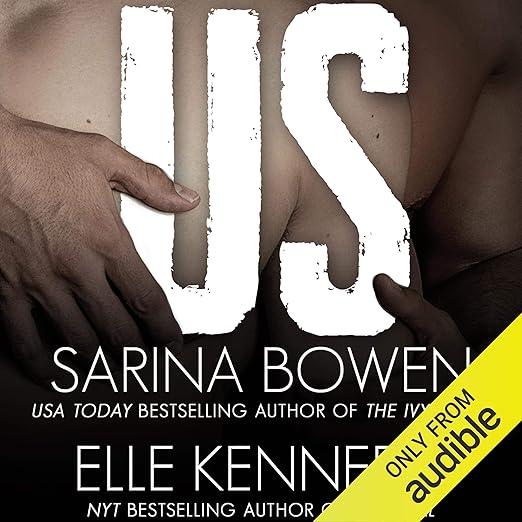
I came to Us already knowing Ryan Wesley and Jamie Canning from Him, which is the only fair way to approach it. This is a sequel that does not bother with reintroductions; it drops you immediately into a relationship five months in, with both characters navigating careers and a secret that is starting to cost them more than they anticipated. If you have not read Him, start there.
Co-authors Sarina Bowen and Elle Kennedy built something genuinely popular with the Him-Us duology. The hockey romance genre has a substantial readership, but what distinguished this series on its initial publication was its willingness to write two men in love as fully realized human beings under recognizable social pressure, rather than using the m/m framework as a vehicle for wish fulfillment alone. The question Us has to answer is whether the second book can maintain that credibility when the primary conflict shifts from discovery to maintenance, from falling in love to sustaining it under external strain.
Ryan's Rookie Season Threatens Their Careful Secret
The conflict is specifically located. Ryan Wesley is having a record-breaking rookie season with his NHL team in Toronto. He and Jamie are living together, but no one outside their families and team management knows they are a couple. When a nosy teammate moves into the apartment above them, the pressure on their carefully maintained secret intensifies. Meanwhile Jamie's new job is not going as smoothly as he hoped, adding a second strain to a relationship already carrying the weight of concealment.
The warning note in the synopsis is honest about what is in the book, sexual situations, a vibrating chair, long-distance intimacy, and it delivers exactly what it promises. But the reviews that resonate most strongly praise the emotional dimension rather than the explicit content. One reader highlighted the book's treatment of depression, anxiety, and loss alongside hope and the stubborn commitment of both characters to hold on to each other. That layering is what separates this from genre entertainment that does not aim for more.
Teddy Hamilton Takes on Both Voices Alone
Teddy Hamilton narrates alone, which is an interesting choice for a dual-perspective story. Him was narrated by both Hamilton and Cody Kennedy, one voice per protagonist, which is the conventional approach for alternating first-person narration. The single-narrator approach here flattens the distinction between Wes and Jamie's voices somewhat, and listeners who found the dual narration of the first book particularly effective may notice the absence. Hamilton is a skilled narrator and the performance is technically strong throughout.
The audiobook is a 2017 Audible Studios production with production quality to match. At seven hours and forty-five minutes, it is a comfortable single-sitting listen or a two-session investment, depending on your schedule. The pacing is well matched to the emotional rhythm of the plot.
No Easy Resolution to the Closet Narrative
The nosy teammate, Blake Riley, plays a larger role than the synopsis suggests. His presence generates most of the external plot pressure, but he is also genuinely funny, which provides tonal relief in a book that handles some fairly heavy material. The humor is one of the duology's consistent pleasures, and Us uses it well without letting it deflect from the real emotional stakes.
The NHL closet narrative has been explored in fiction elsewhere, but rarely with this level of specificity about what daily concealment costs a couple who are otherwise openly and comfortably themselves. The book does not resolve the broader social problem. It is honest that there is no easy resolution available to these characters in their particular professional context. That honesty is one of the things that makes it linger.
Read Him First, Then Come Back Here
You should read or listen to Him first. If you have already done so and loved it, Us is what you are looking for. If you are new to M/M hockey romance and want to start somewhere, start with Book 1 of this duology. Listeners who prefer their romance with more plot complexity and emotional weight than the genre average will find the series rewarding. Those who want lighter, faster-paced entertainment may find the emotional density in this particular book requires more patience than they expected.
Why does Teddy Hamilton narrate alone when Him used two narrators?
The choice appears to be a production decision rather than a creative one. Some listeners find the single narrator slightly flattens the character distinction; others find Hamilton's versatility sufficient. It is the most commonly noted difference from the first book's audiobook experience.
Is this series well suited to listeners who generally prefer contemporary romance over hockey-specific fiction?
Yes. The hockey setting provides context and pressure points but is not technical or deeply insider. What drives the books is the relationship, not the sport, and the emotional dynamics translate well to readers without particular interest in hockey.