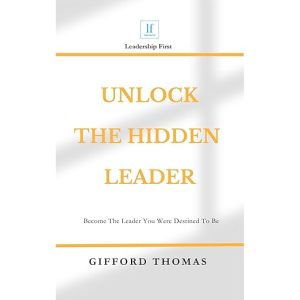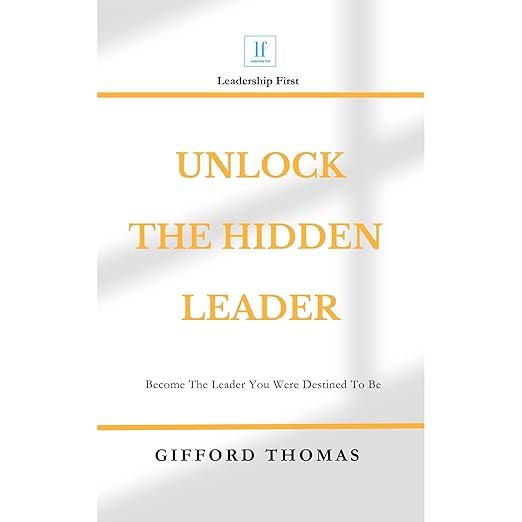
John spent twenty years in the same chair at a company that never gave him a reason to stay, watching new hires quit within six months while colleagues who had given their 'blood, sweat and tears' grew uncertain and unmotivated about a future nobody at the top seemed to be steering. Gifford Thomas opens Unlock The Hidden Leader with John's story as a composite of the burnout he says he sees constantly in organizations with no clear purpose or values, then builds this audiobook around the question that follows: if leadership has nothing to do with your title, your salary, or your spot on the org chart, what actually makes someone a leader? Virtual Voice, Amazon's AI narration, reads the answer.
Synthetic Narration Skips the Warmth in John's Arc
At 2 hours and 59 minutes, this is a compact, focused audiobook, and that brevity works in its favor. Thomas is not trying to write an exhaustive leadership textbook; he is making a single argument, that authority and leadership are not the same thing, and illustrating it through short chapters built around stories like John's rather than academic case studies. Virtual Voice's AI narration handles that structure competently: the pacing is even and the delivery clear, though listeners should know upfront that synthetic narration carries none of the interpretive warmth, vocal emphasis, or storytelling color a human narrator would bring to John's arc from burnout to purpose.
The Women in Business tag attached to this listing is worth flagging as a likely mismatch; nothing in the synopsis frames the material as gender-specific, and both the John narrative and the John Quincy Adams quote that closes out the book's framing point toward general leadership advice rather than content aimed specifically at women in business. Listeners browsing by that category tag should not expect content tailored to gender-specific workplace dynamics.
Virtual Voice is Amazon's AI narration option built specifically for independently published authors who might not otherwise be able to afford a professional studio narrator, and Unlock The Hidden Leader reads like exactly the kind of self-published business title that program was designed for: a short, personal, single-author project without a major publisher's production budget behind it. Understanding that context helps calibrate expectations; this is indie business publishing, not a lower-tier version of a traditionally published leadership book.
The Quincy Adams Line That Closes the Book
Reviewer BrandGuru's response gets at what this audiobook does well: it reframes leadership advice as self-worth advice, arguing listeners are 'worth every minute and hour' of their working life and should not give that time to companies that 'don't appreciate your work ethic.' That reframing, from a management technique book into something closer to a permission-granting book, is probably why Logan's review calls it useful for 'self reflection' rather than for building a specific skill set. Thomas is less interested in teaching influence tactics than in giving burned-out employees and reluctant leaders language for what they already sense is broken around them.
The John Quincy Adams line Thomas closes on, 'if your actions inspire others to dream more, learn more, do more and become more, you are a leader,' also does real structural work: it gives listeners a portable definition to carry out of the book, which matters for a title this short. Peggy Young's review, calling it an 'easy read' with 'several unique perspectives' despite having 'read a number of leadership books' already, suggests Thomas found angles that felt fresh even to an audience already saturated with the genre.
Thomas's central claim, that your position on the org chart doesn't make you a leader, sits in a lineage that includes Simon Sinek's work on purpose-driven leadership, though Thomas's version is more personal testimony than research-driven framework. The synopsis's own list of what does not confer leadership, title, authority, bank account, social status, reads almost like a checklist meant to be argued against point by point, and that rhetorical structure gives the book's short chapters a clear, almost sermon-like momentum.
Sample a Clip Before Committing to Virtual Voice
The brevity that makes this audiobook an easy commitment also caps how deep it can go. Under three hours leaves room for the John narrative, the core reframing argument, and a handful of supporting stories, but not for extensive frameworks, exercises, or the kind of case-study depth longer leadership titles can offer. Listeners wanting a structured curriculum with actionable steps to implement over weeks or months should look elsewhere; this is closer to a motivational reset than a training program.
AI narration technology continues to improve, and nothing in the available reviews flags a specific problem with this recording, but listeners considering Virtual Voice titles generally should know the technology can still occasionally stumble on unusual proper nouns or land slightly flat emphasis on an emotionally loaded sentence, the kind of moment a skilled human narrator would instinctively lean into harder. Sampling a short clip before committing is a reasonable precaution for any Virtual Voice title, this one included.
Because this is self-published, listeners should not expect the editorial polish and structural rigor of a major house's leadership catalog: deep research citations, layered case studies, multiple professional editing passes. What Thomas offers instead is closer to a mentor's direct address than a business-school framework, and adjusting quality expectations to that format, rather than comparing it directly to a large publisher's release, makes for a fairer listen.
The John narrative device Thomas builds the book around is a common and generally effective technique in short-form business writing: a composite or illustrative case study standing in for a pattern the author says he has observed repeatedly rather than one specific person's literal, verifiable story. Whether John represents an amalgam of real clients, colleagues, or Thomas's own experience is not something the synopsis clarifies, and listeners looking for a rigorously documented case study, with real names and outcomes tracked over time, should know this reads as illustrative storytelling rather than investigative reporting, a distinction that matters less for the book's motivational goals than it would for a research-driven title.
Long on Inspiration, Short on Specific Mechanics
This audiobook suits anyone currently feeling like John, stuck, unappreciated, and unsure whether the problem is the job or their own ambition, more than it suits someone actively searching for a leadership skills curriculum. It also works well as a short reset between denser business audiobooks, three hours that can shift a listener's framing without demanding a multi-week commitment.
Skip it if you are looking for a rigorous, research-backed leadership framework with data and case studies behind every claim; Thomas's approach here is motivational and narrative-driven rather than academic. Listeners who need concrete, step-by-step management tactics, delegation systems, performance-review scripts, that kind of thing, will find this audiobook long on inspiration and short on the specific mechanics of actually running a team.
Common Questions
Is the Unlock The Hidden Leader audiobook narrated by a real person?
No. It uses Virtual Voice, Amazon's AI narration technology, which delivers the material clearly but without the interpretive warmth a human narrator would add to the John narrative at the book's center.
Does this audiobook apply specifically to women in business, as the category tag suggests?
Not based on the synopsis. The content, built around a composite employee named John and a general argument that leadership is not the same as authority, reads as gender-neutral leadership advice rather than material targeted at women specifically.
How long is the Unlock The Hidden Leader audiobook?
Just under three hours, 2 hours and 59 minutes, which makes it one of the shorter titles in the business-leadership category.
Does this audiobook include exercises or a step-by-step leadership framework?
Not really. It is built around short, story-driven chapters, like John's twenty-year stagnation and career change, making a single central argument, rather than a workbook-style program with structured exercises.