Quick Take
- Narration: Tracy Russell brings a steady, knowledgeable delivery that suits the pharmacist-authored material, maintaining an accessible tone without oversimplifying the clinical content.
- Themes: intestinal permeability and inflammation, gut-brain connection, dietary and lifestyle approaches to digestive repair
- Mood: Accessible and encouraging, with a practical problem-solving orientation
- Verdict: A well-organized introductory guide to leaky gut and digestive health that covers significant ground in its runtime, best for listeners new to the topic.
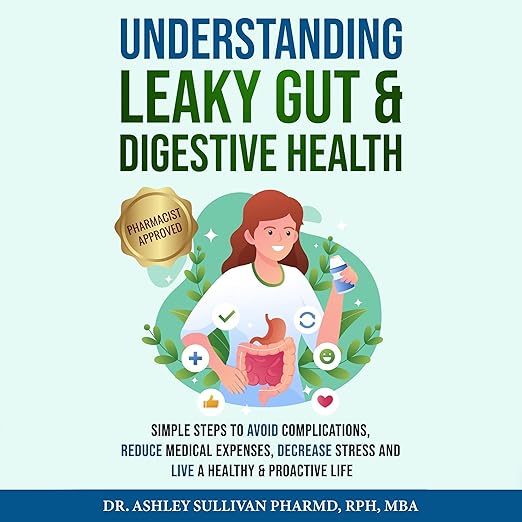
Leaky gut is one of those terms that has made an uncomfortable journey from the edges of integrative medicine into mainstream wellness culture, picked up on the way by everyone from functional medicine practitioners to supplement companies. The result is a landscape where it is genuinely difficult to separate the evidence-based content from the marketing. I came to Dr. Ashley Sullivan’s audiobook with that context in mind, and I was curious whether a PharmD authoring a book in the Understanding Chronic Illness and Disease series would bring the kind of scientific discipline the topic actually needs.
The answer is: mostly yes, with some caveats.
What a Pharmacist’s Lens Brings to Gut Health
Sullivan’s background in pharmacology shapes this book in ways that distinguish it from the more entrepreneurial corners of the gut-health space. She is careful about causation versus correlation, which matters because much of the microbiome research is still primarily associative rather than mechanistic. When she describes the relationship between intestinal permeability and inflammatory conditions, she is generally clear about what has been demonstrated in controlled studies and what remains working hypothesis. That discipline is not universal in this category, and it is worth noting where it appears.
The gut-brain connection sections are handled with similar care. Sullivan explains the bidirectional signaling between the enteric nervous system and the central nervous system without the overclaiming that plagues some popular accounts. The role of neurotransmitter production in the gut, the vagal pathways, and the influence of the microbiome on mood and cognition are covered in enough detail to be genuinely informative without requiring a neuroscience background to follow. Reviewer RStorey’s observation about clear, easy-to-understand explanations captures what Sullivan does well throughout.
The Breadth and Depth Tradeoff
Reviewer RTEndi raised an honest concern: the book is almost too comprehensive, covering so much terrain at the cost of depth in any single area. That is an accurate observation. Sullivan addresses diet, stress management, sleep, supplementation, food sensitivities, the role of specific gut bacteria, and lifestyle practices within a five-and-a-half-hour runtime, which means each topic gets a solid introduction but not the kind of extended treatment that would let a listener walk away knowing exactly what to do.
This is partly a genre limitation. The book’s positioning as a comprehensive guide creates an expectation of coverage that works against sustained depth. If you want to understand leaky gut from multiple angles quickly, the breadth is a feature. If you want to understand one aspect deeply, like the specific dietary changes with the strongest evidence base or the most current research on probiotic strains, you will need to follow this with more specialized reading.
Tracy Russell and the Audio Format
Tracy Russell’s narration at five and a half hours is consistent and well-matched to the material. She delivers Sullivan’s more technical passages without stumbling on the terminology, and she maintains an encouraging tone through sections where the subject matter could feel intimidating. This is health content that is asking listeners to consider making significant lifestyle changes, and a narrator who sounds supportive without being patronizing is exactly what that requires.
One structural observation worth making: the book is part of the Understanding Chronic Illness and Disease series, which means it is designed with a particular format and scope. Listeners who have heard other titles in that series will know what to expect: comprehensive introduction, accessible delivery, practical orientation, limited clinical depth. Understanding that series positioning helps calibrate expectations appropriately.
Suitable Listeners and Honest Notes
This is a strong first audiobook for someone who has been experiencing digestive issues, bloating, food sensitivities, or unexplained systemic symptoms and wants to understand what might be driving them. Sullivan’s approach demystifies a topic that can feel overwhelming or pseudoscientific and gives listeners a framework for productive conversations with their healthcare providers.
Listeners who have already read Fiber Fueled, The Gut-Immune Connection, or similar titles at the research-forward end of the gut-health spectrum will find this covers familiar ground. And the book’s consistent emphasis on empowering readers to take control of their digestive health has the motivational quality that suits listeners at the beginning of a health journey more than those who are already deep into the protocols. Come to this one first, not after you have already read six other books on the same topic.
Frequently Asked Questions
Is ‘leaky gut’ a medically recognized condition, and does the book address the controversy around the term?
Sullivan approaches this thoughtfully. Intestinal permeability is a recognized physiological phenomenon studied in research contexts, and its association with inflammatory and autoimmune conditions is increasingly supported by peer-reviewed evidence. The more controversial marketing term ‘leaky gut syndrome’ as a standalone diagnosis is less well-established, and Sullivan distinguishes between the evidence-based physiology and the promotional framing that has attached itself to the term in popular wellness culture.
Does this book recommend specific probiotic supplements or brands?
Sullivan discusses probiotic and prebiotic principles and the role of specific bacterial families in gut repair, but her pharmacist background leads her to be appropriately cautious about specific product recommendations. She focuses on mechanisms and principles rather than brand names, which is the right approach for an educational audiobook that will reach listeners with different health profiles and needs.
How does this compare to other gut health audiobooks in terms of scientific rigor?
It sits in a middle register: more evidence-focused and careful about causation than most wellness-market titles, less research-dense than academic texts or books like Bulsiewicz’s Fiber Fueled. For a general audience starting their gut-health education, Sullivan’s approach represents the right level of rigor, presenting the evidence accurately without requiring a biology background to follow.
Is this appropriate for someone already diagnosed with a digestive condition like IBS or Crohn’s disease?
It provides useful foundational context but should not replace condition-specific guidance from a gastroenterologist. Sullivan covers IBS and inflammatory bowel conditions within the broader gut-health framework, but the book is designed as a general introduction rather than a management protocol for specific diagnoses. Those with existing diagnoses should treat this as supplementary background reading alongside their medical team’s guidance.