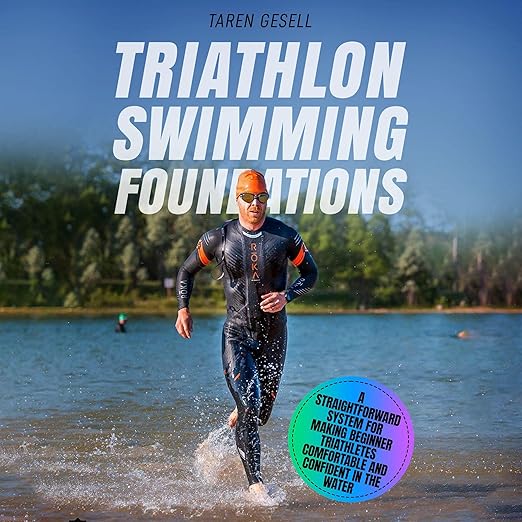
Quick Take
- Narration: Taren Gesell self-narrates with the relaxed confidence of someone who has explained these concepts thousands of times on YouTube, which makes the instruction feel personal and trust-building.
- Themes: fear management in open water, technique over power, triathlon-specific swimming adaptations
- Mood: Encouraging and methodical, like a patient coach who has been where you are
- Verdict: The clearest swimming primer available specifically for age-group triathletes who dread the first leg of their race.
I did not grow up swimming competitively. I learned the mechanics well enough to get from one end of a pool to the other without embarrassing myself, but the idea of open-water swimming, in a wetsuit, surrounded by other people’s elbows, at the start of a race I still have to finish on a bike and then on foot, has always struck me as a special category of anxiety. So when I picked up Triathlon Swimming Foundations on a Sunday afternoon between other review commitments, I was not entirely the target audience, but I understood immediately why that audience is so hungry for this kind of book.
Taren Gesell, who is known to a substantial online audience as Triathlon Taren and coaches thousands of athletes through his Team Trainiac platform, built this book from a specific observation: swimming is the leg most dreaded by age-group triathletes, and yet it is the one where technique improvements produce the fastest results relative to the time invested. His premise, that triathlon swimming is a separate discipline from pool swimming and needs to be trained as such, is the organizing principle from the first chapter forward. This is not a general swimming instruction book. It is targeted at a very specific athlete profile, and that specificity is its core strength.
Our Take on Triathlon Swimming Foundations
Gesell self-narrates, and this is unambiguously an asset. He has clearly explained these drills and concepts hundreds of times in video format, and that fluency comes through in the audio. He tells you, early and without apology, that he was a struggling swimmer himself, which immediately earns the trust of the listener who is afraid of the water. One reviewer described getting back in the pool after twenty-five years and finding the book’s smallest-steps approach genuinely comforting. Another called the drills simple, humbling, and revealing in the same breath. That combination, accessible enough to start immediately and technical enough to expose what you have been doing wrong for years, is exactly what this format needs to deliver.
Why Listen to Triathlon Swimming Foundations
Because Gesell is not selling a secret method. He is solving a specific problem for a specific person: the age-group triathlete who has registered for an Ironman 70.3 or a sprint tri and knows that the swim is where confidence goes to die. The drills in this book are described as fundamental enough that strong swimmers attempting them discovered gaps in their technique they had never noticed. That is a meaningful credential. The book also belongs to the Triathlon Foundations Series, which means if the approach works for you in the water, there is a parallel framework for the bike and run legs from the same coaching voice, and the methodology stays consistent across all three disciplines.
What to Watch For in Triathlon Swimming Foundations
At two hours and thirty-six minutes this is a short listen, and some of the drill descriptions would benefit from visual reference. Gesell’s YouTube channel exists and has demonstrations for many of the concepts covered here, so treating this audiobook as the conceptual layer and the channel as the visual companion is a reasonable approach. Competitive swimmers or athletes who have had formal coaching may find the foundational level covers ground they already know. This is calibrated firmly for the beginner to intermediate range and does not pretend otherwise, which is the right call given its audience.
Who Should Listen to Triathlon Swimming Foundations
First-time triathlon participants, especially those with open-water anxiety or no formal swim coaching background. Adult returners to swimming who swam casually in youth but never learned proper technique. Anyone who has searched for triathlon swimming tips and found the advice too generic to implement in actual pool sessions. Less useful for experienced swimmers or multi-sport athletes who are already comfortable in open water and looking for race-specific performance gains rather than foundational confidence building from the ground up.
Frequently Asked Questions
Does this book work for someone who has never done a triathlon before but is training for their first sprint or 70.3?
Yes, that is precisely the audience Taren Gesell designed it for. Multiple reviewers mention signing up for their first triathlon and finding this book after searching for swim-specific guidance. The system is built from the assumption that the listener is not a trained swimmer.
Is this audiobook part of a series, and do I need the other books to use it?
It is the first book in the Triathlon Foundations Series. Each book covers one discipline of the sport independently, so you do not need the others to benefit from this one. It stands alone as a swimming resource.
How does Taren Gesell’s self-narration compare to a professional audiobook narrator for instructional content?
Reviewers consistently respond well to it. His YouTube background gives him a conversational authority that makes technical drill descriptions feel approachable rather than clinical. For this type of coaching content, the personal voice is an advantage over a professional narrator who might deliver the material with less felt understanding of the material.
Are the drills described in enough detail to execute without video reference?
Mostly yes, though Gesell’s YouTube channel provides visual demonstrations for many of the techniques covered. Reviewers describe successfully implementing the drills from the audio descriptions alone, but combining the audiobook with the channel content will give you a richer picture.