Quick Take
- Read by: One credited reader, David Lee Huynh, on a record whose only clue about what you will hear is a single metadata field.
- At its heart: Nanite immortality, a disappearance, an artificial intelligence taught to read poems, love outlasting the species.
- Vibe: Cool, cerebral, quietly grieving.
- Short version: The premise is worth seven hours, but this record cannot tell you what you will hear or whether its fields describe a recording or a paperback.
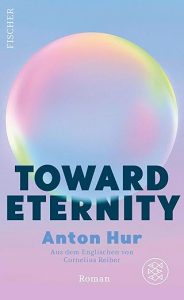
An English title heads this audiobook record, and not one sentence of the description beneath them is in English. The language field says German. The page also carries an ISBN, a page count of 288, and a product identifier in the shape of an ISBN, sitting alongside a running time of seven hours and five minutes and a credited reader. Two different objects are being described here by one set of fields, and the listing never chooses between them.
Genre comes first, because this record is doing something strange with it. This record carries exactly one label, and the label is lgbtq-plus, on a book whose own copy describes an experimental therapy that cures cancer by replacing human cells with robot cells until the patient can no longer die, a literary scholar among the first test subjects who then vanishes, a doctor monitoring the project, and an artificial intelligence taught to understand poems. Every one of those elements belongs to a genre the record does not mention anywhere.
Underneath it, the single written verdict asks the same question from the other direction, which turns a filing quibble into something larger. It wants to know whether what it is reading is science fiction or the love story of two men, and it adds that the author does not appear to have settled the matter either. So the shelving on this page reproduces, precisely, the confusion the one reader here complained about. Read the rest of the same verdict and more surfaces. It reports buying the book on the strength of a radio recommendation, finding the text hard going, objecting to digressions that do not connect to the plot, and setting the whole thing down after seventy pages. Seventy pages. The only assessment attached to this product comes from somebody who abandoned a printed copy less than a quarter of the way in, and whose final complaint concerns a typographic gender convention that interrupted the flow of reading. That is an objection filed against a page, and it is being displayed above a recording.
Highlights
Set the metadata aside and the premise is genuinely good. Cells replaced one at a time by machines until mortality is engineered out. A scholar who was among the first to be treated, then disappears, leaving a doctor to work out whether the person who came back is the same person who left. An artificial intelligence taught to read poetry, named for the scholar's husband, with the copy pausing to gloss that name as meaning the beloved. A debut novelist who arrived at fiction from translation and is being sold on exactly that.
Now consider what the premise asks of a performance. The copy's own central question is whether the returning person is the original one, and a single voice reading both halves of that story answers it by default the moment the file begins. Sameness of voice reads as sameness of person unless a performer decides otherwise, which makes this one of the rarer novels where the casting choice is not neutral to the plot. David Lee Huynh is named as the reader. Nothing on the page reports what the recording does with that seam, but the demand is legible from the description alone, and it is a more interesting assignment than most literary science fiction offers.
Poetry pulls in the same direction. A book that hands poems to a machine and asks what the machine makes of them has recitation somewhere near its center, and recitation is not the worst argument for hearing a novel rather than reading it. The running time is short for this kind of speculative material too, which suggests a book built around one idea rather than a sprawl.
Things to Know Before Starting Toward Eternity
Identifiers are the first thing a careful buyer should notice. An ISBN, a page count and a product code in ISBN form all belong to a printed edition. A running time and a reader credit belong to a recording. Several fields on this record describe the first object and several describe the second, they sit in the same table, and no sentence anywhere tells you which one a purchase delivers.
Language is the second. The field says German, the description is written in German from first word to last, and the reader credit is simply a name. What the file actually sounds like is not stated in any field, and a buyer who cares which language the performance is in has one entry to trust and nothing at all to check it against. On a novel by a working translator, that gap is not a small one.
Beyond those, the record is bare. No series information, no badges, no publisher note about the recording, and a description whose closing paragraph is a positioning statement about the author rather than an account of what happens in the book. Anyone accustomed to a synopsis that lays out setup, stakes and length will find perhaps a third of that here, in a language they may or may not read.
Is This One for You?
Consider it if you want speculative fiction that treats immortality as a medical procedure with paperwork rather than as a wish, and if a marriage braided through a machine-intelligence plot sounds like your kind of braid. The file is compact for the genre, so the book has to move, and the copy suggests it moves through ideas rather than incident. Readers who liked the cell-by-cell logic of hard science fiction but wanted a love story underneath it are the natural audience.
Do not start here if you need to know what you will be hearing before you commit, because that is the honest state of this listing. Do not start here either if the print fields would bother you: a page count on an audio record is a sign that nobody checked the entry, and that carelessness may extend to things you cannot see. And weigh the one existing verdict for what it is. A lone one-star from a reader who stopped at seventy pages is not a consensus, but it is the entire visible response to a novel with a large premise, and the asymmetry between the ambition and the evidence is worth a moment before you spend.
A Few Questions About Toward Eternity
What language is this audiobook in?
German, according to the only field that addresses the question. Every sentence of the copy runs in the same language, which corroborates it, while the title at the top of the page does not. No other entry confirms the recording independently, so a single metadata value is carrying the whole answer for you.
Why does the record show a page count and an ISBN?
Because identifiers belonging to a bound object have been stapled onto something you play. Numbers that count pages and register an edition with a wholesaler cannot describe a file, yet they sit in the same table as a duration. Nothing on the listing explains the mixture, or says which of the two a purchase delivers.
Who is Panit in this audiobook, and why does the name matter?
By the copy's own account, Panit is an artificial intelligence taught to understand poems, and the name is taken from the husband of the scholar who built it. The copy glosses the word as meaning the beloved. A machine named after a spouse is the novel's central conceit compressed into a single proper noun.
Is seven hours and five minutes short for a novel of this scope?
It sits at the compact end for speculative fiction, which is usually a point in a debut's favor. The 288-page figure printed on the record is broadly consistent with a file that length, so the two numbers at least agree with each other, even though only one of them describes what you are buying.