Quick Take
- Narration: Fiona Ferris reading her own work is exactly the right choice, her unhurried warmth makes the book feel like a long conversation with a friend who has figured something out.
- Themes: French-inspired living, simplicity, everyday elegance
- Mood: Gentle and aspirational, like a Sunday morning with good coffee and no obligations
- Verdict: One of the better entries in the French-lifestyle genre for audio, Ferris’s self-narration turns what could be a listicle into something that feels genuinely lived-in.
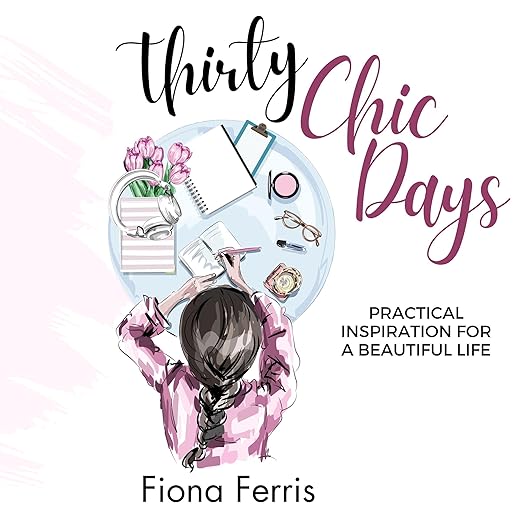
I came to Thirty Chic Days on a Tuesday evening when I was genuinely tired of the kind of self-improvement content that arrives with urgency. No five-step systems, no optimization frameworks. Fiona Ferris reads her own work in a voice that is unhurried in the best possible way, and within the first chapter I had stopped taking notes and simply listened. That is a meaningful thing to say about a book that could easily have been structured as a checklist. It is not. It is thirty chapters, or days, as Ferris frames them, each one a small essay on some facet of living with grace, pleasure, and deliberate simplicity. The French inspiration is real but light-handed. This is not a book that asks you to feel bad for not living in Paris.
Ferris is a New Zealand-based writer who has built a following on the premise that the philosophy of French chic, simplicity, quality over quantity, pleasure in small daily rituals, is transferable anywhere. That premise is not original to her. Jennifer L. Scott’s Lessons from Madame Chic arrived first and remains the better-known entry in this genre. But Ferris has a distinct quality that separates her from the more aspirational, aesthetically glossy versions of this content: she sounds like she actually lives this way. The listener reviews repeatedly describe her as feeling like a friend, and there is genuine accuracy in that. Her writing is personal and honest, not polished in the way that signals a marketing team.
Thirty Chapters That Earn Their Structure
The thirty-day framework could easily feel gimmicky, and in less careful hands it would. But Ferris uses it as an invitation rather than a prescription. Each chapter is self-contained enough that you could dip in and out, revisit a favorite, or move through them sequentially over an actual month if you are the kind of reader who responds to that kind of intentional pacing. In audio form, this structure works better than in print. The chapters are short enough that you can listen to one on a commute and let it sit before moving on. One reviewer specifically noted planning to revisit the book once a month by subject, which is an unusual level of intentionality that speaks to how the material invites repeated engagement.
The content ranges across familiar chic-living territory: simplifying your wardrobe, cultivating personal rituals, finding beauty in ordinary objects and moments, spending money deliberately, investing in quality where it matters. None of this is surprising if you have read widely in this genre. What Ferris adds is her own life, specific, personal examples that ground the advice in something real rather than the slightly floaty aspirationalism that can make books like this feel empty. The detail about enjoying the smell of coffee as an example of finding pleasure in small things is almost comically simple, but it reads differently when you hear it in someone’s actual voice rather than encountering it on a page.
Why Self-Narration Works Here
Ferris reading her own work is worth dwelling on. Self-narration can go badly in a number of directions: authors who rush, who are too casual about pace and enunciation, who seem uncomfortable with the recording process. Ferris avoids all of these. She reads at a pace that feels considered, with natural warmth but without the performed intimacy that some self-narrators fall into. Her New Zealand accent is distinctive without being distracting. There is a sense that she has recorded this thoughtfully, aware that the audio experience is different from reading. At nearly seven hours, the runtime gives the thirty chapters room without feeling padded.
This is the first book in the Thirty Chic Days series, and Ferris has extended the framework into additional volumes. Listeners who enjoy this one will find more of the same sensibility in the sequels. The series does not escalate in terms of philosophical ambition, it is a consistent, settled voice returning to themes it finds genuinely interesting. That is either exactly what you want or not what you are looking for, and it is worth knowing that going in.
What This Book Actually Is
The most useful framing for Thirty Chic Days is that it is not primarily instructional. It will not tell you which capsule wardrobe pieces to buy or give you a precise morning routine. It is closer to a mood realignment, a book you listen to when you want to feel differently about your daily life rather than when you need a plan for changing it. That distinction matters. Listeners who come in looking for concrete lifestyle prescriptions may feel gently frustrated by how impressionistic the advice stays. Listeners who come in wanting permission to slow down, simplify, and enjoy ordinary things more deliberately will find this exactly right.
Who should listen: Fans of the French-lifestyle genre who want something personal and warm rather than aspirationally glossy; anyone feeling overwhelmed by the relentless pace of productivity culture; listeners who respond well to self-narrated books with a genuine conversational quality. Who should skip: Listeners looking for specific, actionable style advice with concrete protocols; anyone who has read extensively in this genre and is looking for something philosophically new.
Frequently Asked Questions
Do you need to read the Thirty Chic Days series in order?
No. Each volume is self-contained. This first book establishes Ferris’s philosophy and voice, and sequels return to the same themes from different angles. Starting here makes sense for new readers, but it is not a story that builds sequentially.
How does Thirty Chic Days compare to Jennifer L. Scott’s Lessons from Madame Chic?
Scott’s book is more structured and draws directly from her time living in France, giving it a narrative anchor. Ferris is more essayistic and personal, writing from New Zealand about how she has applied French philosophy to her own life. Both are genuine entries in the genre; Ferris’s audio version has an edge because of her self-narration quality.
Is this book religious or does it have any faith-based framing?
No. The philosophy is secular and focused on pleasure, simplicity, and quality of life. The French-inspired framing is aesthetic and cultural rather than spiritual.
Is the audiobook format better or worse than reading the print version?
Better, for this particular book. Ferris’s voice and the short-chapter structure make it well-suited to the audio experience. The conversational quality of her narration adds warmth that a text on a page can only approximate.