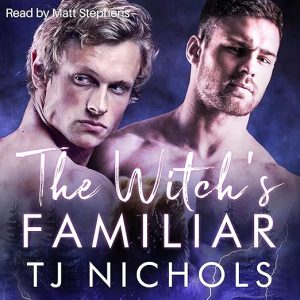
Jude Sullivan gets one more chance to prove he is not a danger to the paranormal community, and the penalty for failing is having his magic pulled out of him in a process the description calls painful. That is where this audiobook begins, and five hours and forty-three minutes later it is over. The brevity is a design decision rather than an accident, and it governs everything the book can and cannot do with that premise.
What We Made of It
Mercy South, Colorado, is where the coven sends him, and the assignment is cattle mutilation. Jude hates cows and hates small towns, and believes a nature witch would have been the obvious choice, all of which the description states up front. That opening is the book's best instinct. A witch on probation, stuck in a place he does not want to be, doing work he considers beneath his specialty, is a comic setup and a character study running on the same engine.
Rob Mackenzie is the local mechanic and a bear-shifter, and what he wants gets stated with unusual directness: someone who really knows him and is not afraid. That single line does more for the romance than any quantity of banter could. Mack is not concealing a tragic history so much as living inside an ordinary loneliness, and when cattle start turning up chewed, he finds himself wondering whether he is even the strangest thing in town any more. It works as a joke and as a genuine anxiety at once.
Two things happen quickly after that: Jude decides Mack is the cause of the trouble, and Mack recognizes Jude as his fated mate. The response that admits the cover nearly put it off buying gets the effect right, calling the book short but well paced, with a clear storyline and well-defined characters whose connection lands. That is the correct measure for a book this length. A novella cannot build trust by slow accumulation, so it has to make you like two people fast, and this one manages that inside the first hour.
Why The Witch's Familiar Works as an Audiobook
One credited reader, Matt Stephens, carries a romance in which Jude and Mack trade the viewpoint back and forth, the standing challenge of the form in audio. The production is independent in the most literal sense available: the publisher field on this record holds the author's own name, so nothing stands between the writing and the recording except the decisions of one person. That cuts both ways. Nobody diluted the book to fit a house list, and nobody caught the metadata problem I will come to shortly either.
Fated mates as a trope carries one structural difficulty, which is that it hands the couple their ending in advance. The compensating move is to put the obstacle outside the relationship, and the creature hunting through Mercy does exactly that job. An entry that came for the sweetness and stayed for the monster hunt says the excitement of tracking the thing kept the story interesting, and that is the honest verdict: the case is not clever, but it is load-bearing, and without it the romance would have nowhere to go.
Listeners is the word the description itself reaches for when it names its audience, which is a small tell worth registering: this copy was written with an audio buyer in view. What it promises is fated mates, bear-shifters and small-town gay romance, and at five hours and forty-three minutes it delivers all three without complicating any of them. The book is precisely what the label says, and a book that matches its label is more useful to a buyer than a book that oversells.
What Might Not Land
Search for this series and you may not find it. The series field on the listing reads Familiar Mates. The earliest response on the page, written by somebody who summarizes the setup in careful detail, calls it the first novella in Familiar Fates. One of those is wrong, and a buyer typing the wrong one into a search box gets nothing back at all. On a record where the author's own name fills the publisher field, no house upstream is going to notice and reconcile them, which makes this the kind of error that survives for years. Search the author name instead.
Spice is the other thing to settle before buying. The most recent entry in the column states plainly that it wanted more heat than two healthy young men were given, and that reader had come to the book expecting a spicy novel. The description never promised one, naming its tropes without naming a temperature, and the shelf category does not narrow it either. If explicit content is what you are shopping for, this is not that book, and you will not learn that from the listing before you pay.
Repetition inside the characters' heads is the complaint from the lowest grade in the column, which describes Jude and Mack going through the motions of being bonded while spending far too much time second-guessing themselves and their situation. That is a fair account of what a short romance does when it needs internal conflict and has no room for external complication. The figures on this page settle nothing either. The badge reads 4.3 and the rating counter reads two. Two whole-star votes cannot average 4.3 under any rounding rule you care to apply, so whatever that score summarizes, two ratings are not it.
Should You Listen to The Witch's Familiar?
Paranormal romance readers who want the tropes served straight are the audience here: fated mates, a bear-shifter, a small town, and a creature to hunt, all inside a single evening of listening. It also suits anyone wanting a low-commitment introduction to a new author, since the record presents this as the opening volume of a series and asks very little of your week to find out whether the voice suits you.
It will frustrate you if you want heat: three of the written responses raise the spice level and not one of them calls it high. Likewise anyone who needs a mystery with real misdirection, because the creature plot is a frame built to hold a relationship and it behaves exactly like one. Cows are the inciting incident, which tells you the register this book is working in and how little it intends to apologize for it.