Quick Take
- Narrator: Alan Downs reads his own book for Highbridge Audio, a casting choice this particular material makes close to inevitable.
- Subjects: Internalized shame, the invalidating past, three stages toward authenticity, pride examined rather than celebrated.
- Tone: Clinical and direct, warmer in the personal passages.
- Bottom line: A framework rather than a nuanced portrait, and the framework has helped a great many people.
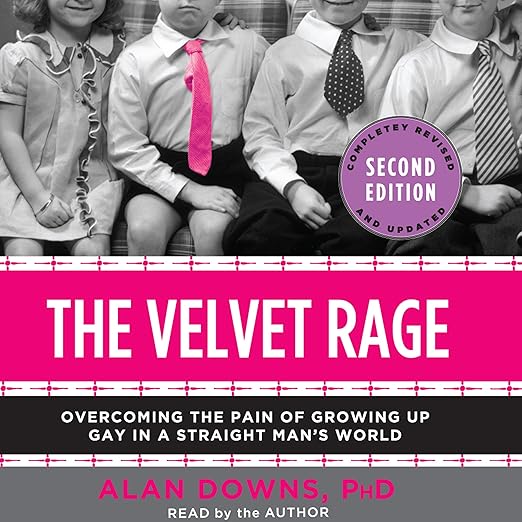
Coming out is not the hardest thing, according to the sentence this description opens on; coming to terms with an invalidating past is. Seven hours and fourteen minutes of audiobook follow from that claim, and Alan Downs reads every one of them personally, which on a book drawn partly from his own journey and partly from the stories of his friends and clients is a decision with consequences running in both directions. Highbridge Audio dates the recording to June 2012.
First, the Big Picture
Clinical rather than celebratory is the register, and the copy says so before you can wonder. Growing up gay in a straight world produces an internalization of shame, rejection and anger, which the description calls a toxic cocktail and follows with a list: drug abuse, promiscuity, alcoholism, depression, suicide. Against that, Downs sets contemporary psychological research and three stages toward emotional well-being. The provocation sits in one phrase, the myth of gay pride, which the book takes on rather than gestures at, and in the question underneath it, asked despite everything that has improved: are we better off?
Mechanism is what the oldest response on the page supplies, better than the copy manages, with a condition attached. That reader insists on the part people skip, which is a willingness to look at yourself honestly and compassionately and then do the work the book sets out. Then the summary: Downs observes that gay men grew up in a world where they were forced to hide themselves, which that reader confirms from experience, and asserts that later in life the gay man never develops their own authenticity and so cannot experience real joy, because of toxic shame. Stated that flatly, the thesis is either the most useful thing you will hear this year or a considerable overreach.
Why The Velvet Rage Works as an Audiobook
Format is the subject of the entry that matters most to a buyer, since it began in print and switched partway through. That reader found some passages so emotionally moving that the change became necessary, and now recommends the recording specifically, because hearing the author's voice felt like talking to a compassionate friend. It is the strongest available case for self-narration anywhere in this genre. A hired reader would deliver the clinical material cleanly and the personal material with care, and neither would be the same as hearing the person who lived it say it out loud. That same entry recommends a second title, Straight Jacket by Matthew Todd, particularly for anyone dealing with addictions, whether to substances, shopping or the search for external validation.
Congruence carries a cost worth naming. A book making strong clinical claims about an entire population, read aloud by the clinician who made them, gives a listener no distance at all. A professional performer introduces a small gap between the argument and the voice, and inside that gap a listener does their own evaluating. Here the diagnosis and the delivery arrive in a single package, which is precisely what makes it land and precisely what makes it difficult to argue with while it plays.
Seven hours and fourteen minutes is well judged for what this is. The book has a shape, three stages, and a shape that clear survives being heard rather than read, an advantage a good deal of psychology writing does not share. A listener who loses the thread can rejoin at the next stage without unpicking what came before. Anyone using it the way the copy suggests, as work rather than as reading, will want a second pass, and at this length a second pass is genuinely feasible.
Scope was widened deliberately in the revised and expanded edition the description is written about: material on gay marriage, a broader range of examples reaching past middle-class gay men in America, and an expanded discussion of living authentically. That widening matters, because narrow scope is the standard criticism aimed at books in this space, and the copy is answering it directly rather than waiting to be asked.
A Few Reservations
Which edition sits on this file? The description is written about the revised and expanded text, and names what the revision added, though no edition marker appears in the title field at all, and Highbridge Audio dates the recording to June 2012. A buyer who specifically wants the widened material has no field on this page confirming its presence. The ratings tally has a related problem, since it is smaller than the column of written responses sitting beneath it, which means the number and the column are not describing the same group of people. Read the entries and treat the badge as decoration.
Measured is the word for the entry grading below five stars, and its reservation is the predictable one. The book is good, that reader says, though it simplifies life very much, with some insights worth having. The recommendation attached is precise: young gay men, because the big picture helps a great deal later on. Simplification is what a three-stage model does by design, and whether that reads as a flaw or as the point depends entirely on whether you want a framework or a nuanced account. Anyone who dislikes stage models in psychology generally will dislike this one specifically.
Should You Listen to The Velvet Rage?
Another response answers the audience question with unusual care. That reader had seen recommendations everywhere, put it off for ages, and calls the delay a disservice to themselves, because the book described so many things that had happened and were still happening in their life as a gay man. Then the qualification, which the entry credits to the book itself, made early on: this is not exclusively for gay men, but it is a beacon for them specifically. That framing is right. Partners, parents, friends and clinicians will find it legible and useful, while the address is unmistakably to one reader in particular.
This is the wrong book for anyone who wants a celebratory account of gay life, and it warns you in its opening paragraph by putting the myth of gay pride on the table. It will also frustrate listeners who want contemporary data, since the recording is well over a decade old and the copy's own progress question gets asked from that vantage point. Anybody whose interest is the coming-out story will find the book explicitly uninterested in it, since its subject begins where that story ends.
Who narrates The Velvet Rage audiobook?
Alan Downs, the author, is credited in the narrator field as well as on the byline, for Highbridge Audio. The recording runs seven hours and fourteen minutes and carries a June 12, 2012 date. Self-narration is common on clinical books written partly out of the writer's own experience.
Does The Velvet Rage audiobook discuss addiction and self-harm?
The description names them plainly, calling internalized shame, rejection and anger a toxic cocktail and then listing the outcomes it can produce, self-harm among them. That list sits in the opening paragraph of the copy rather than buried later, so anyone for whom it is difficult ground will know before starting.