Quick Take
- Narration: Marguerite W. Gavin brings her characteristic reliability to the material, reading with warmth and conviction that suits a book written partly from a parent’s perspective.
- Themes: Gut-brain connection in autism, inflammation and oxidative stress, natural treatment protocols
- Mood: Urgent and hope-oriented, with clinical specificity grounded in personal experience
- Verdict: A passionate, protocol-focused guide to non-psychiatric autism interventions that will resonate most with parents who’ve found conventional approaches insufficient, though readers should engage with Lintala’s claims alongside mainstream clinical guidance.
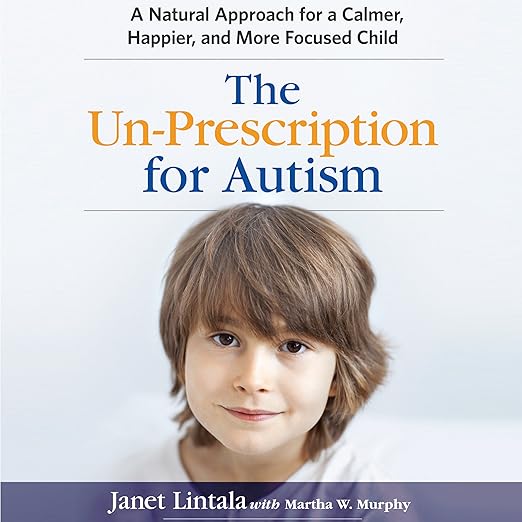
I started this one late on a weeknight, initially expecting another overview of autism treatment options, and found something considerably more specific: Janet Lintala is not surveying the landscape of interventions but presenting the protocols she uses in her own practice and has lived in her own family. That combination of clinical context and personal investment gives the book a texture that is difficult to fake, and it also shapes the way she makes her arguments, with a sense of urgency that comes from someone who has watched both research and conventional medicine move too slowly for the families in front of her.
The central claim of The Un-Prescription is that many of the most disabling features of autism, particularly aggression, bowel problems, sleep disturbances, and repetitive behaviors, have physiological substrates that are being systematically undertreated. Lintala targets four underlying conditions: chronic inflammation, oxidative stress, gastrointestinal dysfunction, and immune dysregulation. She argues, drawing on current research and clinical experience, that addressing these with digestive enzymes, probiotics, antifungals, and other non-psychiatric interventions can produce transformative improvement in function, not by curing autism, but by removing the pain and physiological chaos that exacerbates its most difficult symptoms.
The Gut-Brain Connection and What the Research Actually Shows
The gut-brain relationship in autism has become a substantially more active research area in the decade before this book’s publication, and Lintala situates her protocols within that emerging literature. The evidence for gastrointestinal dysfunction as a comorbidity in autism, rather than a separate issue to be addressed separately, is real and she presents it with more rigor than you might expect from a book that sits at the alternative medicine edge of the clinical spectrum. The distinction she draws between symptom suppression through psychiatric medication and addressing underlying physiological conditions is clinically legitimate as a conceptual framework, even where her specific intervention recommendations go beyond what the mainstream evidence base would currently support.
One reviewer described a dramatically improved outcome for a high-functioning son after implementing some of the protocols, and several others describe similar experiences. These accounts are consistent with the real heterogeneity of autism and the genuine possibility that physiological interventions make a meaningful difference for some individuals. They are not evidence that the protocols work across the board or that Lintala’s causal explanations are correct. Readers will need to hold both of those things simultaneously.
Lintala as Parent-Clinician
The book is most powerful when Lintala is writing from her dual position as a clinical practitioner and an autism parent. The passages describing her son’s journey and the years of trial and error that preceded the protocols she now uses in practice are honest in a way that distinguishes the book from both clinical literature and from more purely testimonial autism memoirs. She describes failures alongside successes, and she acknowledges that not everything works for every child, which is an important caveat in a field where parents are vulnerable to treatments that overpromise.
Marguerite W. Gavin has been one of the more reliable narrators in health and wellness nonfiction for a long time, and her performance here is in that tradition. She reads Lintala’s urgent, caring voice with matching warmth and brings appropriate weight to the sections where Lintala is describing both clinical protocols and personal experience. At seven and a half hours, the runtime is proportionate to the depth of the protocol content.
How to Use This Book Responsibly
Parents who are considering the interventions Lintala describes should treat the book as a framework for informed conversations with practitioners rather than as a DIY treatment guide. Several of the protocols she recommends require clinical oversight, and the interactions between some of the supplements she discusses and any existing medications are real. The book’s value is in the framework and the questions it equips parents to ask, not in the ability to implement its recommendations without professional guidance. Approached that way, it offers something genuinely useful to families who have found conventional approaches insufficient and are looking for a more physiologically comprehensive model of their child’s condition.
Frequently Asked Questions
Is Lintala’s approach considered mainstream by pediatricians and developmental pediatricians?
No, and Lintala acknowledges this directly. The gut-brain connection in autism has more research support than it did a decade ago, but the specific protocols she recommends go beyond what most mainstream pediatricians would currently endorse. The book is most useful as a framework for informed conversations with practitioners rather than as a standalone clinical guide.
Does the book address children at all points on the autism spectrum, or is it focused on more severe presentations?
Lintala’s clinical work and personal experience both center on children with significant support needs, and the protocols she describes are aimed at the physiological underpinnings of severe behavioral and physical symptoms. Some of the material may be relevant for children with less severe presentations who have significant GI or immune issues, but the book’s primary audience is families dealing with aggression, self-injury, and significant bowel and sleep disruption.
How does this book compare to We Walk: Life with Severe Autism by Amy Lutz in terms of approach?
Lutz’s book is a philosophical and personal essay collection that questions the public conversation about autism without prescribing interventions. Lintala’s is a protocol-focused guide written for parents who want something to do. They address entirely different reader needs and are not really in competition. A reader who has processed the questions Lutz raises about what severe autism is and what we owe those who have it might find Lintala’s practical focus a useful complement.
Is Marguerite Gavin’s narration a good fit for this material?
Gavin reads the material with warmth and conviction that suits a book written partly as a parent’s testimony and partly as a clinical guide. She brings a quality of presence to the dual register, clinical and personal, that serves the material well. For a seven-and-a-half-hour listen on a subject this emotionally weighted, having a skilled, warm narrator matters.