Quick Take
- Narration: Virtual Voice, Amazon’s AI text-to-speech. For a dense, reference-heavy endocrinology guide, the mechanical narration strips the explanatory warmth and emphasis that complex physiological content requires.
- Themes: Testosterone optimization, hormonal health, male wellness and longevity
- Mood: Clinical and comprehensive, leaning toward encyclopedic
- Verdict: A thorough, evidence-cited guide to male hormone optimization whose content quality is undercut by Virtual Voice narration, the information is there, but the format works harder than it should.
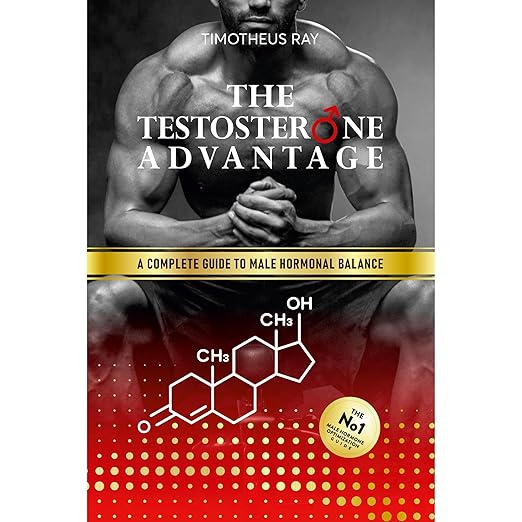
I want to address the narration question directly and early, because it shapes everything about this listening experience. The Testosterone Advantage is narrated by Virtual Voice, Amazon’s AI text-to-speech technology. I have noted in previous reviews that Virtual Voice performs tolerably on straightforward narrative prose and poorly on content that requires tonal emphasis, explanatory pacing, or the kind of warmth that makes dense scientific information feel accessible rather than overwhelming. This book is firmly the latter type: a comprehensive, evidence-based guide to male hormone optimization that covers everything from endocrinology to supplementation protocols to lifestyle modification. It deserved a human narrator, and the absence of one is a genuine limitation.
That said, the content itself is substantive. Timotheus Ray has clearly done thorough research, and the 552 Audible ratings, overwhelmingly positive, suggest the book is connecting with its intended audience despite the format limitation. One reviewer describes the experience of discovering they had been throwing the word testosterone around in conversations without real understanding of what the hormone actually does in the body, which is a genuinely useful outcome for any nonfiction audiobook. Another, identified as Dr. Dom, provides a specific, technically informed assessment describing the examination of testosterone’s effects as compelling. That kind of precise reader response is not deterred by AI narration.
The Scope of What Is Covered
At ten hours and thirty-seven minutes, this is an extensive treatment of the subject. Ray covers testosterone’s role in muscle mass, bone density, sperm production, libido, metabolic health, body composition, mood, cognitive function, cardiovascular health, red blood cell production, and immune function. That list is not padding. The book apparently addresses each of these systems with real depth, organized as a reference guide as much as a linear narrative. Identification of low testosterone signs, root causes of hormone imbalance, scientific developments in endocrinology and anti-aging medicine, risks associated with testosterone replacement therapy, and natural alternative approaches all receive dedicated coverage across the runtime.
For someone dealing with fatigue, low energy, or gym performance concerns, conditions described by multiple reviewers who found the book genuinely helpful, having this information organized systematically is valuable even when the narration does not maximize the material. The reviewer who discovered they had been entirely wrong about what testosterone actually does in the body is a strong signal that the content is substantive at a foundational level and does not assume prior knowledge. Building from first principles is a good strategy for a subject this frequently misunderstood.
Natural Optimization vs. the TRT Question
The positioning on testosterone replacement therapy is one of the more useful aspects of the book’s framework. Rather than advocating reflexively for or against TRT, Ray covers the risks in detail and then presents natural alternatives: dietary changes, exercise protocols, sleep optimization, supplementation, and nutraceuticals. This is the right approach for a general audience book. Synthetic hormone therapy should not be positioned as a first resort, and evidently it is not in this guide. The extensive coverage of natural optimization strategies is where most readers will find practical application for their specific situations, whether they are athletes seeking performance improvements or individuals dealing with age-related hormonal changes.
The reviewer who noted that the book is not only for men but for women too is worth taking seriously. Testosterone is a relevant hormone for women’s health as well, and a comprehensive treatment of its functions necessarily touches on that dimension, even when male optimization is the primary frame. Women dealing with fatigue, low libido, or body composition changes may find the foundational physiology sections more applicable to their situations than the title alone suggests.
The Virtual Voice Problem at Scale
Ten and a half hours of AI narration reading technical content is a significant ask of the listener. The issue is not that Virtual Voice is incomprehensible, it processes text accurately enough. The issue is that complex scientific content benefits from emphasis, from the natural pauses a human narrator places before a crucial caveat, from the difference in pace between a definitional passage and a practical recommendation. Virtual Voice flattens these distinctions uniformly across the runtime. For a brief explainer or a simple narrative, this is manageable. For a book this dense and this long, the accumulated flatness becomes genuine fatigue that compounds with each additional hour.
Who Should Listen / Who Should Skip
Men dealing with symptoms of low testosterone who want a comprehensive, science-oriented reference will find the content substantive and well-organized. Listeners who can tolerate Virtual Voice for extended reference material, or who plan to revisit sections rather than listen straight through, will get more from it than those seeking a fluid listening experience. Anyone using this as a starting point for medical conversations should treat it as background education rather than clinical guidance. The high review count suggests the content is genuinely useful despite the format constraint.
Frequently Asked Questions
Does this book recommend testosterone replacement therapy, or focus on natural approaches?
Ray covers TRT comprehensively, including its potential risks, but the book’s emphasis is on natural optimization through diet, exercise, sleep, supplements, and lifestyle changes. The framing positions TRT as a last resort with significant caveats, not a default recommendation.
Is the content evidence-based, and are the claims supported by research?
Multiple reviewers including a medical professional describe the content as thoroughly researched and evidence-based. The book references endocrinology and anti-aging research, though listeners should be aware it is a general audience guide, not a peer-reviewed medical resource.
Is the Virtual Voice narration tolerable for a 10-hour technical listen?
This depends significantly on the listener’s tolerance for AI narration. Virtual Voice is competent at basic text rendering but lacks the emphasis and pacing that complex physiological content benefits from. Some listeners adapt to it; others find it fatiguing over an extended runtime.
Is this book relevant for women as well as men?
One reviewer specifically noted the book’s usefulness extends to women, as testosterone plays roles in women’s health including energy, libido, and body composition. The primary frame is male hormone optimization, but the physiology sections cover testosterone’s functions more broadly.