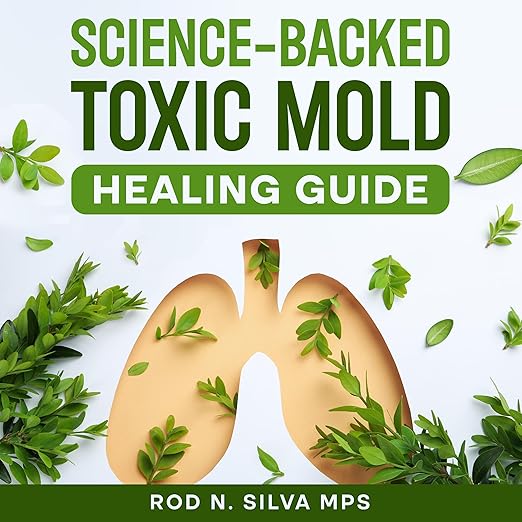
Quick Take
- Narration: Josh Frantz delivers a measured, instructional register that matches the book’s deliberate calm-over-alarm approach, never clinical to the point of coldness, never alarmist.
- Themes: Environmental illness investigation, body-environment interaction, step-by-step remediation decision-making
- Mood: Grounded and methodical, with genuine empathy for how frightening mold illness can be
- Verdict: A well-structured audiobook for people navigating an active mold situation who need a clear decision framework rather than another list of symptoms to worry about.
A friend of mine spent eight months convinced she had chronic fatigue syndrome before a home inspector found black mold behind the drywall in her bedroom. The timeline of her symptoms, in retrospect, mapped almost exactly onto when she had moved into that apartment. I thought about her throughout my time with The Science-Backed Toxic Mold Healing Guide, because this is precisely the book she would have needed, and because the absence of a resource like this, when she was at her most confused and frightened, cost her months of suffering and several rounds of appointments with specialists who were not asking the right questions.
Rod N. Silva, who holds a Master of Professional Studies, has written a book that knows its audience intimately. The subtitle signals everything: this is not a book for people idly curious about mold biology. It is a book for people who are sick, who suspect their environment is responsible, and who need to know what to do next without being overwhelmed by technical language or paralyzed by fear. Narrated by Josh Frantz with a PDF companion available in your Audible library, the audiobook runs just over five hours and covers a remarkably complete arc from symptom pattern recognition through home testing, remediation or relocation decision-making, belonging decontamination, and internal detoxification.
The Problem With How Mold Illness Gets Discussed
Silva identifies early what distinguishes this guide from the scattered information most sufferers find online: most mold content either catastrophizes or minimizes. The catastrophizing end includes forums where every symptom is attributed to mold and every landlord is a criminal. The minimizing end includes doctors who haven’t been trained to recognize mold-related illness and dismiss patients with phrases that, as one reviewer notes, leave people feeling like they are making things up. The book’s deliberate tone sits precisely between these failure modes. Silva’s framing throughout is: this is real, it is treatable, here is the specific order of operations.
The symptom recognition section, what the book calls decoding hidden patterns across body systems, is where many listeners will have their most significant recognition moment. Mold illness presents across multiple systems simultaneously, and the pattern of gut distress plus mood swings plus cognitive fog plus respiratory issues plus unusual fatigue is distinctive in aggregate even when each individual symptom seems explainable otherwise. Silva explains why standard medical workups miss this: physicians assess individual symptoms rather than the cross-system constellation. This systemic view is the audiobook’s most practically valuable contribution.
The Stay-or-Go Framework
The section that multiple reviewers call out as particularly strong is the Stay-or-Go decision framework. Mold remediation is expensive. Relocation is disruptive and not always possible. The decision involves a combination of health severity, landlord or homeowner legal standing, timeline, available budget, and the specific mold species involved. Silva structures this as a decision flow rather than a simple recommendation, which is the right call, the book acknowledges that two people with identical mold exposure and identical symptoms might make legitimately different choices based on their circumstances.
Josh Frantz’s narration serves this section particularly well. His delivery is clear and unhurried, with enough warmth to communicate that these are not merely logistical questions but difficult decisions that carry real emotional weight. He distinguishes between the instructional sections, step-by-step cleaning protocols, testing guidance, liver support recommendations, and the more narrative portions without losing consistency of tone. One reviewer notes the book’s clear order of operations as a key strength, and Frantz’s narration reinforces that structure rather than flattening it.
The PDF Companion and Internal Healing Content
The downloadable PDF, available with Audible purchase, includes home inspection logs, symptom trackers, and cleanup matrices. This is not a decorative supplement, for a book built around systematic protocols, the tracking tools are integral to the program’s effectiveness. Audio listeners who skip the PDF will get the conceptual framework and the scientific grounding, but will lose the practical infrastructure that makes the protocols actionable. The full value of the book is audio-plus-document, not audio alone.
The internal healing section, sleep rebuilding, liver support, nervous system calming to reduce total toxic load, is appropriately modest in its claims. Silva does not promise miraculous recovery timelines or advocate for any specific supplement protocol beyond what peer-reviewed research supports. The mycotoxin biology is explained accessibly but accurately, including the mechanisms by which certain molds produce compounds that directly disrupt neurological function. One reviewer, a healthcare provider, notes that the book took her inside the day-to-day life of mold illness in a way that standard medical education does not, which is both a compliment to the writing and a damning observation about how poorly this area is covered in clinical training.
Who Should Listen, Who Should Skip
Listen if you are currently living in or have recently left a potentially mold-affected environment and need a structured decision framework. Also valuable for healthcare providers who want an accessible overview of mold illness presentation that they can recommend to patients. The book works best as a companion to professional remediation and medical care rather than a replacement for either. Skip if you are looking for a comprehensive academic treatment of mold microbiology, this is explicitly a practical guide, not a scientific text, and Silva is clear about that scope.
Frequently Asked Questions
Is the PDF companion essential or optional for the audiobook?
For the conceptual and scientific content, the audio alone is sufficient. But the PDF includes symptom trackers, home inspection logs, and cleanup matrices that the book’s protocols are designed around. If you are actively managing a mold situation rather than just learning about the topic, the PDF is effectively required to get full value. It is available at no extra cost in your Audible library.
Does this book distinguish between different types of mold, or does it treat all mold the same?
Silva distinguishes between mold species and their relative toxicity throughout. The book is not a mycology course, but it explains the particular concern with mycotoxin-producing molds like Stachybotrys, how different molds affect the body through different mechanisms, and how testing should reflect the specific species present rather than simply detecting mold presence.
Is this appropriate for tenants dealing with landlord disputes, or is it primarily for homeowners?
The synopsis explicitly addresses this: Silva designed the book to serve tenants, homeowners, and parents concerned about their children’s health. The stay-or-go decision framework accounts for the different legal and practical positions of renters versus owners, including guidance on documentation and communicating with landlords about remediation obligations.
Should this guide replace seeing a doctor for suspected mold illness?
Silva is explicit that this guide is meant to work alongside medical care, not replace it. The book’s practical value is that it helps you arrive at a medical appointment with better questions and a clearer symptom picture, and helps you assess whether the environmental source has been adequately addressed. It does not diagnose or prescribe.