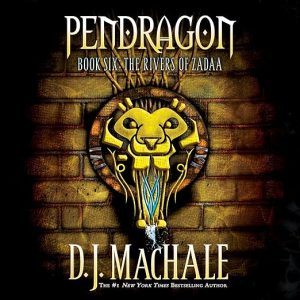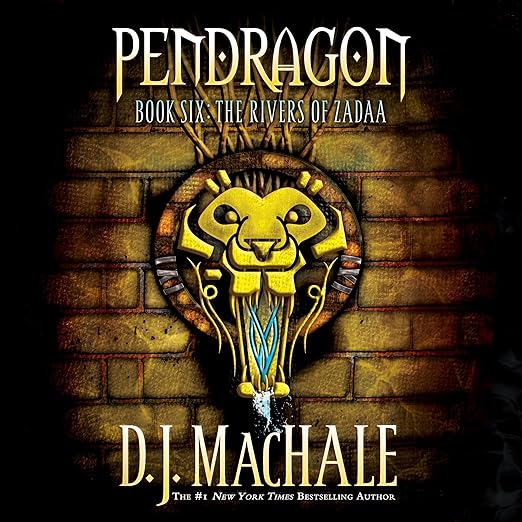
My introduction to the Pendragon series came through a parent's review I read years ago, the kind of comment where someone says they read a children's series because their kid loved it, expected to tolerate it, and ended up genuinely invested. I filed that away and eventually came to the series myself, and I understand now what that reviewer meant. D.J. MacHale is doing something in these books that the middle-grade label undersells: he is writing a multiverse adventure that takes its own internal logic seriously, and by book six, The Rivers of Zadaa, that seriousness starts to pay dividends in ways the earlier books could only promise.
I listened to this one on the kind of rainy afternoon that is made for exactly this kind of audiobook: nowhere I needed to be, a cup of tea that kept getting cold because I forgot about it. Bobby Pendragon following Saint Dane to the territory of Zadaa pulls the series into territory that is genuinely more complex than its opening volumes suggested.
What We Made of It
What The Rivers of Zadaa does better than any of the preceding books is articulate why Bobby's journey matters beyond the mechanics of stopping Saint Dane. MacHale describes it plainly in the synopsis: Bobby is no longer a flip kid looking for excitement; he is a young man beginning to understand his quest as something weightier than a series of adventures. That internal shift is rendered with enough specificity in this volume that it feels earned rather than announced. Bobby's growing awareness of his own powers, abilities no normal human should have, is handled with appropriate unease rather than triumphant discovery.
The territory of Zadaa itself is one of MacHale's stronger worldbuilding achievements in the series. The conflict between the Rokador and the Batu has political and ecological dimensions that give the story a texture beyond simple good-versus-evil framing. Loor's centrality to this volume adds something the series has needed: a Traveler whose perspective genuinely complicates Bobby's outsider point of view.
What Makes The Rivers of Zadaa Worth Hearing
William Dufris has been with this series since the beginning, and that consistency matters in a long-running audiobook franchise in ways that are easy to underestimate. By book six, his Bobby Pendragon is not the same voice as book one, there is a gravity and weariness that has accumulated through the narration that mirrors the character's arc. The emotional moments in this installment, which one reviewer described as running the full gamut from sad to triumphant to romantic, land harder because Dufris has built up the credit over five previous volumes.
The thirteen-plus hour runtime is appropriate for a book that is doing serious narrative work. Unlike some mid-series installments that feel like connective tissue between more important entries, The Rivers of Zadaa advances the central mythology substantially while also working as a satisfying story in its own right.
What Might Not Land
Series readers have noted a tonal shift starting around book four, and The Rivers of Zadaa continues that trajectory. The whimsical adventure quality of the early Pendragon books gives way here to something more emotionally complex and occasionally darker. A reviewer who read the series as a teen and is now revisiting it with their own teenager flags this shift explicitly, noting that some of the descriptions and action become more graphic after book four. That is worth knowing for parents who are deciding how much oversight to bring to their kid's reading.
First-time arrivals to this book, those who have not read or listened to the previous five, will find themselves thoroughly lost. The Zadaa arc assumes complete familiarity with the series mythology, the history between Bobby and Loor, and the nature of Saint Dane's campaign across territories. This is emphatically not a standalone entry point.
Who Should Listen to The Rivers of Zadaa
The obvious audience is readers who have already committed to the Pendragon series and want to continue. If you have made it to book six, you do not need a review to tell you whether to keep going. For those who are weighing the series fresh, the better entry point for that decision is the first book, The Merchant of Death.
Parents reading alongside their children will likely find this installment genuinely engaging rather than merely tolerable, multiple reviewers note the series rewards adult readers who bring more narrative experience to it, noticing patterns and themes that younger readers process differently. The Rivers of Zadaa, in particular, has something to say about identity and responsibility that reads differently when you are no longer the same age as Bobby Pendragon.
The Short Version
- Narrator: William Dufris is a Pendragon series constant, his Bobby Pendragon has grown along with the character across six books, and the emotional register he brings to this installment matches the story's maturing tone.
- Subjects: Coming-of-age and moral responsibility, cross-cultural conflict and tribalism, the weight of a chosen destiny
- Tone: Adventurous and emotionally earnest, with a darker undertow than earlier volumes
- Bottom line: A strong installment for committed series readers, the series mythology deepens and Bobby finally starts becoming someone worth following for reasons beyond plot necessity.
Good to Know
Is The Rivers of Zadaa appropriate for younger middle-grade listeners, or has the series become more mature by this point?
The series does become darker and occasionally more graphic after book four. Reviewers flag that the earliest Pendragon books have a whimsical adventure quality that gradually gives way to more complex and intense content. Parents of younger readers may want to preview this installment before listening together.
How does William Dufris handle the emotional complexity of this volume compared to earlier books in the series?
Dufris's performance has matured along with the series. His Bobby Pendragon in book six carries a gravity that earlier volumes did not require, and reviewers who have listened to the full audiobook series consistently note the consistency of his characterization as one of the franchise's major assets.
Does Loor become a more central character in this volume, and how does that affect the story's dynamic?
Yes, significantly. Zadaa is Loor's home territory, which means this is the first major installment where Bobby is operating on someone else's ground rather than arriving as an outsider to a culture he is unfamiliar with. That shift gives Loor genuine authority in the narrative and complicates the partnership dynamic in ways that earlier books, set in Bobby's primary frame of reference, could not explore.