Key Details
- Read by: Stormie Omartian narrates herself, and decades of women's ministry speaking give the delivery a genuine, lived-in authenticity.
- At its heart: prayer as practice, tween spiritual identity, evangelical Protestant faith formation
- Vibe: Warm, gentle, and sincerely devotional
- Short version: A sincere, age-appropriate devotional audiobook best experienced as a co-listen between mothers and tween daughters within a Christian household.
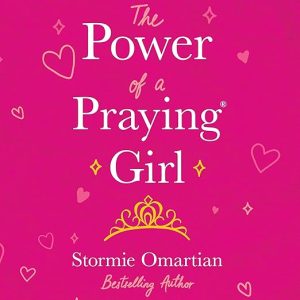
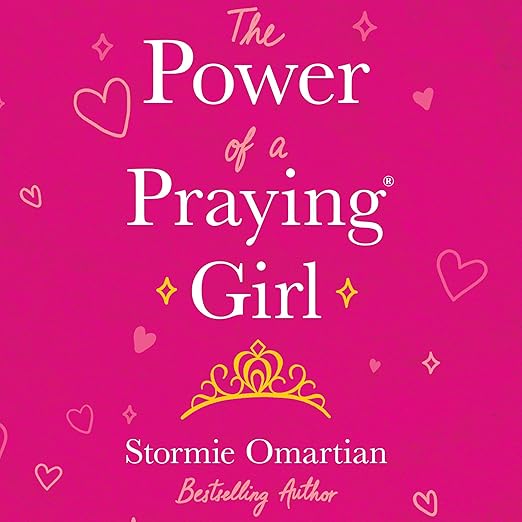
'Next generation of prayer warriors' is how Stormie Omartian describes the tween girls she is training up in this audiobook, and the phrase says a lot about how seriously she takes an audience plenty of devotionals still talk down to. Omartian has spent an entire career, across a writing life that includes The Power of a Praying Wife and its many companion volumes, teaching adults how prayer can reshape a marriage or a family, and here she turns that same voice directly toward girls roughly nine to thirteen. The Power of a Praying Girl runs three hours and twenty-six minutes, moving chapter by chapter through what it means to actually talk to God, not recite at him, and covering a tween girl's spiritual identity, who Jesus is, and how to invite him into an ordinary, everyday life.
Stormie Omartian Narrates Her Own Devotional
Omartian narrates the book herself, and that choice carries real weight here specifically, since her decades of women's ministry speaking give the material an authenticity a hired narrator, however skilled, simply could not replicate. Reviewer Whitney Little calls it a 'good devotional for young girls,' praising how it avoids 'too many big words or confusing phrases' while staying 'straight to the point on topics that young ladies deal with on a regular.' That directness is the book's real strength: Omartian does not dress up her theology in language built for adult readers and then simplify it after the fact, she seems to be writing to tweens from the start.
Omartian's broader Power of a Praying franchise, covering wives, husbands, parents, and now specifically tween girls, has sold in the millions across its various volumes, and that scale matters for context here: this is not a new or unproven approach to devotional writing, it is a well-tested formula being extended thoughtfully to a specific, younger audience for what appears to be one of the first times. The core mechanic stays consistent across the whole franchise, teaching prayer as a specific, learnable practice rather than a vague spiritual feeling, then giving the reader or listener a structured way to actually practice it chapter by chapter rather than just reading about the idea of prayer in the abstract.
Queenn's Entire Review Is Three Words
Each chapter closes with simple reflection questions meant to help a girl 'grow deeper' in her faith, and Omartian reads those questions aloud with the same warm, unhurried directness she brings to the rest of the book, rather than treating them as a rushed afterthought tacked onto the end of a chapter. Reviewer Queenn's entire review is three words, 'Kids love it,' which is about as blunt a piece of evidence as a parent could ask for, and reviewer Marketia Wesley describes choosing the book specifically because it felt 'helpful' to her own life, a reaction that suggests the material resonates even with listeners past the tween age range it was written for.
This is explicitly and unapologetically evangelical Protestant material, teaching girls how to invite Jesus into their hearts in fairly traditional theological language, and Omartian never pretends otherwise or softens that framing for a broader interfaith audience. That specificity is exactly what gives the book its emotional force for the audience it is actually built for; a vaguer, more universalist spirituality book would lose the directness reviewers keep praising. Families already inside that evangelical tradition, or specifically looking for material that teaches within it rather than around it, will find Omartian's voice consistent and sincere throughout.
This Audio Can't Provide Space for Answers
Each chapter is built around reflection questions with room for a girl to write down her own answers, a structure clearly designed for a print copy with blank space on the page rather than an audio-only listen. The audiobook can read those questions aloud just fine, prompting real pause-and-reflect moments, but it cannot provide anywhere for a girl to actually record her answers the way the print edition intends. Pairing this audiobook with a simple paper journal, rather than expecting the audio alone to deliver the full intended experience, closes that gap easily enough, but it is worth knowing going in rather than discovering partway through the first chapter.
This is squarely evangelical Protestant in its theology, discussing sin, salvation, and inviting Jesus into one's heart in traditional terms, so families from other Christian traditions or other faiths entirely should know the framing going in rather than assuming a more general spirituality title. The tag on this listing, Religions, is accurate but broad; this is not a comparative or interfaith resource in any sense, it is a specifically Christian devotional written for a Christian household. None of the three attached reviews raise any concern about age-appropriateness or content, which tracks with how gentle and encouraging Omartian's actual tone stays throughout.
The book leans into fairly heavy theological territory for its intended nine-to-thirteen audience, and Omartian does not shy away from presenting these ideas directly rather than diluting them for a younger crowd. That directness is a real strength for families already comfortable with that content, but it does mean the book assumes a household already oriented toward Christian faith rather than gently introducing the concepts from a neutral starting point. Parents wanting to preview specific chapters before sharing them with a daughter may want to sample those sections directly first, rather than assuming the whole book stays at the same gentle register throughout.
Filling the Gap Before Denser Adult Devotionals
The market for tween-specific devotional content sits in a real gap between picture-book-style children's Bible stories and denser adult devotionals, and Omartian stepping into that gap for girls specifically, after decades writing for adult women, reflects a considered choice rather than a simple age-down rebrand of existing material. The book's chapter length and pacing, short enough for a single bedtime or car-ride session, reflects that same tween-specific calibration throughout, rather than assuming the longer attention span an adult devotional could count on.
Christian families raising tween daughters roughly nine to thirteen, especially mothers looking for a shared listen that opens conversations about faith rather than lecturing at a daughter from the front seat of a car, are the clear audience. Omartian's own decades of speaking to women's ministry audiences give the material a lived-in warmth that suits exactly this kind of co-listening use case, parent and daughter working through a chapter together and then talking about the reflection questions afterward rather than a girl listening entirely alone. Churches and youth groups building a girls' devotional program around a single accessible text will also find this a reliable, uncomplicated choice.
Non-Christian families, or Christian families hoping for a more interfaith or universalist spiritual framing, should look elsewhere, since Omartian's theology here is specific and traditional throughout, not a broad spirituality primer. Girls who respond better to independent journaling than to spoken reflection prompts may also get more out of the print edition, which provides the actual blank space this audio version can only gesture toward. And families wanting devotional material for boys, or gender-neutral framing generally, should know this is written specifically and consistently to and for girls, down to its title and its examples.
Before You Listen
Is the Power of a Praying Girl audiobook appropriate for younger children?
It's written specifically for tween girls roughly nine to thirteen; younger children may not yet relate to the specific concerns the reflection questions address.
Can I complete the written reflection questions using just the audiobook?
The audio can read the questions aloud, but you'll want a separate journal to actually write answers, since only the print edition provides blank space on the page.
Does Stormie Omartian narrate this audiobook herself?
Yes, and her own decades of women's ministry speaking give the devotional content an authenticity a hired narrator would struggle to match.
Is this audiobook written from a specific religious perspective?
Yes, it's explicitly evangelical Protestant, teaching girls to invite Jesus into their hearts in traditional theological language, so families from other traditions should know that framing going in.