Quick Take
- Narration: Dr. Kelly Casperson’s self-narration is the book’s greatest asset, she brings the conversational directness of a physician who has had this exact conversation with hundreds of patients and is no longer willing to soften the edges.
- Themes: Menopause and perimenopause, hormone therapy evidence, women’s health advocacy
- Mood: Clear-eyed and empowering, with the energy of someone correcting a long injustice
- Verdict: An exceptionally well-narrated medical education that gives women the specific knowledge they need to advocate for their own care at midlife.
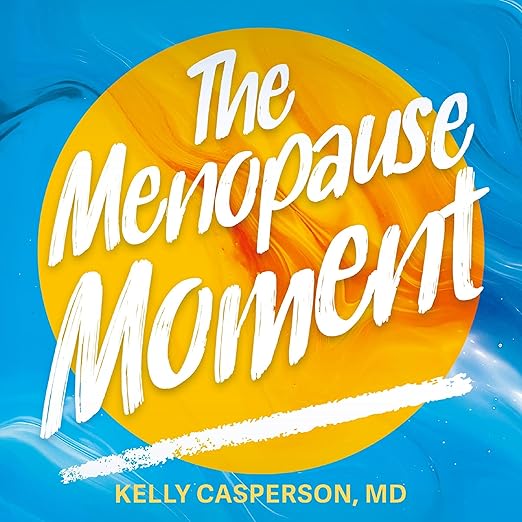
I was on a long walk last autumn when I first put on The Menopause Moment, and I ended up circling the neighborhood an extra forty-five minutes because I didn’t want to stop listening. At 207 ratings with a 4.8 average, this was already on my radar as something that had resonated unusually strongly with its audience. What I didn’t expect was how much of the eleven hours would feel less like a health book and more like a long-overdue correction.
Dr. Kelly Casperson is a urologist and women’s health advocate whose podcast, “You Are Not Broken,” has built a substantial following around the same mission this book embodies: giving women the information about their own bodies that the medical system has consistently failed to provide. She narrates the audiobook herself, and within the first chapter it’s clear this was the only sensible choice.
The Information Gap This Book Fills
The central argument of The Menopause Moment is that women in midlife have been systematically misinformed, not through malice, but through a combination of outdated research, medical conservatism, and a cultural tendency to treat women’s suffering at menopause as inevitable and therefore not worth addressing aggressively. The 2002 Women’s Health Initiative study, which dramatically shaped medical attitudes toward hormone replacement therapy for over two decades, is addressed directly. Casperson walks through what the study actually found, what it was widely misrepresented as finding, and how the resulting medical culture left a generation of women undertreated for a condition with evidence-based interventions.
This isn’t presented as polemic. It’s presented as information. The distinction matters. Casperson isn’t recruiting women to a movement; she’s explaining the science so they can make informed decisions with their doctors. The repeated theme across listener reviews, that the book gave them the tools to advocate for their own healthcare, is exactly what she’s aiming for.
What the 11 Hours Actually Cover
The runtime is put to good use. Casperson covers perimenopause symptoms and why they’re often missed or misattributed, the actual evidence base for hormone therapy (including the difference between bioidentical and synthetic hormones, and why that distinction matters less than it’s often presented as mattering), cardiovascular and cognitive health considerations, genitourinary syndrome of menopause, and the relationship between sleep, mood, and hormonal shifts. Each section is clinically precise without becoming inaccessible, the book is written for patients, not for colleagues.
The reviewer who quoted the passage about glasses for failing eyesight and implants for failing teeth is touching on one of the book’s most effective rhetorical moves. Casperson repeatedly asks why we accept medical interventions for virtually every other form of age-related change except hormonal decline in women. The question is rhetorical in structure but clinical in intent.
The Voice Behind the Information
Casperson’s narration is what I’ll remember longest from this listen. She has the quality that the best medical communicators share: she sounds like she’s talking to you specifically, not to an imagined average patient. When she describes the frustration of women who have spent years being dismissed, she doesn’t perform sympathy, she conveys a physician’s genuine professional frustration with a system that isn’t serving her patients. That register is harder to achieve than it sounds, and it’s what elevates this from a good health book to an excellent audiobook.
At eleven hours and fifteen minutes, there are sections that some listeners will find slower than others, the more technical metabolic discussions in the middle third, but Casperson’s voice carries the narrative momentum through them.
Who Should Listen
Any woman in her late thirties, forties, or fifties who has been experiencing symptoms and not getting satisfactory answers from her medical providers should listen to this. Any woman who wants to understand what the evidence actually shows about hormone therapy, independent of the fear-based framing that has dominated the conversation for twenty years, should listen to this. Any healthcare provider who treats women in midlife would benefit from hearing how a clinician who specializes in this space communicates about it. Those who want a gentler, more holistic approach to menopause wellness will find this somewhat brisk and science-forward. It is not a book about acceptance; it is a book about information and action.
Frequently Asked Questions
Does Dr. Casperson advocate for hormone replacement therapy for all women, or does she present it as one option among several?
She presents it as one evidence-based option and explains both the evidence in its favor and the contraindications. Her argument is that women deserve accurate information to make their own decisions, not that HRT is universally appropriate. She addresses the specific populations for whom it may not be recommended.
Is this book useful for women who are in early perimenopause rather than full menopause, or is it primarily for those in or past menopause?
It’s highly relevant for perimenopause, which Casperson argues is significantly undertreated and underdiagnosed. Several sections specifically address how perimenopause symptoms are often missed or attributed to anxiety, depression, or other causes, and why that matters for treatment timing.
How does the book handle the relationship between menopause and mental health, specifically anxiety and depression?
This is one of the more substantial sections of the book. Casperson discusses how hormonal shifts affect neurotransmitter function and mood regulation, and why some cases of midlife anxiety and depression are more accurately understood as hormonal rather than purely psychiatric. She addresses both the overlapping presentations and the implications for treatment.
Is the self-narration appropriate for a medical subject this dense, or does the conversational style sacrifice precision?
The self-narration enhances the precision rather than sacrificing it. Casperson’s clinical background means she can deliver technical content with appropriate emphasis and pacing. The conversational register is a deliberate choice to make the information accessible, not a sign of looseness with the science.