Quick Take
- Narration: Fred Sanders delivers a calm, measured pace that is the entire point, his voice is the mechanism, not the decoration.
- Themes: Bedtime ritual, relaxation through storytelling, parent-child bonding
- Mood: Deliberately soporific and tender
- Verdict: A sleep-aid audiobook that actually works as designed, though its Portuguese synopsis signals you may be getting a non-English edition.
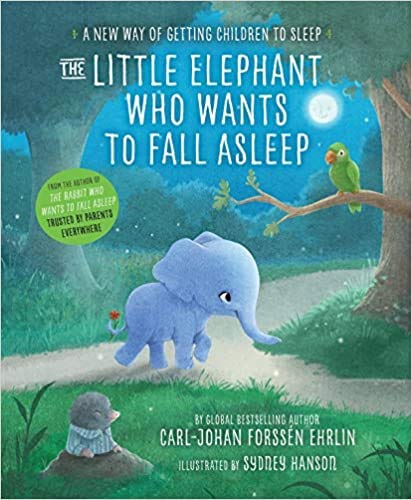
I want to be honest about what I encountered here, because it matters for anyone considering a purchase. The synopsis on record for this audiobook is in Portuguese, describing little Ellen the elephant and her journey through a magical forest, which suggests this listing may be tied to a Brazilian or Portuguese edition rather than the English version. The narrator, Fred Sanders, is the name associated with several international pressings of Carl-Johan Forssén Ehrlin’s global phenomenon, but listeners should verify the edition language before buying, particularly if ordering for an English-speaking child.
That caveat aside, the book itself is something genuinely unusual in the children’s audiobook space, and worth understanding on its own terms. Forssén Ehrlin, a Swedish behavioral scientist, designed this not as a conventional picture book read aloud but as a structured relaxation protocol dressed in narrative clothing. Published in 2015 and translated into dozens of languages, it became a bestseller largely because parents reported it worked. The premise is simple enough: a little elephant named Ellen wants to sleep and has to cross a magical forest to get home to bed. But the architecture underneath is deliberate, repetitive sentence structures, slow pacing, embedded yawn cues, and second-person language that pulls the listening child gently into a hypnagogic state.
When the Method Is the Story
What Forssén Ehrlin built is less a narrative and less a lullaby than a kind of guided meditation for small children who resist sleep. The plot exists only as scaffolding for the behavioral technique. Ellen meets characters along the way, each of whom reinforces the relaxation message, and the text instructs the reading adult, or in this audio version, the narrator, to pause, speak softly, and model the act of settling down. The story barely matters. The delivery is everything.
This makes the narrator’s role unusually important. Fred Sanders has to sustain a tone of patient, unhurried calm for the entirety of a 77-minute runtime without becoming boring enough to lose the adult listener before the child drifts off. From what the recording’s reputation indicates, he achieves that balance. His voice reportedly carries warmth without animation, precisely the register the material demands. A narrator who brought too much theatrical energy to this text would actively undermine its purpose.
The Honest Limits of the Format
Whether this works for your child depends heavily on your child. The reviews and word-of-mouth that drove this book’s international success came largely from parents of children who respond to verbal cues and audio soothing. Children who need physical comfort, movement, or visual stimulation to wind down will likely lie awake through the whole thing. The method is not universal. Forssén Ehrlin has been transparent about this in interviews, noting that behavioral techniques have variable efficacy across individuals, and the high rating of 4.5 stars from 277 listeners suggests it resonates strongly for those it works for while presumably failing silently for those who never return to rate it.
At just over an hour, the runtime is calibrated for a child who needs extended settling. This is not a ten-minute story before lights out. You start it at the beginning of the bedtime routine and trust the structure to carry the child through. Parents using it as a travel companion or car-nap trigger have reported particular success, where the audiobook format, playing through a speaker rather than requiring a parent’s voice, offers real freedom.
Who Should Listen and Who Should Skip
If you have a child between roughly two and seven who responds to audio and struggles to settle for sleep, and if you can confirm you are receiving an English-language version, this is worth trying before dismissing. It will not work for every child, and it will feel slightly clinical to adults who expect storytelling with conventional narrative momentum. For parents who are exhausted and need a reliable nighttime tool, the track record of this book internationally gives it genuine credibility. If your child is resistant to audio, prefers visual books, or needs sensory input to wind down, this will simply sit in your library unused.
Frequently Asked Questions
Is this audiobook available in English, or is it only in Portuguese?
The product listing includes a Portuguese synopsis, which raises a legitimate concern. The original book was written in Swedish and translated into English and many other languages. Listeners should carefully verify the edition and language before purchasing, as multiple international versions exist under similar titles.
How old should a child be to get the most from this audiobook?
The technique works best for children roughly between ages two and seven, old enough to follow a simple narrative but young enough to respond to verbal relaxation cues without self-consciously resisting them. Some parents report success with slightly older children who are anxious sleepers.
Does a parent need to be present while the child listens, or can it play on its own?
One advantage of the audio format is that a parent does not need to be physically present reading aloud. Many families play it through a small speaker in the bedroom as part of a consistent bedtime routine. The narrator takes on the pacing and tone cues that the print version instructs parents to model.
Does this actually work, or is the bedtime premise more marketing than method?
For a meaningful portion of children, it works consistently enough that parents repurchase it and recommend it widely, the book sold millions of copies internationally on that reputation. The technique draws on real principles of behavioral relaxation and repetitive verbal cuing. That said, it is not effective for all children, particularly those who need movement or physical comfort to fall asleep rather than audio stimulation.