Before You Press Play
- Narrator: Esther Hicks narrates her own material, and the effect is inseparable from the content; her voice carries the warmth and authority of someone presenting teachings she has lived with for decades.
- Subjects: Deliberate creation, vibrational alignment, emotional guidance
- Tone: Warm, expansive, and reassuring
- Bottom line: The most comprehensive audio collection of the foundational Abraham-Hicks material available; the best single purchase for listeners serious about these teachings.
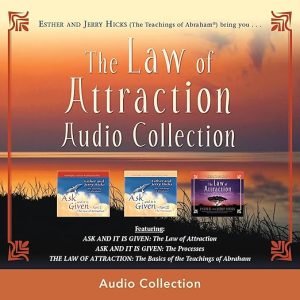
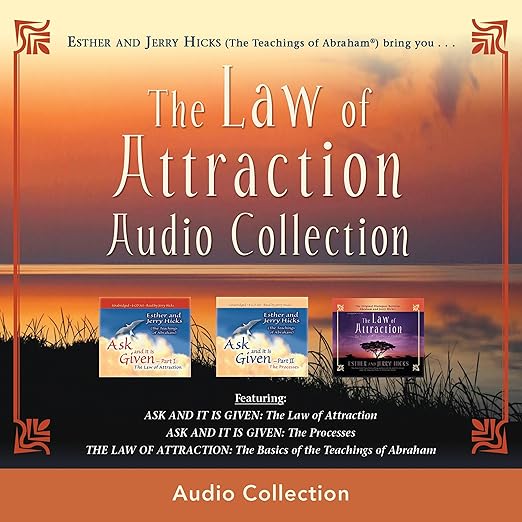
Esther Hicks narrates this comprehensive audio collection, which brings together three of the most widely circulated programs from the Abraham-Hicks catalog: "Ask and It Is Given: The Law of Attraction," "Ask and It Is Given: The Processes," and "The Law of Attraction: The Basics of the Teachings of Abraham." The audiobook runs fourteen hours and twenty-eight minutes, making it one of the longer entries in the spirituality category, and the length is deliberate. This is not a single unified argument but a collection of related programs, each approaching the core Abraham framework from a different angle. The narrator, Esther Hicks, presents herself as a channel for the non-physical consciousness called Abraham, a claim that is foundational to all of the material and that functions as the necessary condition for engaging with it. Listeners who accept that framework will find a carefully developed and internally consistent set of teachings. Those who cannot accept the premise will find the material difficult to engage with regardless of how it is delivered.
Our Take on The Law of Attraction
The Abraham-Hicks teachings have accumulated a devoted global following over several decades, and this collection represents their most distilled available form. The core argument, that thoughts, feelings, and desires operate according to a universal law of attraction that draws toward the believer what is vibrationally matched to their emotional state, is presented here with the characteristic warmth and practical specificity that distinguishes the Hicks approach from more abstract new age material. One reviewer described the teachings as having "literally transformed our lives" and the audio as "a great way to enjoy the talks while driving, sharing the info together." Another described finding more substance in this set than in other comparable law of attraction audio material they had encountered, noting the "hours of wonderful exercises, warmth and humor" and the reward of returning to the material repeatedly.
That iterative quality is real and is built into the collection's design. The 22 Processes section in the second program is the most practically oriented part, offering concrete exercises rather than pure concept, and several reviewers found this section more useful in audio form than the corresponding print versions, an interesting reversal of the usual audiobook dynamic. The exercises are designed to be practiced in motion, which makes the audio format a natural fit. Reviewers who came from a religious background that emphasized a judgmental God found the Abraham framing offered a different and more comfortable relationship to the concept of a higher power, which points to one of the collection's distinct audiences.
Why Listen to The Law of Attraction
Esther Hicks' self-narration is the primary reason to choose this format over the books. The material was originally recorded rather than written. These programs emerged from seminars and audio recordings before they became books, which means the audio format is the native habitat for this content. One reviewer described the audio as preferable to the print editions for exactly this reason, noting that the exercises "seemed more exciting" in book form for reference but the teachings themselves came through more fully in the audio. The fourteen-hour runtime, which might seem daunting for a spirituality title, is better understood as a complete course rather than a long book. The pacing is calibrated for absorption rather than rapid consumption, with the material building across the three programs in a logical sequence.
The third program, "The Basics of the Teachings of Abraham," is historically significant within the Abraham-Hicks catalog as the original recording that launched the wider teachings. Its presence here gives longtime followers a sense of the foundational material in its earliest form, and the evolution of Hicks' presentation from these recordings to the more developed later programs is audible to listeners who engage with all three. The sonic quality of the third program differs from the later two, reflecting the earlier production context, though Hicks' voice remains the consistent through-line across all fourteen hours.
What to Watch For in The Law of Attraction
The collection assumes no prior familiarity with the Abraham-Hicks framework at its entry point but builds complexity as it progresses. Listeners entirely new to this material will find the first program accessible and complete as a standalone introduction. The 22 Processes in the second program are more nuanced and benefit from having the first program's conceptual context; attempting them without that foundation risks finding them mechanical rather than transformative. The companion exercises referenced in the audio are more fully detailed in the print edition of "Ask and It Is Given," and listeners who want to work through the 22 Processes systematically may find the book a useful complement. The audio alone is self-sufficient for the conceptual and motivational purposes of the collection.
The collection also works for listeners who do not fully share the metaphysical premises. Several reviewers describe engaging with the practical dimensions, including the exercises around emotional guidance and the cultivation of deliberate positive focus, without necessarily committing to the full framework of non-physical consciousness and vibrational law. Whether that is a legitimate engagement with the material or a misreading of it is a question each listener will answer differently. The teaching style does not insist on the full premise before offering the practical tools.
Who Should Listen to The Law of Attraction
This collection is designed for listeners already oriented toward spiritual self-development frameworks and specifically curious about the law of attraction as the Abraham-Hicks teachings develop it. Newcomers to the material will find the first program an accessible entry point; longtime followers will find the complete collection the most comprehensive single audio resource available in the catalog. Skip it if you approach these claims with fundamental skepticism. The material is presented as spiritual truth rather than hypothesis, and no production quality will bridge that gap. Listeners who found other manifestation or new thought audiobooks too abstract or too prescriptive may find the Hicks approach more grounded: the 22 Processes are practical enough to apply, and Hicks' warmth as a narrator creates a more conversational than dogmatic atmosphere across all fourteen hours.
A Few Questions About The Law of Attraction
Is this audiobook suitable for someone completely new to the Abraham-Hicks teachings?
Yes, with a qualification. The first program in the collection covers the foundational framework from the beginning. The complete fourteen-hour set is most valuable for listeners committed to engaging with the material seriously. Newcomers curious but uncommitted may want to sample the first program before purchasing the full collection.
Does this audiobook include the 22 Processes in enough detail to apply them?
The processes are covered in the audio in enough detail to understand and attempt them. However, Esther Hicks references the print edition of 'Ask and It Is Given' for the fully written exercises. Listeners who want to work through the processes systematically will find the book a useful companion alongside this audiobook.
How does Esther Hicks' self-narration affect the quality of this audiobook?
Significantly and positively. The Abraham-Hicks teachings were developed in audio form first, meaning these recordings predate the books. Hicks speaks with the warmth and authority of someone in direct dialogue with the listener rather than reading a prepared text. Multiple reviewers described preferring the audio to the print versions for exactly this quality of presence.
Does the audiobook format add anything over reading the Abraham-Hicks books?
For this specific material, yes. The teachings were developed in audio form originally, and Hicks' vocal presence carries a quality of warmth and conviction that the print versions approximate but cannot fully replicate. The 22 Processes in particular benefit from being guided in audio rather than read from a page.