Quick Take
- Narration: Ruffin Prentiss is an energetic, expressive presence, he handles the Virginia setting and its cast of Logan County weirdness characters with evident enjoyment, and his pacing through the action sequences is genuinely propulsive.
- Themes: Time and its value, cousin partnership and complementary problem-solving, the bittersweet end of childhood summers
- Mood: Zany and warm, with surprising emotional depth
- Verdict: A time-freeze mystery that earns its heart, Lamar Giles writes Black middle-grade adventure with real wit and genuine stakes.
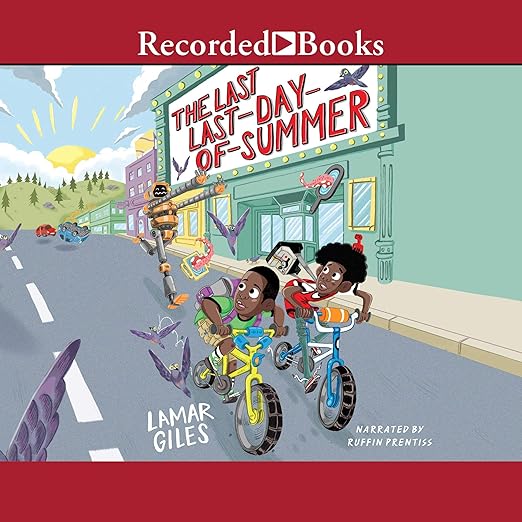
I started listening to The Last Last-Day-of-Summer on a Tuesday evening when I had no particular reason to be charmed, and within the first twenty minutes I was. Lamar Giles has a gift for premise economy: cousins Otto and Sheed are local sleuths in a town with a weirdness problem, summer is ending, and a mysterious man appears with a camera that stops time. That is a complete setup delivered in a compact package, and Ruffin Prentiss delivers it with the kind of momentum that makes the first chapter feel like an invitation you can’t refuse.
A reviewer who compared this to Phineas and Ferb is reaching for something real. There’s the same dynamic-duo energy, the same parade of escalating strangeness, the same underlying warmth between the two leads even when they’re in open disagreement about what kind of fun they want to have. The Logan County weirdness, a recurring concept in the series, functions as Giles’ license to do whatever he wants narratively, and he uses it generously. Strange people, stranger creatures, and a mystery that keeps revealing new dimensions.
Two Cousins and One Frozen Clock
Otto and Sheed are not interchangeable, and that matters enormously. Otto is the analytical one, the deducer, the cousin who wants to have a plan. Sheed is the improviser, the one who acts on instinct and figures out the logic later. Their disagreement at the start of the book, about how to spend the last day of summer, is not incidental; it is the engine of the story. When time freezes and the real crisis begins, the ways their different approaches clash and complement each other become the central dramatic interest. Giles doesn’t resolve this tension by having one cousin be right and the other wrong. Both approaches matter, and the story is honest about when each one fails.
The Legendary Alston Boys Adventures are rooted in place, the Virginia setting isn’t generic small-town America, it has texture and specific character, and in a family unit. Reviewers note that the cousins’ relationship feels genuinely warm without being sentimental. The adults in their lives are present and functional, which makes a real difference in a middle-grade novel.
What the Time-Freeze Premise Actually Delivers
The camera that stops time could easily be a gimmick. In less careful hands it would be. Giles uses it to force the boys into a situation where they must cooperate on a shared timeline, where every choice has visible consequences, and where the urgency is real. The strange creatures and clever foes that populate the frozen-time sequences are inventive without being random, and the resolution has actual logical coherence rather than magic-wand convenience.
Ruffin Prentiss brings the right register to all of this. He has the energy for the physical comedy and the weirdness, and he slows down noticeably when the emotional content arrives, there are moments in this book that are genuinely touching, and his performance earns them rather than rushing through them toward the next action beat.
Chapter Endings That Pull You Forward
One reviewer bought this for an eight-year-old and reported that the child demanded more at the end of each chapter. That is the clearest possible description of how the pacing works. Giles writes with an instinct for chapter-ending momentum that is particularly well-suited to audiobook listening, where the decision to keep going or stop is made at those exact junctures. At six hours and 47 minutes, this is a substantial middle-grade listen that doesn’t outstay its welcome.
Who Should Listen / Who Should Skip
The sweet spot is 8-to-12-year-olds who enjoy mystery, adventure, and a premise with genuine strangeness. Adult listeners who accompany younger children will find enough wit and emotional intelligence to stay engaged. The cousin dynamic will resonate strongly with children who have close cousins or best friends of different personality types. Skip if your listener needs grounded realism, this book is comfortably in the magical-quirky register and commits to it fully.
Frequently Asked Questions
Is The Last Last-Day-of-Summer the first book in the Legendary Alston Boys Adventures, and do the books need to be listened to in order?
This is the first book in the series, so there is no prerequisite. Subsequent entries expand on the Logan County world and the cousins’ partnership, but this one works fully as a standalone entry with a complete narrative arc.
How does Ruffin Prentiss handle the book’s cast of strange supporting characters without losing the thread of the main plot?
Prentiss keeps Otto and Sheed’s voices consistent and recognizable throughout, using the supporting characters’ strangeness more through tone and energy than through elaborate vocal disguise. The main narrative thread stays clear even during the book’s most chaotic sequences.
The synopsis mentions Otto and Sheed are bickering at the start, is the conflict between them handled well, or does it feel contrived?
The disagreement is organic rather than forced. They want different things from the last day of summer, a small, believable conflict, and when the real crisis arrives, that friction becomes productive rather than simply resolved. Giles uses their different problem-solving styles as a genuine plot mechanism, not just an introductory device.
Is there any content in The Last Last-Day-of-Summer that parents should know about for younger listeners?
The book is solidly within middle-grade parameters. The time-freeze threat has genuine stakes and the foes are genuinely threatening in a narrative sense, but nothing tips into horror territory. There is mild peril that might be intense for very young or sensitive listeners, but for the 8-12 target range it is appropriate.