The Short Version
- Voice: Katherine Kellgren is exceptional, her vocal range and comedic timing are perfectly matched to Maryrose Wood's Victorian satirical voice and the children's wolfish vocalizations.
- Big ideas: Nature versus nurture, governess fiction satire, the absurdity of social convention
- Atmosphere: Warmly comedic and gently mysterious, ideal for family listening
- Worth it?: Kellgren's narration alone justifies the audio format, and Wood's writing rewards both children and the adults listening alongside them.
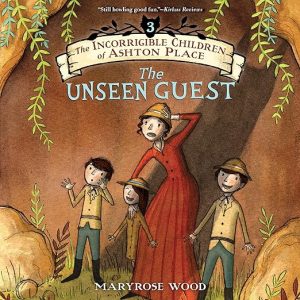
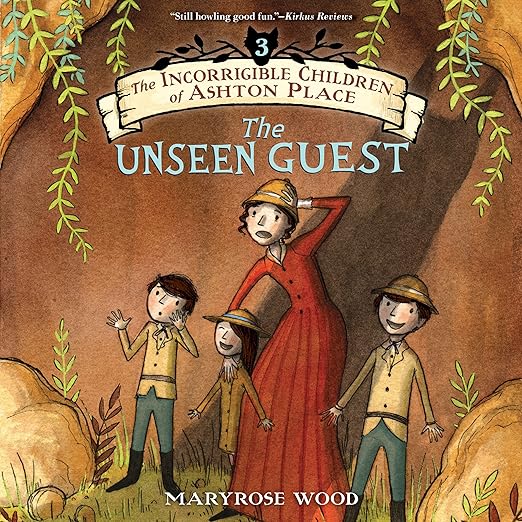
I first listened to the Incorrigible Children series with my nephew during a long road trip two summers ago, and by the time we were three hours into the second book he was begging me not to stop. The third installment arrived on our reading list this past spring and reminded me why I keep returning to series fiction that takes its young audience seriously enough to actually challenge them with language, structure, and ideas.
Maryrose Wood's series premise, a Victorian governess tasked with educating three children who were literally raised by wolves, is a premise that should not work as well as it does. The trick is that Wood uses it to lampoon the conventions of governess fiction itself while actually delivering a functional mystery. Miss Penelope Lumley is a delightful creation: earnest, resourceful, and occasionally baffled by the adults around her, whose social machinations are far more bewildering than any wolf-child behavior could be.
This third entry introduces Lord Fredrick's long-absent mother and the noted explorer Admiral Faucet, whose prized racing ostrich escapes into the forest and sets the plot in motion. What sounds like pure comedy is undercut by a genuinely unsettling development: Penelope's fear that the children, once back in wild surroundings, might revert to their wolfish ways and refuse to come back to Ashton Place at all. Wood layers the humor and the melancholy with skill. The Ashton family tree, which has been creaking with secrets since book one, produces more gruesome details here, and the accumulation of mysteries, the sandwich mystery, the tarpit mystery, Judge Quinzy, is handled with enough wit that readers who notice the novel is mostly building toward book four do not particularly mind. One reviewer described it accurately: the book runs in place compared to the second entry, which moved the central mystery forward substantially. That is fair, but it is running in place in very entertaining company, with genuinely surprising character moments and Wood's signature vocabulary instruction woven throughout.
Why The Incorrigible Children of Ashton Place: Book III Works as an Audiobook
Katherine Kellgren is simply one of the best narrators working in children's audiobooks. Her performance here is a masterclass in timing: the Incorrigibles' barks and howls land because she commits to them completely, and Penelope's internal commentary on the absurdities around her is delivered with a dry precision that adult listeners appreciate as much as children do. Multiple reviewers who read the series in print switched to audio specifically because of Kellgren, and the recommendation stands. At six hours and fifty minutes, this is a satisfying length for a middle-grade novel: long enough to feel substantial, short enough to complete over a weekend with a young listener. The vocabulary and literary references woven through the text, which Wood explains as she goes, also make this an outstanding read-aloud choice for parents who want the listening experience to do genuine educational work.
Weak Spots in The Incorrigible Children of Ashton Place: Book III
New listeners should begin with book one. This is an installment in an ongoing mystery series, and while the ostrich chase is largely self-contained, the Ashton family secrets and the children's backstory require prior context to carry their proper weight. The novel also ends with more questions than answers, which is by design but can frustrate listeners who want resolution within a single installment. Wood is building something over the long arc of the series, and book three is primarily adding layers rather than peeling them back. Patient readers will be rewarded; those who want a tidy ending within one sitting should be warned that the central mystery does not resolve here and is not intended to.
The Right Listener for The Incorrigible Children of Ashton Place: Book III
Ideal for upper elementary through middle school listeners, and genuinely entertaining for adults who appreciate Victorian fiction pastiche and literary in-jokes. This is outstanding family road-trip listening. It is also a strong choice for any listener who appreciated Lemony Snicket's Series of Unfortunate Events and wants something in a similar register with more overt literary warmth and less relentless darkness. Skip it if you have not read the first two books in the series, you need that foundation for the ongoing mysteries to resonate at all.