Before You Press Play
- Narrator: Shannon McManus, the series' consistent narrator across all sixteen books, gives Umber a quiet, self-effacing read distinct from every prior protagonist.
- Subjects: found family among outcasts, stepping into an unwanted protector role, uncovering a hidden community's past
- Tone: Adventurous with real emotional stakes, a hopeful reset after a rocky prior arc
- Bottom line: A strong arc opener for existing Wings of Fire fans, especially anyone disappointed by the previous arc, though newcomers should start from book one.
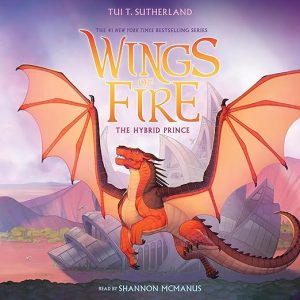
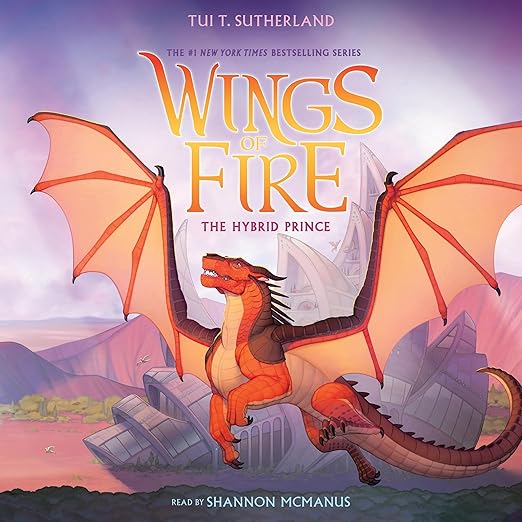
Umber spends his entire life as the goofy, overlooked younger MudWing brother, content to live in the shadow of his prophesied sibling Clay, right up until his sister Sora's mistake at Jade Mountain Academy ends that comfortable role for good. This audiobook, book sixteen in Tui T. Sutherland's Wings of Fire saga and the opening chapter of the series' fourth arc, follows Umber and Sora on the run, eventually washed up on an island community of dragons hiding from their own pasts after a hybrid dragon named Mulberry saves Umber from a kraken attack. What starts as a story about survival turns into one about unlocking a hidden island's history, and about Umber discovering that being a protector might actually suit him.
Mulberry's Name Carries the Book's Real Theme
Reviewer Shannon Kocka, a self-described lifelong Wings of Fire fan disappointed by how the previous arc closed, calls The Hybrid Prince 'a massive improvement,' rating it 4.5 out of 5 while acknowledging 'it's not fair to make that comparison since this is only the beginning of Arc 4.' That caveat matters: this book is doing the specific work of an arc opener, introducing a new setting and a new emotional register, rather than delivering a fully resolved standalone story.
The title itself rewards a second look once you've heard the full story: Mulberry, the hybrid dragon who saves Umber's life and later becomes his love interest, embodies the book's central theme of belonging somewhere between fixed categories, tribe loyalty versus found family, prophesied destiny versus chosen purpose. Naming the book after a side character's identity rather than Umber's own arc is a subtle but real signal about where Sutherland wants a reader's sympathy to land across this opening arc.
Umber's family position is worth naming precisely, since it's the engine behind his whole arc: older brother Reed carries real practical responsibilities within the MudWing hatching, while Clay carries an entire prophecy's worth of heroic destiny, leaving Umber genuinely free of expectation in a way his siblings never were. That freedom is framed as comfortable right up until it isn't, which is what makes his forced transition into a protector role land as a real character shift rather than a predictable hero's-journey beat.
McManus Has Narrated Every Wings of Fire Book
Shannon McManus has narrated every single Wings of Fire book since the series began, and that continuity shows in how she handles Umber specifically. Rather than leaning on an extreme vocal transformation, McManus differentiates each dragonet protagonist through emotional signature and pacing, and her read of Umber lands on a quiet, self-effacing kindness that is genuinely distinct from every prior protagonist in the series, a meaningful shift after fifteen books of louder, more openly heroic leads. That's a real technical achievement across sixteen books and counting: keeping an entire non-human cast vocally distinct without ever tipping into caricature.
Reviewer Brenda Baker describes her eleven-year-old grandson as 'breathless' telling her how good book sixteen is, and notes he 'likes to read it out loud in the car,' adding that Sutherland's 'language is beautiful' and that the author 'does not talk down to her audience, whatever their age.' That cross-generational appeal, a grandmother listening to her grandson's enthusiasm secondhand, says something real about how the series has aged with its earliest readers while still welcoming newcomers at each new arc's opening chapter.
Sora's role in setting the entire plot in motion deserves its own mention, since her costly misstep during their time at the Academy is what forces Umber out of his comfortable, overlooked role in the first place. The book is careful not to simply villainize her for it; the two MudWings flee together, and part of what makes the sibling dynamic compelling is watching a formerly goofy, secondary brother become the one steadying his sister through the consequences of her own error, a genuine role reversal from where the two of them started.
The Court of Refuge Runs on Shared Shame
At eight hours and thirty-two minutes, this is a substantial listen, and it explicitly assumes familiarity with the broader Wings of Fire world even as it opens a new arc; listeners with zero exposure to the earlier fifteen books will be missing context about the dragon tribes, the MudWing family dynamics, and what happened at Jade Mountain Academy that sets Umber and Sora running in the first place. Reviewer Emma calls it 'another epic book in the series' and praises the physical edition's raised-relief cover art, a reminder that this franchise has a strong print-collecting culture running alongside its audio life.
Because this is an arc opener rather than a self-contained story, listeners should expect threads that stay open by the end, new island, new characters, a mystery about the community's past, rather than a tidy resolution. Shannon Kocka's review flags this directly, noting the book earns its praise while also acknowledging the unfair pressure of comparing an opening chapter to a full arc's payoff. Anyone burned by the previous arc's ending, as several longtime fans reportedly were, should know this book is rebuilding trust rather than delivering a complete emotional arc on its own.
Sixteen books deep across four separate story arcs is a genuinely rare achievement for a still-actively-publishing children's series, and it's worth noting what that longevity signals for a new or returning listener. A franchise this large can be intimidating to approach, but it also means the world-building, dragon tribes, established rules, prior character relationships, has had over a decade to develop real depth, which is exactly why arc openers like this one lean as heavily as they do on assumed prior knowledge rather than re-explaining the basics each time.
The Court of Refuge itself, the hidden island community where Umber and Sora wash up, deserves attention as a setting choice: a community explicitly built around shared secrecy and shame gives Sutherland a natural mechanism for introducing an entire cast of new, morally complicated characters at once without needing a slow, book-by-book rollout. It also sets up the arc's central tension efficiently, since a community built on secrecy and shared shame is inherently unstable the moment someone starts asking real questions about how it actually works.
Grandparents and Grandkids Both Get the Appeal
Existing Wings of Fire listeners are the obvious core audience, especially anyone who fell off after a disappointing third arc and wants to know whether it's worth jumping back in; the consensus among these reviewers is a clear yes. Families listening together will find real value too, given how consistently reviewers mention reading or listening across generations, grandparents, parents, and kids all engaging with the same material without anyone feeling talked down to.
Complete newcomers to the series should start at book one rather than here; while a fresh story arc like this one can function as a natural re-entry point for lapsed fans who already know the world, it still assumes a working knowledge of the dragon tribes and prior character relationships that a true newcomer won't have. Anyone hoping this book alone will deliver full closure on the new island's mystery should also adjust expectations, since Arc 4 is only just getting started.
Good to Know
Is Shannon McManus's narration consistent with the earlier Wings of Fire audiobooks?
Yes. McManus has narrated the entire series since it began and brings the same character-differentiation approach here, giving Umber his own quiet, self-effacing vocal signature distinct from the louder, more overtly heroic protagonists in earlier books.
Is this audiobook appropriate for the same age range as earlier Wings of Fire entries?
Yes, it maintains the series' established middle-grade appeal, and reviewers specifically note the writing doesn't talk down to listeners regardless of age, with several describing genuinely cross-generational family listening.