Key Details
- Voice: Dave Ramos narrates the full Spanish-language edition with pacing reviewers credit for helping the book's case studies actually land and stick.
- Big ideas: Team culture as a learnable skill, psychological safety, shared purpose
- Atmosphere: Practical and case-study-driven rather than abstract or academic
- Worth it?: A genuinely strong listen for Spanish-speaking business audiences; English-only listeners need a different edition entirely.
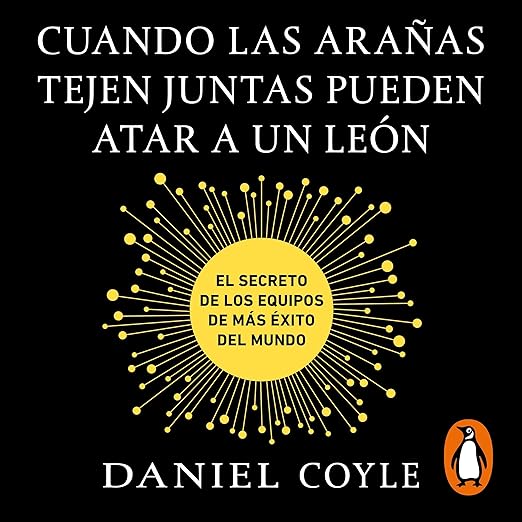
Daniel Coyle already had one influential book about how skill gets built, The Talent Code, before he turned the same reporting instinct toward a harder, squishier question: why do some teams outperform the sum of their individual talent while others, stacked with equally skilled people, fall apart? This audiobook, the full Spanish-language edition of The Culture Code, is worth flagging immediately for English-only listeners: both the source text and the narration are entirely in Spanish, so confirm that fits your listening needs before buying. For Spanish-speaking listeners and advanced Spanish-language learners, Coyle's research into Google, Disney, and the Navy SEALs makes for a genuinely substantial listen.
The Google Study Behind This Is Project Aristotle
Coyle's central move here, arguing that culture is a set of learnable skills rather than a fixed trait some groups luck into, gives the book real practical teeth that a lot of workplace-culture writing lacks. He organizes the whole argument around three skills: building safety through belonging cues, sharing vulnerability to build trust-based cooperation, and establishing purpose through shared narrative, and each one gets developed through the kind of concrete organizational case study, Google, Disney, the Navy SEALs, that turns abstract advice into something a team leader can actually apply.
Dave Ramos narrates the Spanish edition, and reviewer Tatianny's short but pointed praise, translated here as 'both reading and the audiobook are fascinating,' at least confirms the audio format holds up as a genuine alternative to the printed page rather than a lesser substitute. Dilson Vargas V's review goes further, crediting the book's woven-in stories with helping internalize the concepts and calling the result pleasant and highly beneficial, which suggests Ramos's pacing gives Coyle's case-study structure room to land rather than rushing through the research toward the takeaways.
The Google case study Coyle leans on is almost certainly built around Project Aristotle, the company's own widely reported internal research effort that set out to identify what separated its highest-performing teams from the rest and landed, somewhat to researchers' own surprise, on psychological safety as the single strongest predictor. That real, independently documented finding gives Coyle's build-safety skill an unusually solid research foundation compared to a lot of pop-business writing that leans more on anecdote than replicated study.
Coyle's own background as a contributing editor at Outside magazine explains part of what makes his case studies land: he has spent a career profiling high performers, athletes, teams, and organizations under real pressure, for a readership that expects concrete, reported detail rather than abstract theory. That reporter's instinct carries through in translation as clearly as it does in the English original, since the case-study structure itself, not just the prose style, is what makes the book's argument persuasive, and Ramos's steady narration lets that reported detail breathe rather than rushing toward the three-skill framework's tidy conclusions.
A Language Barrier Made the Spanish Version Easier
The endorsements attached to the original book are not incidental; this edition's own synopsis includes praise translated from Charles Duhigg, author of The Power of Habit, calling it essential reading for understanding how successful teams work, and from Adam Grant, who says he had been waiting years for someone to write this book. Those are two of the most respected names in accessible organizational psychology vouching for Coyle's research, which suggests the Spanish translation carries the same substantive content as the original rather than an abridged or repackaged version.
For Spanish-speaking business and leadership audiences specifically, this audiobook fills a real gap; Kayleigh Lemachko's review notes her husband found the Spanish audio easier to process than reading the English original given 'a slight language barrier,' and was able to 'finish the book' comfortably as a result, exactly the kind of accessibility win a well-produced translated audiobook is supposed to deliver. That is a genuinely different value proposition than simply offering the English text with subtitles or a machine translation.
Coyle's prose leans on casual, narrative-driven English idiom, colloquial phrasing and concrete scene-setting rather than academic register, and writing this dependent on idiom can tip toward a stiffer, more formal tone once translated. Ramos's narration seems to compensate for that risk with warmer, more conversational pacing than a strict word-for-word rendering might have allowed, consistent with how reviewers describe the listening experience as pleasant and easy to follow rather than stiff or textbook-like.
Both the Text and the Narration Are Spanish
Confirm the language before buying. This is worth repeating because it is the single most important purchase decision here: both the source material and Dave Ramos's narration are entirely in Spanish, with nothing anywhere on this specific listing indicating that an alternate English audio track has ever been produced or exists for it. English-only listeners wanting Coyle's research should look for the original English-language edition instead.
Beyond the language question, this audiobook shares a limitation with most books in the popular-business-psychology genre: the underlying research is real and well-cited, but the three-skill framework is, by design, broad enough to apply to almost any group context, from sports teams to corporate departments to families. Listeners wanting industry-specific tactical guidance rather than a generalized framework may find themselves doing real translation work, in a conceptual sense, to apply Coyle's Google and Navy SEALs case studies to their own, very different organization.
One structural note worth flagging: because Coyle's three skills are demonstrated through short, self-contained organizational stories rather than one continuous argument, listeners can reasonably skip around to the case study most relevant to their own situation, a sports team story, a corporate one, a military one, without losing the thread of the book's overall framework. That modularity is a real strength for listeners returning to specific chapters for reference rather than working through cover to cover only once.
English-Only Listeners Should Look Elsewhere Entirely
This audiobook is a strong choice for Spanish-speaking managers, team leads, and organizational-psychology readers who want Coyle's research without navigating it in a second language, and reviewer Dilson Vargas V's praise for how the case studies help internalize the concepts suggests the audio format specifically aids retention here. It is also a good pick for advanced Spanish-language learners with a genuine interest in business psychology who want immersion material that happens to double as professional development.
Skip this specific edition if you are an English-only listener; the language barrier here is total, not partial, so seek out the original English-language audiobook of The Culture Code instead of struggling through content that is available to you natively elsewhere. Listeners who have already read Coyle's The Talent Code and want an entirely different subject rather than a thematic companion should also know the two books, while both built on Coyle's reporting style, address distinct questions, individual skill development versus group culture.
Common Questions
Is this audiobook in English or Spanish?
Entirely in Spanish, both the source text and Dave Ramos's narration. English-only listeners should look for a separate English-language edition of The Culture Code instead.
Do I need to read Daniel Coyle's The Talent Code before this audiobook?
No. The two books address different questions, individual skill development in Talent Code versus group culture here, and can be listened to in either order or independently.
Does this audiobook cover real companies, or is it purely theoretical?
It's grounded in specific case studies, including Google, Disney, and the Navy SEALs, which Coyle uses to develop his three core skills for building strong group culture.