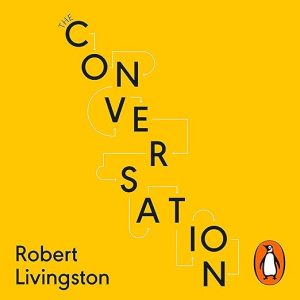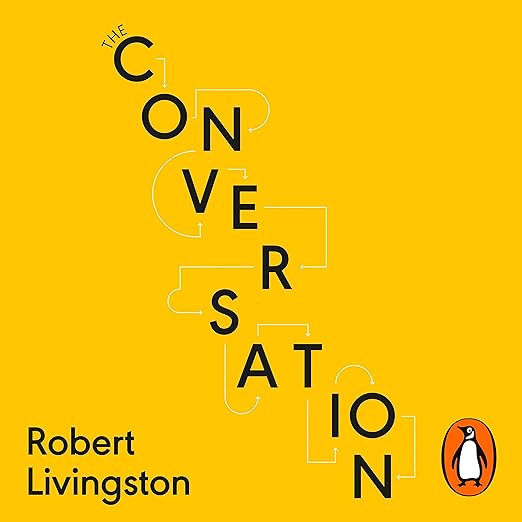
Robert Livingston's central argument in this audiobook is both simple and uncomfortable: most organizations fail at racial equity not because they lack values, but because they lack a functional strategy. The Conversation, narrated by Desmond Manny and running just over ten and a half hours, is Livingston's attempt to supply that strategy - built from decades of research as a social psychologist and filtered through enough real-world case study to give it teeth. This is not a book of cultural commentary or personal testimony. It is, at its core, a professional manual dressed in accessible language, and that distinction matters enormously for understanding what it does well and where it falls short.
A Facilitator Calls It the Most Effective Framing
Livingston's approach is grounded in what he calls the PRESS model - Problem Awareness, Root Cause Analysis, Empathy, Strategy, and Sacrifice - and the audiobook moves through each component methodically. What makes this structure work is that Livingston refuses to treat racism as a monolith. He distinguishes between different psychological mechanisms driving bias, between individual prejudice and systemic inequity, and between symbolic gestures and structural change. For an audience that has grown fatigued by workplace diversity training that never seems to move the needle, that specificity is refreshing. Reviewer Fran Sutton-Williams, a five-year anti-racism facilitator who had read extensively in the genre, called it the most effective framing she had encountered - high praise from someone with well-calibrated standards.
The book draws on behavioral economics, sociology, psychology, and management research in a way that feels synthesized rather than stitched together. Livingston blends data with narrative throughout, moving from academic findings to concrete organizational examples without letting either side overwhelm the other. There are moments of genuine wit - the kind that signals intellectual confidence rather than an attempt to lighten difficult material. The book earns its seriousness because it does not mistake seriousness for gravity.
What also distinguishes Livingston's approach is his insistence that the conversation about race in the workplace can only move forward when the people having it are operating from shared facts rather than competing assumptions. He spends considerable time in the early chapters establishing the empirical record on bias - not to shame the reader but to build a foundation from which strategy becomes possible. Reviewer Maria Mayhue, who attended a live presentation by the author, noted that the combination of scientific and philosophical framing lands even more effectively when Livingston delivers it in person, which suggests the audiobook captures much but not all of that authority. That gap is worth knowing about before you decide whether to supplement the recording with a live event.
Manny Handles the Shift From Citation to Anecdote
Manny's narration is a genuine asset here. The audiobook format suits Livingston's lecture-inflected prose better than a cold page read might, and Manny threads that needle well - present without being performative, authoritative without being stiff. He handles the shifts between research citation and personal anecdote cleanly, which is not a trivial task when the content moves between registers as often as Livingston's does. For professionals who absorb material during commutes or exercise, the listening experience is notably smooth throughout the full ten and a half hours.
The book's real value is in its second half, where Livingston moves from diagnosis into implementation. This is where most books in the diversity-equity-inclusion space tend to go vague or retreat into platitude. Livingston does not entirely avoid that trap - there are moments where the prescriptions feel more aspirational than operational - but he stays in concrete territory far longer than most. He addresses incentive structures, leadership accountability, and the political economy of organizational change in ways that will resonate with anyone who has tried to move a workplace and found themselves blocked by institutional inertia rather than bad intent. His framing of the Sacrifice element in PRESS is where the book gets genuinely uncomfortable in productive ways: change requires giving up something, and Livingston is direct about what that usually looks like in practice.
Landing Best With Readers Who Already Have Exposure
The book's primary weakness is one of audience calibration. Livingston pitches it at a wide readership - anyone seeking change in their organization - but the research foundations and the structural sophistication of the argument will land most meaningfully with people who already have some formal exposure to organizational behavior or social psychology. Readers coming to the subject cold may find the early chapters foundational and useful; readers with more background may occasionally want Livingston to push harder into the data rather than stepping back to explain terms. Neither response is wrong; they simply reflect a book trying to span a wide range of entry points.
The Penguin Audio production is clean and consistent throughout - no amateur audio artifacts, clear chapter breaks, and stable sound design across all ten and a half hours. For a book this dense in argument, not having to fight poor audio is a legitimate convenience. This matters particularly for listeners returning to specific sections, since the chapter structure is logical enough to navigate without replaying large blocks.
This Pairs With Organizational Change Literature
If you are a manager, HR professional, team leader, or executive who has found existing diversity frameworks too thin to actually implement, this audiobook offers something more durable. Livingston gives you a vocabulary and a structural approach, not just a call to do better. The listening format works particularly well for absorbing the book's cumulative argument across multiple sessions. Skip it if you are looking for memoir-style testimony or a purely emotional account of racial injustice - this book is analytical in its bones, and that is a defining characteristic rather than a flaw. It pairs naturally with organizational change literature rather than with personal narrative nonfiction.
In Brief
- Narration: Desmond Manny delivers a measured, authoritative reading that suits the book's professional register - clear diction, steady pacing, and enough warmth to carry Livingston's personal anecdotes without sounding clinical.
- Themes: Workplace racial bias, psychological roots of racism, organizational change strategy
- Mood: Serious and solution-focused, with flashes of wit that cut through the weight of the subject
- Verdict: Robert Livingston's framework is one of the few in this genre that moves from diagnosis to actionable strategy without losing rigor along the way.