The Short Version
- Performance: Tanya Eby brings a calm, unhurried presence suited to a text built for repeated family listening across many sittings.
- What it covers: Bible stories retold for children, Reformed Christian teaching, family read-aloud tradition
- Feel: Warm, reverent, and steady
- Our call: A trusted, long-running choice for Christian families wanting Bible content that respects children's intelligence rather than talking down to it.
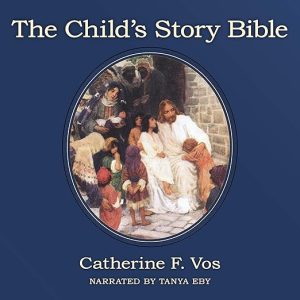
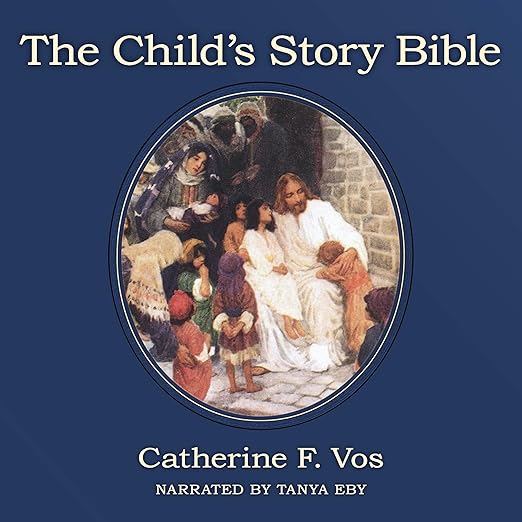
Catherine F. Vos spent twenty years paraphrasing the entire Bible into story form before The Child's Story Bible ever reached print, work she reportedly began after searching without success for a children's Bible with real depth to it, and that origin still shapes how this audiobook lands more than fifty years after first publication. Tanya Eby narrates the twenty-hour-plus collection, and the sheer scope, both Old and New Testament material retold at a pace young listeners can follow without the stories being watered down, explains why families keep returning to this particular version generation after generation. Reviewer Kivak, homeschooling for over two decades, called it the version she'd searched for through many, many other children's Bibles before finally finding the depth she wanted.
Difficult Biblical Language Convicts Parents Too
What the source material doesn't spell out in much detail, this audiobook's listener reviews do. Reviewer Rachel Hill described the stories as pitched exactly right for kids, interesting and comprehensible without being dumbed down, while still containing real theological and biblical substance rather than a simplified paraphrase that loses the weight of the original text. Reviewer Rach went further, praising the book specifically for not editing out difficult biblical language, noting that it stays true to the word and, in her own words, convicts the parents reading along just as much as the children listening to it. That's a notable claim from a parent reviewer specifically, since it suggests the material rewards adult attention rather than functioning purely as background audio for young listeners alone.
That combination, genuine fidelity to scripture alongside real accessibility for young minds, is a difficult balance for any Bible storybook to strike, and it's the balance every review attached to this title independently praises in its own way. Vos wrote from a specific theological tradition, and her reverence for the material is apparently audible on the page even before Eby's narration adds another interpretive layer; Kivak described that reverence as breathing through every single page of the text.
Bedtime Chapters Born From a Personal Search
The book's design, and Eby's pacing in this audio edition, both seem built around the family read-aloud tradition specifically, shorter story units that work as a single bedtime chapter rather than a continuous novel-length experience demanding one long sitting. That structural choice matters enormously for a twenty-hour production meant to accompany a family across months or years rather than a single binge listen, since a young listener's attention span for any individual sitting is necessarily much shorter than the collection's total runtime.
Vos's project reportedly began as a personal search rather than a commercial commission, one reader and eventual writer looking for a children's Bible with real theological substance and deciding, after coming up empty, to write it herself. That grassroots origin is part of why the book reads, according to every attached review, as more personal and less formulaic than many children's Bible products built primarily around a licensing or franchise strategy.
Eby's Narration Outlasts Twenty Years of Highlights
Tanya Eby brings a calm, unhurried narrative presence that suits material built for repeated, extended family listening rather than a single sitting. Across more than twenty hours, consistency matters more than flash: a narrator who oversells the drama of each individual story risks exhausting both the parent and the child across dozens of repeat listens, while one who underplays too much risks losing a young listener's attention entirely. Based on the reviews attached to this title, Eby's steadier register appears to land in the right place for a book meant to be revisited constantly, not consumed once and shelved.
The runtime itself is a genuine structural asset rather than a burden. Twenty years of paraphrasing work by Vos produced comprehensive coverage across the full biblical narrative, not just the handful of highlight stories, Noah, David, the nativity, that dominate thinner children's Bible collections. Families looking for a single ongoing audio resource they can return to for years, rather than a short seasonal listen, get real value out of that scope and depth.
More than six hundred ratings averaging 4.8 stars, accumulated gradually over decades rather than through a single marketing push, is a meaningfully different kind of popularity signal than a new release generating early buzz. It suggests sustained, generational word-of-mouth recommendation within specific religious communities and homeschooling networks rather than a single viral moment, which tracks with how Kivak and other reviewers describe discovering the book, through searching and recommendation rather than advertising.
Written From Within a Specific Reformed Tradition
Available details on this specific audio edition are thinner than they are for most titles, with no breakdown of individual story chapters or production notes beyond the runtime and narrator credit, so families should treat the twenty-hour-plus figure as a signal of real scope rather than expect a detailed chapter guide going in. What the three attached reviews do confirm consistently is the tone: warm, reverent, and unwilling to soften scripture's harder edges for the sake of comfort or convenience.
Vos wrote from within a specific Reformed Christian tradition, and families outside that tradition should know the theological framing is not neutral or ecumenical; it reflects a particular denominational lens on scripture and doctrine. None of the attached reviews describe that as a problem, and Rachel Hill specifically praised the theological substance, but it's worth naming plainly for parents who might be seeking a more general or interfaith retelling instead of a doctrinally specific one.
Because this edition carries minimal production metadata beyond narrator and runtime, families curious about exactly which biblical books or story arcs receive the most detailed treatment will need to sample the audiobook directly rather than rely on a chapter-by-chapter guide ahead of time. Every review on record for this specific edition consistently describes comprehensive coverage rather than a curated highlights approach, which is consistent with Vos's own two-decade paraphrasing project, though a specific table of contents isn't available to confirm exact scope before purchase.
Homeschool Families Give This a Permanent Spot
Christian families looking for a long-term, repeatable Bible resource for children, especially those who want theological substance rather than a heavily simplified version, are the clear audience here. Homeschooling parents in particular, per Kivak's two-decade endorsement, seem to find this title earns a permanent spot in regular rotation rather than a one-time listen that gets set aside after a few weeks. Grandparents building a shared library for grandchildren across a family are another quietly natural audience for a resource built to last decades rather than a single childhood.
Families outside the Reformed tradition should know Vos writes from a specific theological lineage rather than a neutral or interfaith perspective, though nothing in the available reviews suggests that specificity gets in the way of the storytelling itself for families who share, or are simply comfortable with, that particular framing.
A Few Questions About The Child's Story Bible
Is The Child's Story Bible audiobook appropriate for very young children?
Reviewers describe it as pitched for kids without being dumbed down, though the book does not edit out difficult biblical language, so parents of very young children may want to preview certain sections before independent listening.
Is the Child's Story Bible audiobook better for read-aloud family time or independent listening?
Its scope and consistent, steady tone make it especially well suited to ongoing family read-aloud style listening across years, though the reviews suggest it holds up for independent listening by older children as well.