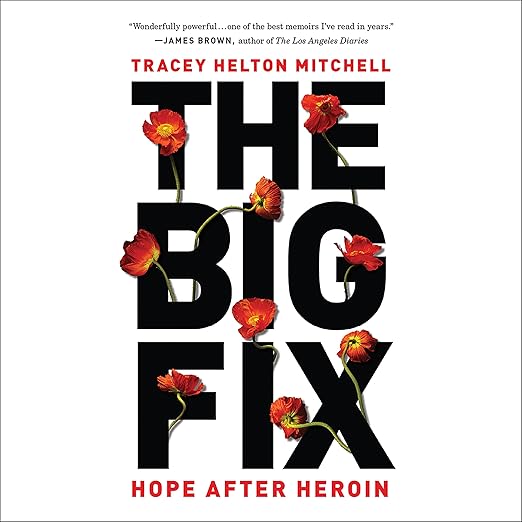
- Voice: Tracey Helton Mitchell narrates her own recovery story with unfiltered, lived-in authority.
- Big ideas: Addiction and recovery, homelessness, motherhood, rehab system failure
- Atmosphere: Unflinching and heavy early, genuinely hopeful by the end
- Worth it?: A candid, well-earned recovery memoir best suited to listeners ready for its heaviest chapters.
San Francisco's Tenderloin District is where Tracey Helton Mitchell spent nearly a decade lost to heroin, and she narrates that entire descent herself before walking listeners through the harder, slower work of getting clean for good. The Big Fix covers roughly seven hours of raw, specific memoir, homelessness, addiction, and the particular dangers women face at the intersection of drug dependency and survival sex work, before turning toward Mitchell's rebuilding of a stable life as a mother of three. This audiobook does not dwell in the misery for its own sake; it treats recovery itself as the real subject, with addiction as the necessary backstory rather than the point.
Relearning How to Handle Money and Trust
Mitchell's own voice narrating her own history gives this an authority a professional narrator simply could not replicate, and the effect is strongest in the passages describing relearning basic life skills after years of survival-mode thinking: how to interact with men without transactional expectation, how to build friendships not organized around drug use, how to handle money again. Real specificity carries these sections, separating the book from a more generic addiction memoir, since Mitchell names the exact skills recovery required her to rebuild rather than gesturing vaguely at getting better.
The book's other central thread, a direct critique of the American rehab system's failures, gives Mitchell's personal story a policy dimension that purely confessional addiction memoirs often lack. She is not just recounting what happened to her; she is arguing for what should change, drawing a straight line between systemic gaps in treatment access and the specific dangers women in addiction face that a gender-neutral treatment model tends to miss entirely. That combination, unflinching personal history plus a genuine argument for reform, is what elevates this above a simple survival story.
Mitchell's account of rebuilding her relationship with her own mother stands out as some of the book's most carefully handled material, since it avoids both easy blame and easy forgiveness in favor of something more genuinely complicated. She narrates those specific passages with a noticeably different, quieter register than the more kinetic street-survival chapters earlier in the book, a shift a listener can hear even without any explicit signal that the subject matter has changed, which speaks well of how deliberately she paces her own narration overall rather than delivering every chapter at the same emotional volume.
Recovery From Heroin Is Possible After All
At 4.6 across 307 ratings, this has clearly resonated well beyond a niche recovery-community audience. One reviewer, Carlisle Celt, calls Mitchell's account of her own descent and long path back excruciatingly honest, and specifically credits her with knowing the recovery field inside and out, having sought the book out after hearing Mitchell interviewed on the radio. Another reviewer, MsDaevu, pushes back directly against a common fatalistic assumption about heroin addiction, noting that they had been told recovery from heroin specifically was not really possible, and found this book disputing that claim point by point rather than through vague inspiration alone.
What separates The Big Fix from adjacent recovery memoirs is Mitchell's explicit focus on the mechanics of rebuilding rather than dwelling primarily on rock bottom itself; the book's own framing, rather than dwelling on the pain of addiction, tells listeners upfront that the emphasis sits with the work of recovery and the failures of the systems meant to support it. For listeners who have found other addiction memoirs to be trauma-focused to the point of feeling exploitative, Mitchell's forward-looking structure offers a genuinely different reading experience within a crowded genre.
Mitchell's critique of the American rehab system carries specific, lived weight because she is describing gaps she personally fell through rather than citing statistics secondhand; the book names concrete failures, inadequate support for women specifically, insufficient long-term follow-up after initial treatment, instead of relying on vague appeals to a broken system in the abstract. For listeners with a policy or advocacy interest in addiction treatment reform, that specificity gives the memoir a practical usefulness well beyond its value as personal narrative alone, closer to a first-person case study of where treatment infrastructure actually fails people.
Mitchell's Own Narration Trades Polish for Truth
The description of active drug use and the toxic connection between addiction and prostitution that the synopsis names directly is handled with the same unflinching honesty as everything else in the book, and listeners currently in early recovery themselves, or close to someone who is, should know this going in rather than being caught off guard partway through. Mitchell does not sanitize this period of her life for a more comfortable listening experience, and that honesty is the book's core strength, but it also means the content is genuinely heavy in stretches, not just difficult in the abstract.
Because this is Mitchell's own narration rather than a professional audiobook performance, listeners expecting the smoother vocal polish of a trained narrator should adjust expectations slightly; what her narration lacks in technical vocal training it makes up for in the simple fact that every detail comes directly from the person who lived it, with no interpretive layer standing between the listener and the account.
Because Mitchell narrates roughly seven hours entirely herself, listeners should expect a consistent single perspective throughout with no outside expert voices or clinical framing layered in between chapters; this is memoir first, resource guide second, even with its genuine policy dimension. Anyone specifically looking for a structured treatment guide or workbook-style recovery program alongside the personal story should know this stays in narrative form throughout rather than shifting into a more instructional format at any point.
No Single Big Fix, Only Harder Small Ones
Anyone personally affected by substance abuse, whether in active recovery, newly sober, or supporting a family member through addiction, is the audience this book most directly serves, and the specific attention to women's experience within addiction and recovery makes it especially valuable for anyone who has found more general, gender-neutral recovery literature incomplete. Readers and policy-minded listeners interested in the actual failures of the American rehab system will also find real substance here beyond the personal narrative alone.
The book's title itself, a play on the common but misleading idea that recovery is a single fix rather than sustained work, is a fair preview of Mitchell's own argument throughout: no single big fix existed for her, only a long accumulation of smaller, harder ones, and the memoir is more convincing for resisting the easy framing its own title gestures toward.
A gentler, more distanced account of addiction is not what this offers, and anyone hoping to skip quickly past the specifics of street-level survival toward the redemption arc should know upfront that Mitchell spends real, sustained time in the hardest parts of her story before the rebuilding begins. It is honest rather than comfortable listening, and that honesty is precisely the point, but it is worth choosing the right moment to start it rather than picking it up expecting something softer.
Does Tracey Helton Mitchell narrate her own audiobook?
Yes, and while her delivery lacks a trained narrator's polish, every detail carries the direct authority of someone recounting her own lived experience.
Does this audiobook offer practical recovery advice or just personal narrative?
Both. Alongside her personal story, Mitchell argues directly for reforming specific failures in the American rehab system.