Quick Take
- Narration: Whitney Bowe’s self-narration carries the authority of a working clinician, her delivery is measured, confident, and never condescending, which suits the science-heavy material well.
- Themes: Gut-skin axis, microbiome science, lifestyle-as-medicine
- Mood: Methodical and motivating, like a smart consultation you actually leave feeling hopeful
- Verdict: For anyone who has cycled through dermatologists without lasting results, Bowe’s gut-first framework offers a genuinely different way of thinking about skin.
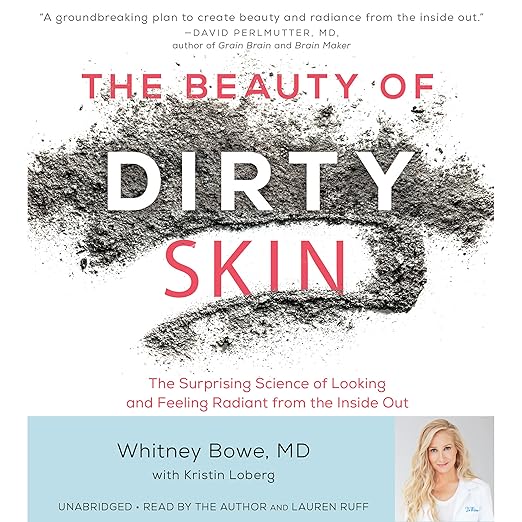
I picked up this audiobook on a Tuesday evening after yet another frustrating conversation about my skin with a doctor who handed me a prescription and showed me the door in under seven minutes. I was skeptical going in. I had read plenty of books that promised an inside-out approach to skin and delivered mostly rebranded advice about drinking more water. The Beauty of Dirty Skin is something else.
Whitney Bowe is a practicing dermatologist and a publishing researcher, and she narrates this herself. That combination matters more than it might seem. When she explains the gut-brain-skin axis, she is not translating from another expert’s work. She is walking you through her own clinical framework, and the confidence in her voice reflects that. There are no hedged disclaimers or awkward pauses. She knows this material the way someone knows the floor plan of a house they have lived in for years.
The Science That Actually Lands
Bowe’s central argument is that skin disorders, from the stubborn acne that resists topical treatments to the rosacea that flares mysteriously and the eczema that keeps returning despite prescription steroid creams, are frequently symptoms of deeper disruption in the gut. She builds this case incrementally, explaining how the microbiome communicates with the skin via the brain, and how stress, sleep deprivation, and inflammatory diets create conditions in the gut that eventually show up on your face. The science is dense in places, but Bowe has a gift for analogy. She describes the microbiome as a conversation among trillions of participants, and explains that most dermatological treatment addresses only the last sentence of a very long exchange.
One reviewer called her the best qualified physician in North America to tackle the subject of healthy skin, and while that is a difficult claim to verify, it captures something real about the book’s credibility. Bowe cites her own research without being self-promotional about it. The citations feel like evidence rather than credentials.
The 21-Day Program in Audio Form
The structural backbone of the book is a 21-day program designed to reset the gut-skin connection through targeted changes to diet, sleep, stress management, and topical care. In audio, this section requires more active attention than in print. Bowe is clear about what each phase involves, but the program has enough specificity, particular probiotic strains, specific dietary eliminations, skincare ingredient guidance, that I found myself pausing and replaying portions to absorb them properly. If you plan to actually follow the 21 days, keep something nearby to take notes. The audiobook does not come with a companion PDF, which is a real gap for a program-oriented title.
That said, the program chapters work well as motivational listening even if you are not tracking every recommendation. Bowe is persuasive about the cumulative logic of her approach: small, consistent changes to the gut environment produce compounding improvements in the skin, rather than the boom-and-bust cycle that characterizes most topical treatments.
What Prescriptions Alone Cannot Fix
The most useful section of the book came in the chapters on stress and sleep. Bowe does not treat these as optional lifestyle additions to an otherwise medical program. She positions chronic stress as a direct driver of microbiome dysbiosis, and she cites data connecting poor sleep to elevated cortisol levels that disrupt the skin barrier. This is the part of the book that explains why dermatological treatments so often fail to hold: if the underlying gut environment remains inflamed, the skin will continue reflecting that inflammation regardless of what you apply to it.
She is also clear-eyed about the limits of her approach. Bowe does not claim that gut health cures everything, and she is explicit that patients with serious skin conditions should still be under medical supervision. This intellectual honesty makes the confident parts of her argument more convincing, not less.
Who Should Listen, Who Should Skip
This is the right audiobook for you if you have dealt with recurring skin issues that standard dermatological treatment has not resolved, if you are interested in the science of the microbiome applied specifically to skin, or if you are the kind of listener who finds clinical authority reassuring rather than intimidating. It also works well for practitioners, aestheticians, health coaches, nutritionists, who want a solid grounding in the gut-skin connection.
Skip it if you are looking for a quick-reference skincare guide. The 21-day program requires engagement beyond passive listening, and the science chapters reward careful attention rather than background listening. This is not a bathroom-counter reference; it is closer to a course.
Frequently Asked Questions
Does Whitney Bowe’s self-narration work for a science-heavy medical book?
Yes, and unusually well. Her background as both a clinician and a researcher gives the narration a consistency of authority that a hired voice actor could not replicate. She knows when to slow down for complex microbiome science and when to pick up pace through more familiar territory.
Is the 21-day program actually followable in audio format?
With effort. The program is specific enough that you will want to take notes, particular probiotic recommendations, phased dietary changes, and topical ingredient guidance are spread across several chapters. There is no companion PDF, so plan to pause and replay the instructional sections.
How does this compare to other gut-health and skin books on the market?
Bowe’s distinguishing quality is her research credential. She is not synthesizing other scientists’ work; she is drawing directly from her own published studies on the gut-brain-skin axis. That makes the scientific claims more traceable than most popular wellness titles in this space.
Does the book address skin conditions beyond acne, or is it primarily acne-focused?
The scope is broader than acne. Bowe covers rosacea, eczema, psoriasis, and premature wrinkling within the same gut-skin framework, arguing that each represents a different expression of microbiome disruption. The chapters on rosacea and eczema are particularly detailed.