In Brief
- Read by: Kaleo Griffith brings warm, unshowy clarity to Arbinger's house style, letting the ideas lead rather than the performance.
- At its heart: Conflict resolution, self-deception, workplace and family reconciliation
- Vibe: Reflective and instructive, built for slow re-listening
- Short version: A trusted framework told through parable, worth the patience it asks for even without a synopsis to preview it first.
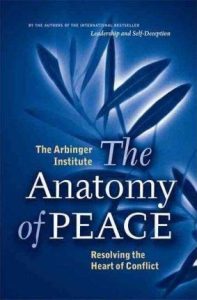
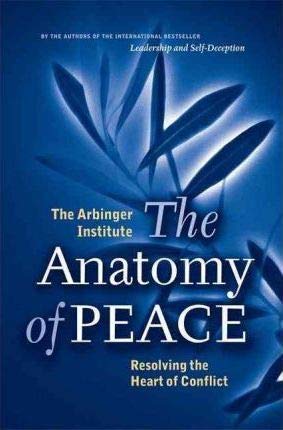
A sixteen-year-old's wilderness therapy program is where one listener found this audiobook, handed to her by the teen's own therapist as close to required listening. That anecdote says more about The Anatomy of Peace than any marketing copy could, since the listing itself arrives with no synopsis attached at all, an unusual gap for a title with this much of a following. The Arbinger Institute, the organizational-behavior consultancy behind the book, built its reputation on Leadership and Self-Deception, and this later title extends the same core idea into the register of interpersonal and even geopolitical conflict. Listeners do not need to have read that earlier book first, though its concepts, self-justification, treating people as obstacles rather than individuals, run underneath everything here.
What fills the gap left by the missing synopsis is reviewer testimony, and it runs deep, uniformly enthusiastic across parenting, workplace, and marital contexts. One listener credits the book with clarifying why beginning change from a place of personal peace, rather than blame, actually works. Another calls it 'required reading for every human being,' a claim broad enough to sound like hyperbole until three separate reviewers independently reach for some version of the same universal framing.
The Same Lineage as Cheese and Dysfunctions
The Arbinger method works through parable rather than bullet points. A framework built around what the Institute calls being 'in the box,' a state of self-justifying defensiveness that turns other people into obstacles or objects instead of individuals with their own fears and needs, gets dramatized through characters working through real conflict rather than delivered as a checklist. The approach extends outward from personal relationships to organizational conflict and, notably, to the kind of entrenched group hostility usually reserved for geopolitics, a wider swing than most workplace conflict-resolution titles attempt.
Not every reviewer loves the narrative delivery mechanism. One listener specifically flagged pushback from people who criticize what they called the 'lifelike story manner' of the writing, preferring a more direct instructional format. It's a fair tension to name upfront: readers who want a framework delivered as a numbered list, ready to skim back through for reference, may find the parable structure slower going than the takeaway itself deserves. The same reviewer still landed on the book's side despite that criticism, which is its own small data point about how the format wins people over even when it initially grates.
Business fables occupy a specific, well-established lane in nonfiction audio, the same lineage that includes titles like Who Moved My Cheese and The Five Dysfunctions of a Team, and The Anatomy of Peace sits comfortably inside that tradition rather than inventing a new format. What distinguishes it from lighter genre entries is scope: where many fable-format business books stay narrowly workplace-focused, this one explicitly widens its lens to family conflict, parenting, and even the language of geopolitical hostility, using the same underlying mechanic, self-justification turning people into objects, at every scale. That range is ambitious for a six-and-a-half-hour audiobook, and the reviewer testimony suggests it mostly earns the ambition rather than spreading itself thin.
Griffith Reads Like a Publisher's House Choice
Kaleo Griffith narrates, and the casting reads like a house choice rather than a one-off; his work turns up across multiple Arbinger Institute productions, which suggests the publisher has settled on him as the voice that best serves this specific material. His reading stays warm and clear without overplaying the cast of characters the parable moves through, a real discipline in fable-format business books, where a narrator can easily tip into performing distinct voices for every speaker and pull focus away from the ideas underneath.
At six hours and forty-eight minutes, the audiobook sits comfortably inside a long weekend or a week of commutes, short enough that the parable's pacing doesn't overstay its welcome the way some twelve-plus-hour business titles can. The runtime also matters for a title reviewers describe as needing re-listening; a shorter core text is easier to revisit in full than a sprawling one, and at least one reviewer mentioned needing to go back through certain sections twice to let the ideas land.
Audio arguably suits the fable format better than silent reading does, if only because dialogue-driven conflict scenes carry more felt tension performed aloud than described on a page; a reader's eye can skim past a tense exchange between characters, while a narrator's paced, controlled delivery forces a listener to sit inside the discomfort a little longer. That's a real structural argument for choosing this format specifically over the print edition, beyond simple convenience.
No Synopsis, Only Reviews and the Arbinger Name
The missing synopsis is worth naming plainly rather than working around quietly. Shoppers browsing this specific listing get no publisher description at all, only the rating, the reviews, and whatever they already know of the Arbinger name. That's a real gap for anyone unfamiliar with the Institute's other work, and it's worth sampling a chapter before committing if the parable format is new to you.
'Fifth Edition' in the title signals a backlist title that keeps getting revised and republished rather than a brand-new release, worth knowing going in. The core content and central metaphor have stayed stable enough across editions that longtime fans of the Arbinger method won't find a radically different book here; new listeners get the most current version of an argument that has already had multiple passes at refinement.
New editions of long-running business titles typically update case studies and examples to stay current rather than rewriting the underlying argument, and nothing in the available reviews suggests this fifth edition breaks that pattern. Anyone who already owns an earlier edition and is deciding whether to upgrade should weigh that against the six-hour-plus time cost of a full re-listen; anyone coming to the book for the first time has no reason to seek out an older edition instead of this one.
It's also worth being clear about what this book doesn't claim to be: not a quick-fix negotiation script, not a tactical playbook with numbered steps to memorize. The 4.7 rating across 422 ratings reflects a title that has earned trust over the patient, parable-driven approach rather than despite it, which is a meaningfully different kind of endorsement than a how-to guide collecting similar numbers might represent.
Therapists and Mediators Show Up in the Reviews
Anyone currently stuck in a specific, ongoing conflict, a difficult coworker, a strained marriage, a teenager in crisis, will likely recognize themselves somewhere in this material faster than a more abstract leadership book would allow. HR professionals, therapists, and mediators show up in the reviews too, suggesting the book has quietly become a recommended text well outside pure business audiences.
Skip this one if you're after hard data, case-study statistics, or a scannable framework you can flip back through on a printed page mid-argument. The parable format is the entire mechanism here, and readers actively resistant to narrative-driven nonfiction should sample a chapter before buying rather than assuming the concepts alone will carry them through six-plus hours of story.
Before You Listen
Does this audiobook include a synopsis or description of the actual story, since the product listing doesn't provide one?
No, this specific listing arrives without publisher synopsis text. The review above draws on detailed listener testimony and the Arbinger Institute's established reputation instead, and sampling a chapter before buying is a reasonable way to preview the parable format firsthand.
Do I need to have read or listened to Leadership and Self-Deception before this audiobook?
No. The Anatomy of Peace stands on its own, though it builds on the same 'in the box' self-deception framework the Arbinger Institute introduced in that earlier title, and fans of one will likely appreciate the other.
How does narrator Kaleo Griffith handle the multiple characters in this parable-format audiobook?
He keeps differentiation controlled rather than theatrical, giving each figure enough distinction to follow the story without turning the reading into a performance piece that competes with the ideas underneath.
Is the fifth edition audiobook different in content from earlier editions of The Anatomy of Peace?
The core argument and central metaphor have stayed stable across editions. This is a refined, current version of an established text rather than a substantially rewritten book.