Quick Take
- Narration: Abby Craden delivers a clear, measured performance that keeps dense clinical content accessible without ever sounding like a lecture.
- Themes: ADHD behavior management, parent-child communication, evidence-based treatment
- Mood: Authoritative and reassuring, structured and practical
- Verdict: The most thorough science-backed ADHD parenting guide in audio form, especially useful for parents who need both the research context and the actual techniques.
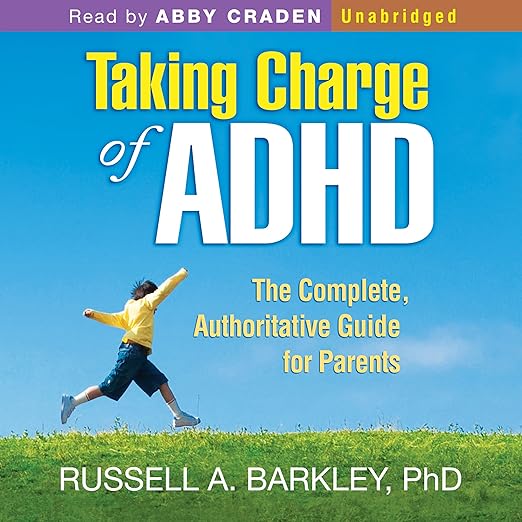
I came to this one not as a parent in crisis, but as someone trying to understand how the research landscape on ADHD had shifted since the earlier editions. I was about forty minutes in when I realized I had stopped taking critical notes and had started actually listening, the way you do when a text stops feeling like reference material and starts feeling like someone explaining something you genuinely needed explained. Russell Barkley has spent decades being one of the loudest and most credible voices in ADHD research, and this third edition carries all of that weight.
What struck me most is how the book refuses to comfort you with simplifications. Barkley’s model of ADHD as a disorder of executive function and self-regulation is laid out with real precision, and he doesn’t flinch from telling parents what that means for their child’s development and long-term outcomes. This isn’t a book that tells you everything will be fine if you just stay positive. It tells you what the science actually shows, and then gives you something to do about it.
The Eight-Step Plan and Why It Holds Together
The practical core of this book is an eight-step behavior management plan designed specifically for children and teenagers with ADHD, covering ages six through eighteen. That range matters because Barkley doesn’t pretend that what works for a seven-year-old will work for a sixteen-year-old. The plan addresses parenting techniques, reward systems, consequences, home environment adjustments, and the critical territory of school advocacy. What makes it work as audio is that Barkley explains the reasoning behind each step rather than just issuing instructions. When you understand why rewards need to be immediate and why punishment often backfires with ADHD children, you’re far better equipped to adapt the principles when real life doesn’t cooperate.
One reviewer, a mental health professional, noted that they learned new things from this book that changed how they worked with clients. That’s a useful signal. This isn’t a popular digest of scientific consensus. It’s a clinically informed text that happens to be written for non-specialists.
The Updated Research and the Medication Question
The third edition adds substantial updated content, including the latest findings on medications and an honest reckoning with the causes of ADHD. Barkley is particularly useful here because he’s willing to say plainly what the evidence does and doesn’t support. The sections on medication are balanced and specific, distinguishing between types, dosages, and use cases in ways that parents can actually bring to a conversation with a pediatrician. He also addresses the things parents often blame themselves for, including diet, screen time, and parenting style, with the same evidence-based directness he brings to everything else.
The companion PDF materials, available after purchase, extend the book into a genuinely useful reference document. Several of the parenting strategies and tracking tools mentioned in the audio are detailed there, so listeners who want to implement the eight-step plan will benefit from having both.
Abby Craden and the Challenge of Clinical Material
Clinical nonfiction is one of the harder narration assignments because the material is dense, often repetitive in the way that careful scientific explanation has to be, and requires a voice that signals authority without sounding cold. Abby Craden manages this well. Her pacing gives the listener time to absorb each concept before the next arrives, and she handles the technical vocabulary without stumbling or over-enunciating. For a book running nearly seventeen hours, that consistency matters. There were occasional stretches in the middle chapters, particularly the detailed sections on school accommodation strategies, where the narration felt slightly mechanical, but these are minor complaints against a generally strong performance.
Who This Is Really For
Parents of children who’ve received a recent ADHD diagnosis, or who’ve been living with an older diagnosis and feel like their existing strategies have stopped working, will find the most immediate value here. The age range covered is broad enough that parents of both younger children and teenagers will recognize their situations in the examples. Mental health professionals and educators working with ADHD children have noted that the book gives them language and frameworks that help them collaborate more effectively with families.
Skip this if you’re looking for a short, encouraging read that focuses primarily on the emotional experience of parenting an ADHD child. This book is substantially about the science, the clinical evidence, and systematic behavior change. It assumes you’re ready to engage with that material at some depth. For parents who are, it’s one of the more genuinely useful audiobooks in this space, and the companion to Barkley’s adult ADHD title is a natural follow-on for families dealing with both a child and a parent with the disorder.
Frequently Asked Questions
Is this book relevant for parents of teenagers, or is it mainly for parents of younger children?
Barkley explicitly designs the material for ages six through eighteen, and the eight-step behavior plan is differentiated by age. Parents of teenagers will find the sections on school advocacy, social skills, and the transition toward independence particularly applicable.
Does the audiobook include all the practical tools and worksheets, or do I need the print version?
The audio covers all the explanatory and strategic content fully. The companion PDF available after purchase includes supplemental documents, tracking tools, and structured forms that complement the audio. For implementing the behavior management plan, having the PDF alongside the audio is genuinely useful.
How does this third edition differ from earlier versions of Taking Charge of ADHD?
The third edition incorporates updated research on brain imaging, revised medication recommendations, and current findings on what causes ADHD. It also includes new content on nutraceuticals and more recent educational accommodation strategies. If you listened to an older edition, there’s meaningful new material here.
Is Barkley’s approach medication-friendly or does he advocate for non-medication treatment?
Barkley presents medication as one legitimate and often effective part of a broader treatment approach, not the default or only solution. He gives substantial attention to behavioral interventions, parent training, and school strategies, while also being clear about when and why medication is supported by evidence.