Quick Take
- Narration: Virtual Voice narrates this illustrated movement guide, a significant mismatch, since the book’s core value comes from visual step-by-step illustrations that audio cannot convey and Virtual Voice cannot compensate for.
- Themes: Balance and fall prevention, gentle movement for aging bodies, nervous system recalibration
- Mood: Gentle and reassuring in intent, though the audio format creates friction with the delivery
- Verdict: The 28-day program has genuine appeal for seniors seeking low-impact stability work, but the illustrated nature of this content makes the print version far more functional than the audio.
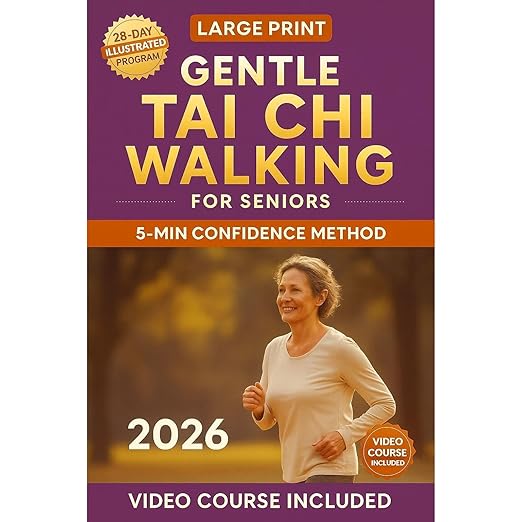
My mother started worrying about falls the year she turned seventy-three. Not after a fall, before one. That anticipatory fear, which I suspect anyone with an aging parent will recognize, is exactly what Ryo Kiyata’s Tai Chi Walking for Seniors sets out to address. The subject matter is real, the need is genuine, and the 28-day framework built around five-minute daily confidence-building sessions is thoughtfully designed for the audience it serves. I want to be honest about why I nonetheless have reservations about recommending this particular edition.
The audiobook is narrated by Virtual Voice, Amazon’s AI text-to-speech technology. For any book that relies on movement instruction and illustrated steps, this creates a fundamental disconnect that no quality of content can entirely overcome. When you’re guiding a seventy-eight-year-old through a balance exercise, the voice in their ears needs to carry warmth, pace, and reassurance. What they get instead is a synthetic delivery that, however technically clear, lacks the human rhythm that movement instruction requires. This is not a minor production note. For this specific genre, with this specific audience, it materially affects the listening experience.
The 28-Day Program Behind the Audio
Setting aside the narration question, the structural logic of the program is sound. The 28-day progression, with its emphasis on slow and safe movement rather than intensity, addresses the actual barrier that keeps many seniors from exercise programs: the fear of overexertion or confusion. Reviewer Jess noted that the plan feels safe and manageable, which is huge for building stability, and that the illustrations make Tai Chi feel simple instead of confusing. Another reviewer described the program as helping seniors walk without fear, which is precisely what Kiyata advertises, and apparently delivers.
The physiological targets are well-chosen. Balance decline in older adults is driven by a combination of proprioceptive loss, muscle weakness, and nervous system changes that Tai Chi’s slow, deliberate movement patterns are specifically suited to address. The program’s focus on retraining the nervous system through mindful steps rather than brute strength training is grounded in what we know about how balance actually works in aging bodies. The connection between psychological state and physical stability is underexplored in most exercise programs for seniors and represents the genuinely interesting contribution this material makes.
Why the Illustrated Format Is Load-Bearing
Here is where the honest assessment gets difficult. The synopsis refers to simple illustrated steps and clear illustrations as central to the program’s accessibility. Reviewers specifically cite the illustrations as what makes the content comprehensible. The book was designed as an illustrated guide, and its audio adaptation strips the primary navigational tool from the reader. The result is instruction that describes movements without being able to demonstrate them visually.
For a general-audience audiobook, this would be a minor limitation. For a movement guide aimed at seniors who may not be familiar with Tai Chi terminology or body mechanics, it’s a more significant one. A reviewer mentioning the author as Daniel Chen rather than Ryo Kiyata suggests some review contamination, but the consensus on the program’s value as a visual resource is consistent enough to take seriously.
The four-hour runtime is appropriate for a 28-day program guide, though listeners should understand they are receiving narrated descriptions of exercises rather than guided audio sessions they can follow in real time.
A Format Recommendation Before Anything Else
If you are buying this for yourself or a family member as a practical movement program, the illustrated print edition will serve the purpose significantly better than the audiobook. The audio version works best as a supplementary companion, something to listen to while reading the visual guide, or as a reminder of principles already absorbed through the illustrated version.
Who Should Listen and Who Should Skip
Listen if you’ve already worked through the print edition and want audio reinforcement of the principles and daily practice cues. Also suitable for caregivers who want to understand the program’s framework before introducing it to an older adult in their care.
Skip, or more precisely, choose the print version instead, if you’re a senior looking for a primary guide to balance improvement. The illustrated format is load-bearing for this content, and the Virtual Voice narration doesn’t compensate for its absence.
Frequently Asked Questions
Can this audiobook be used as a real-time movement guide, following along during a walking session?
The content is not structured as a real-time guided session. It describes movement principles and a 28-day program framework. Reviewers who found it most useful engaged with the illustrated print material rather than using the audio during actual movement practice.
Does the 28-day program require prior knowledge of Tai Chi?
No prior Tai Chi experience is needed. The program is designed specifically for seniors with no background in the practice, emphasizing slow and safe movement appropriate for people with joint pain, limited flexibility, or instability.
Is this audiobook narrated by a human narrator?
No. This edition uses Virtual Voice, Amazon’s AI text-to-speech narration. For movement instruction aimed at seniors, this is a meaningful limitation, the narration lacks the warmth and coaching rhythm that this type of content typically requires.
The synopsis mentions a fear of falling as the primary concern addressed, does the book go beyond safety into improving actual mobility?
Yes. While fall prevention is the entry point, the program addresses both the physical mechanics of balance and the anxiety component that often compounds instability. The connection between nervous system calm and physical steadiness is a recurring theme throughout the material.