In Brief
- Read by: Gibson Frazier's long run as Ben Ripley pays off, especially in the quieter survival stretches without the usual cast.
- At its heart: forced alliance with a nemesis, wilderness survival, espionage adventure
- Vibe: Tense with the series' usual comic relief intact
- Short version: A genuine structural highlight this deep into the series, though newcomers should start at book one.
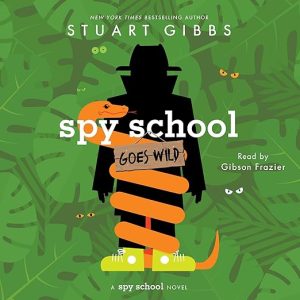
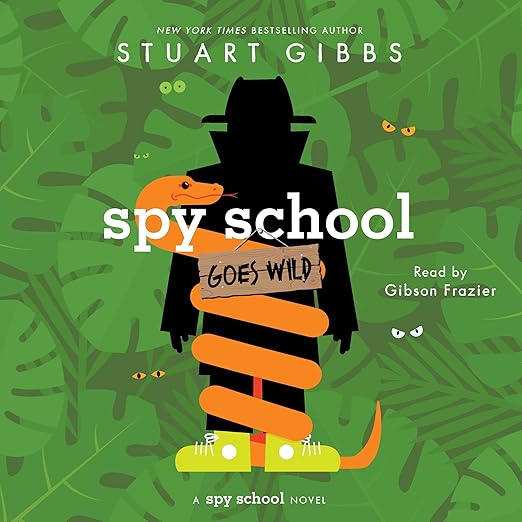
Twelve books into a middle-grade spy series, Stuart Gibbs finally strands his hero in the one place gadgets can't help him: an actual wilderness, with an actual enemy he can't fully trust. That premise alone makes Spy School Goes Wild one of the sharper structural swerves in a series that could easily have coasted on formula by now, and this audiobook lands it with real tension.
Ben Ripley gets sent after his longtime nemesis Murray Hill, the mission collapses, and the two of them end up lost together in genuinely dangerous terrain, with a new and more devious threat circling and none of Ben's usual friends anywhere nearby to bail him out.
Gibbs has kept this series remarkably consistent across twelve installments now, a genuine achievement in middle-grade publishing where long-running series often either calcify into formula or lose their footing trying to escalate stakes book after book. This entry manages neither trap, raising the stakes through a real structural change rather than simply a bigger villain or a flashier gadget.
Frazier's Continuity Pays Off in Quiet Stretches
Stripping away Ben's support network is the smartest choice here: no Erica Hale swooping in with a rescue plan, no gadget lab, just Ben, his own resourcefulness, and a nemesis he has to figure out how to trust just long enough to survive. It forces the book to lean on character rather than plot mechanics, and the forced-alliance dynamic with Murray Hill gives the whole middle section a genuine emotional charge the series hasn't used quite this way before.
Gibson Frazier has voiced Ben across a long run of this series now, and that continuity pays real dividends in the quieter survival stretches, where his handle on Ben's anxious internal voice has to carry scenes without the usual banter from a full supporting cast. He keeps Murray Hill's antagonism believable without slipping into caricature, which matters for a dynamic that depends on the reader half-trusting him too.
Anxiety Becomes Grit With No One to Lean On
Ben's characteristic anxiety, usually a source of comic relief when he's surrounded by more capable teammates, becomes something closer to genuine grit here, since no one else is around for him to lean on. Watching that internal voice hold up under real pressure, rather than just complain about it, is a meaningful character beat for a series that has always treated Ben's self-doubt as central to his appeal.
Gibbs writes action sequences with a clarity that translates well to audio specifically, choreographing physical space, who is where, and what stands between them and safety, in a way listeners can track without a visual aid, which matters even more in a wilderness setting than in the series' usual school corridors and secret labs.
Gibbs also resists the temptation to make Murray Hill's turn toward reluctant cooperation too easy or too complete; he remains genuinely unpredictable through much of the book, which keeps Ben, and the listener, from ever fully relaxing into a straightforward buddy-adventure dynamic even as the two are forced to rely on each other to survive.
A Household Favorite, Also a Gift for a Grandson
Blending wilderness survival into an espionage series is a genuinely fresh device this deep into a run, and it gives Gibbs room to test Ben's resourcefulness in ways that don't depend on the usual spy-school toolkit of gadgets and training. Readers who've followed the series for the humor will still get it, but this entry earns real stakes alongside the jokes.
The reviews back up the series' durability across audiences: one calls it a household favorite that both parents and kids look forward to, and another describes it as a gift for a grandson who reported genuinely enjoying it. Few middle-grade series hold that kind of cross-generational appeal twelve books in.
Middle-grade adventure fiction doesn't often strand its young hero with an enemy rather than rescue him from one, and that choice gives Spy School Goes Wild a slightly different flavor than typical genre entries aimed at this age group, closer to a survival story with espionage trappings than a pure spy caper.
Gibbs has built a career on exactly this kind of premise, capable kids navigating adult-scale danger with real stakes attached, across several different series beyond Spy School alone, and that broader track record is part of why this particular structural gamble lands as confidently as it does rather than reading like a one-off stunt.
Less Ensemble Banter Than Longtime Fans Expect
This is not a good entry point. Twelve books of accumulated relationships, running jokes, and prior mission history sit underneath this plot, and new listeners will miss context that longtime fans take for granted. Start with the first book, Spy School, instead.
Families sensitive to peril-heavy stretches should know the wilderness survival plot plays its danger fairly straight in places, a tonal register slightly different from the series' usual gadget-heavy caper energy, even though the humor never fully disappears.
The Murray Hill dynamic is the emotional engine of the whole book, and how much you enjoy this entry will depend heavily on how much you're invested in that specific rivalry already. Newer or more casual fans of the series may find that relationship carries less weight for them than for readers who've tracked it across multiple earlier books.
The forced proximity with Murray Hill also means less of the ensemble banter longtime fans associate with the series' school-set chapters, a deliberate trade-off that serves this specific story but is worth knowing going in if the supporting cast is your favorite part of the series.
Between Picture-Book Adventure and Young-Adult Intensity
Existing series fans are the obvious audience, and this entry rewards that investment directly. Reluctant middle-grade readers who respond well to fast pacing and humor, along with anyone who enjoys survival-adventure stories generally, should also find plenty to hold their attention here.
Kids who've outgrown picture-book adventure but aren't ready for young-adult intensity sit squarely in this series' sweet spot, and this particular entry's survival-story structure may appeal even to reluctant readers who don't typically gravitate toward espionage plots specifically.
Parents who've read the series alongside their kids will find this entry gives them plenty to discuss afterward, since the Murray Hill alliance raises genuinely interesting questions about trust and forgiveness that go beyond the series' usual action-adventure concerns.
Skip this as a first exposure to the series, and skip it if you specifically want a purely comic entry without real stakes; this installment asks a bit more of Ben, and of the listener, than some of its predecessors did.
Frequently Asked Questions
Do I need to have listened to the first eleven Spy School audiobooks before starting Spy School Goes Wild?
Yes, strongly recommended. Twelve books of accumulated relationships and mission history sit underneath this plot, and new listeners will miss significant context. Start with the first book, Spy School, instead.
Is the Spy School Goes Wild audiobook appropriate for younger kids, or does the wilderness survival plot make it more intense than earlier books?
It skews slightly more intense than some earlier entries, since the wilderness survival plot plays real danger fairly straight in places, though the series' humor never fully disappears.
How does the Spy School Goes Wild audiobook compare in tone to earlier entries in the series?
It leans more heavily into real stakes and wilderness-survival tension than the series' usual gadget-driven caper energy, while keeping enough humor to still feel like the same series.