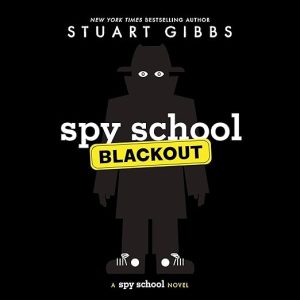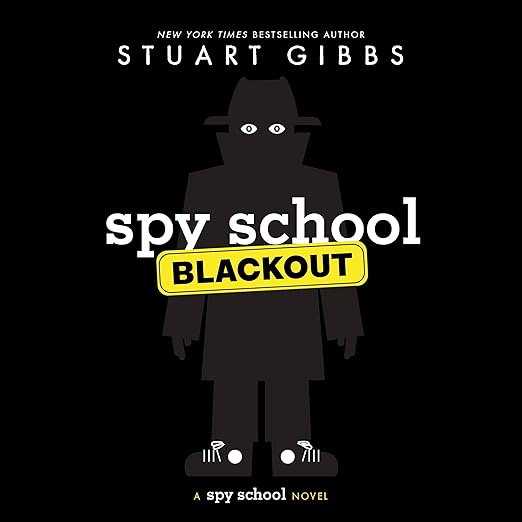
Ben Ripley faces his most technically specific threat yet in Spy School Blackout, the thirteenth book in Stuart Gibbs's New York Times bestselling series. This audiobook, narrated by Gibson Frazier across 8 hours and 7 minutes, drops listeners directly into the aftermath of the CIA's worst-case cybersecurity scenario: a hacker has shut down power networks globally, forcing Ben's team into an emergency landing in Indonesia. The premise is a smart escalation for a series that has built its reputation on combining genuine thriller mechanics with middle-grade humor, and Gibbs uses the off-grid constraint productively - with no computers or phones operational, the team must solve the problem through proximity and ingenuity rather than the technological advantages they normally rely on. That constraint forces a different kind of story than most Spy School books tell, and the Indonesia setting delivers genuine novelty after twelve books across more familiar locations.
Frazier Times Ben's Panic Like a Comedian
The Spy School series has maintained its quality across thirteen volumes primarily because Gibbs refuses to let Ben Ripley become invincible. Book 13 continues that pattern honestly. Ben remains smart enough to deduce that his team is closer to the hacker's base than any CIA asset can reach, but the challenges facing him in Indonesia - described in the synopsis as "a conniving villain, assassins, pirates, sharks, and very big lizards" - are not problems that skill alone solves. The Komodo dragon sequences are particularly well-handled for the middle-grade audience: Gibbs makes them genuinely dangerous without tipping into horror territory, and Frazier's narration amplifies the timing of Ben's increasingly panicked observations with the precision of a comedian who understands the mechanics of escalation.
The cybersecurity threat at the book's center is more conceptually interesting than most Spy School villains. Tying the hacker's identity and motivation to a plausible real-world vulnerability rather than to a cartoonishly evil organization gives Book 13 slightly more narrative weight than some earlier installments. Parents listening alongside younger listeners will find the cyber threat premise more topically resonant than the organizational espionage of earlier books in the series - it is the kind of scenario that has appeared in actual news coverage, which Gibbs handles without tipping into lecturing or oversimplification.
Gibbs's plotting in this series has always been tight, and Blackout is no exception. The emergency landing sequence that opens the book moves at the pace of an action film, establishing the stakes quickly before transitioning into the more methodical puzzle-solving that characterizes the series at its best. Listeners who have been with Ben since Book 1 will notice that supporting characters - including Erica Hale, who remains the series' most consistently compelling secondary figure - receive the kind of scene work that rewards long-term investment in the cast. Gibbs is writing for readers who have been with him across a decade of releases, and he honors that loyalty.
Thirteen Books In, the Voice Feels Owned
Gibson Frazier's performance across this series has been one of the more consistent long-form narration achievements in middle-grade audiobooks. He has been Ben Ripley long enough that the voice feels owned rather than performed - there is a quality of inhabited character here that audiobook listeners who follow series specifically for narrator continuity will recognize and appreciate. His comedic timing is particularly well-calibrated for Ben's self-aware observations about his own predicament, and the Indonesian action sequences benefit from a narrator who knows exactly when to speed up and when to hold a pause for maximum comedic effect. After twelve books, Frazier and the material work together with the ease of long familiarity.
Parents searching for audiobooks to share with reluctant readers in the 8-to-12 age range will find the Spy School series generally, and Blackout specifically, to be among the most reliable options in the genre. The books are sophisticated enough that children are not condescended to, but the humor and pacing are calibrated precisely for the audience rather than for adult approval. Multiple reviewers note their children's eagerness to begin the book the moment it arrived - that kind of engagement is a useful signal for gift purchases, particularly for children who have resisted other audiobook series.
The Threat Resolves, More Threads Wait for Book 14
New listeners should absolutely not start the series at Book 13. The emotional stakes, the character relationships, and ongoing plot threads involving several supporting characters all depend on knowledge accumulated across the previous twelve books. Beginning here risks not just confusion but missing the payoff of arcs that have developed over the series. Starting at Book 1 is the correct approach for any new reader, and the first book is short enough that the investment required is modest. Existing series listeners should also know that while Blackout resolves its central threat fully, Gibbs characteristically leaves enough narrative threads open to sustain forward momentum into Book 14. This is not a structural flaw but it does mean the book does not function as a clean series endpoint for anyone looking for complete closure on all running storylines.
A Reason to Invest From the Very Beginning
This audiobook is designed for established Spy School fans ages 8 to 12 who have read the earlier books in the series. It also works well as a shared listen for parents and children who have been following Ben Ripley together - the humor operates on multiple levels, with enough situational irony to engage adult listeners who find themselves genuinely charmed by the series. Anyone looking for a standalone entry point to middle-grade adventure audiobooks should start with Book 1 of Spy School rather than Book 13. Listeners for whom long audiobook series are a particular pleasure will find Frazier's consistent narration across the full run a genuine reason to invest from the very beginning.
Does the Spy School Blackout audiobook work as a standalone entry point to the series?
No - Book 13 assumes deep familiarity with characters, relationships, and ongoing plot threads from the previous twelve books. New listeners who start here will not be completely lost in the mechanics of this specific book, but they will miss the payoff of relationships and arcs developed across the series. Start with Book 1.
Is Gibson Frazier the narrator for the entire Spy School audiobook series?
Yes - Frazier has been the consistent voice of Ben Ripley across the series, which is one of its significant assets for audiobook listeners. The continuity of his performance builds a sense of genuine character ownership that series narrations with rotating narrators do not achieve.
What age range is the Spy School Blackout audiobook appropriate for?
The series is aimed at readers ages 8 to 12, and the audiobook format works particularly well for younger listeners in this range or for parent-child shared listening. The humor and action are calibrated precisely for middle-grade audiences, though adult listeners who come to it through a child's enthusiasm often find themselves genuinely entertained.
Does the cybersecurity theme in Spy School Blackout require technical knowledge to follow?
No - Gibbs translates the hacker threat into accessible thriller terms without any technical instruction required. The cyber premise provides stakes and sets the location constraint, but the story resolves through character intelligence and physical problem-solving rather than technical expertise. Young listeners with no background in cybersecurity will follow the plot without difficulty.