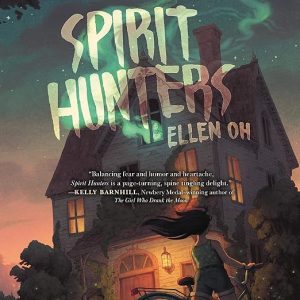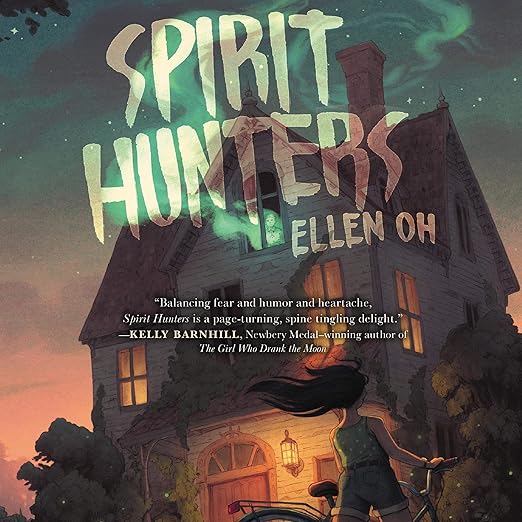
Spirit Hunters, the first book in Ellen Oh's series of the same name, arrives in audiobook form with a specific advantage over the print edition: Amielynn Abellera's narration makes the haunted house atmosphere of the Raine family's new home register as something felt rather than merely described. This is a middle-grade horror audiobook about a seventh grader who can sense things others can't, in a house that is demonstrably not right, and the format rewards that sensory premise in ways that silent reading sometimes doesn't. Publishers Weekly awarded the book a starred review, calling it "a truly chilling middle grade horror novel" - and the audio production earns that description through performance as much as story.
How Spirit Hunters Holds Up
Oh - the founder of We Need Diverse Books - has written a ghost story centered on Harper Raine, the new seventh grader who moves with her family from New York City to Washington, DC, and immediately knows something is wrong with their new house. Her younger brother Michael begins acting strangely in ways that the adults around him explain away. The neighborhood rumors confirm the house is haunted. And Harper carries a sense of deja vu she can't explain but can't dismiss - connected to memories she's blocked that, once recovered, would make sense of Michael's behavior and of the strange, threatening sensations she feels throughout the house.
What lifts Spirit Hunters above pure atmosphere is what Booklist's starred review identifies: "the way the author skillfully uses the compelling premise to present a strong, consistent message of not rejecting what you don't understand." That message is worked into the plot mechanics rather than stated as a theme. Harper's central challenge is to trust her own perception against the normalization pressure of adults who have decided to see nothing, and her investigation proceeds from that basic act of confidence in her own experience. That's a genuinely useful lesson built into a genuinely effective ghost story, and Oh manages both without one compromising the other.
Why Spirit Hunters Works as an Audiobook
Abellera's performance handles the two registers the book requires throughout its six-and-a-half hours. Harper's internal life - the seventh-grade social anxiety of being new, the specific discomfort of not being believed when you insist something is wrong - needs a narrator who can carry that authentic adolescent uncertainty without making it tiresome for adult listeners. Abellera does this, keeping Harper's voice genuine rather than performed. The character sounds like a real twelve-year-old navigating an impossible situation rather than a narrative device moving toward plot resolution.
Simultaneously, the atmospheric material - the threatening sensations in the house, the dread that accumulates around Michael's changed behavior, the specific quality of menace that builds as Harper gets closer to what she's blocking - requires a different kind of presence, and Abellera navigates the shift between registers without losing tonal consistency. Reviewer Erica McDaniel describes her reluctant-reader daughter eagerly reporting to the family what was happening in the book after each listening session, which speaks to how well the audiobook format serves the story's building revelations. The chapter-end hooks land harder in audio when a skilled narrator is managing the pacing, and Abellera earns each of those hooks.
Weak Spots in Spirit Hunters
This is the first book in a series, and it functions as an introduction to Harper and the specific nature of her ability rather than a closed, standalone story with a completely resolved ending. The immediate threat - the ghost haunting her brother - is addressed, but the larger framework of Harper's abilities and what they mean is clearly established for future entries. Reviewer Andrea F. Ozment notes she's looking forward to more from Oh, which is the honest response to a book designed as a series opener. The audiobook satisfies within its own arc while leaving the door open for what follows.
School Library Journal's observation that the book "will appeal to horror fans and to reluctant readers who enjoy a good scare" is worth flagging for parents making decisions about this audiobook for younger listeners. The horror is real, not soft-pedaled for the middle-grade audience - the ghost haunting Michael is genuinely menacing, and there are specific moments of fear that are designed to work on a primal level. The Korean-American cultural elements are woven into the story naturally throughout, specific and present without functioning as the story's defining subject.
The Right Listener for Spirit Hunters
This audiobook is a natural fit for middle-grade listeners roughly aged eight to twelve who want horror with real stakes and a protagonist they can genuinely root for. The We Need Diverse Books context is audible in Oh's characterization: Harper and her family are drawn with specificity and care that goes beyond tokenism. Reluctant readers who find audio engagement easier than print will benefit particularly from Abellera's atmospheric performance - reviewer McDaniel's daughter, who had never been a big reader, finished the book and couldn't stop talking about it, which is about as strong an endorsement of the audio format as a gateway as exists.
Adults who enjoy middle-grade horror in the tradition of R.L. Stine or more recent supernatural fiction for younger audiences can absolutely listen alongside family members, and reviewer B. Hopkins' assessment - "filled with suspense, scary moments, and characters that you want to cheer on" - captures the cross-generational appeal accurately. The six-and-a-half-hour runtime makes Spirit Hunters a manageable shared listening experience over several sessions, and the natural chapter breaks give young listeners a structure for pacing their engagement with the story's building tension.
A Few Questions About Spirit Hunters
Is the Spirit Hunters audiobook appropriate for children who are sensitive to scary content?
The horror is genuine - the ghost threatening Harper's brother is genuinely menacing, not soft-pedaled. School Library Journal targets the book at readers who actively enjoy a good scare. Sensitive younger listeners may find specific sections intense, and the audiobook format - with Abellera's atmospheric performance - can heighten that impact.
Does the Spirit Hunters audiobook work as a standalone, or does it require the sequel?
It resolves the immediate threat to Harper's brother and has its own complete arc. That said, it's clearly a series opener that establishes Harper's abilities for future books. Several reviewers mention looking forward to more from Oh, so expect a satisfying but open-ended conclusion.
Is this audiobook suitable for a parent to listen to alongside a child as a shared experience?
Yes - reviewer B. Hopkins describes the book as balanced with humor and heart alongside the scares, and the themes of trusting your own perception and protecting your family are accessible across ages. The six-and-a-half-hour runtime makes it workable for shared listening over several sessions.