Quick Take
- Narration: Alice Wallis delivers the content with a warm, approachable clarity that suits a first-time parent audience, the tone is reassuring without being condescending.
- Themes: Early language development, speech delay, play-based learning, parent-led communication activities
- Mood: Calm and instructional, with the feeling of having a knowledgeable friend explain something you’ve been quietly worried about
- Verdict: A genuinely useful short primer for parents with toddlers showing communication delays or for those who simply want to understand how early language development works, the 73 games are the real takeaway.
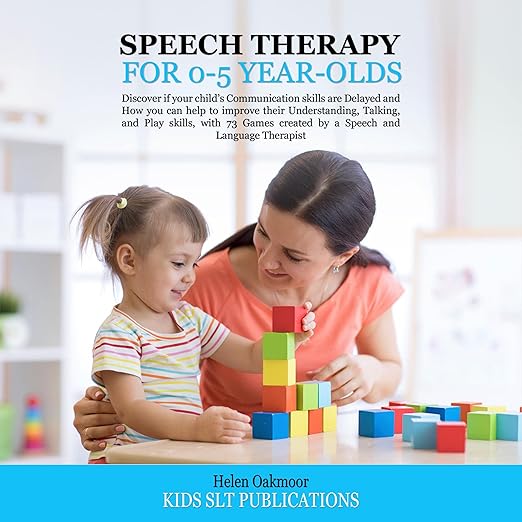
At one hour and forty-six minutes, this is one of the shortest professional audiobooks in the children’s health space. That length is either a dealbreaker or exactly right, depending on what you’re looking for. If you want a comprehensive developmental language guide with detailed case studies and clinical frameworks, this is not that. If you are a parent with a two-year-old who isn’t yet stringing words together and you want clear, practical guidance from a speech and language therapist delivered in an afternoon, this is exactly that.
Helen Oakmoor writes from professional practice, she is a speech and language therapist, and the book reflects the kind of focused, evidence-based guidance that you’d get in a good first consultation, expanded into an accessible format. The research context is briefly but accurately established: early language exposure is critical, the first six months of life are particularly formative, and delays that are caught and addressed early have significantly better outcomes than those identified after school entry. None of that is controversial; all of it is worth knowing.
The Developmental Arc and the Delay Question
Where the book is most useful is in helping parents understand what typical development looks like at different ages within the zero-to-five window, and then how to gauge whether a delay is present and how significant it is. The questions Oakmoor opens with, can your child share a turn-taking game, understand simple instructions, express needs without frustration, are diagnostic not in a clinical sense but in a practical one. They help parents get specific about what they’re observing rather than having a general sense that something seems off.
The section on how delayed a child’s skills are and how to close the gap is the practical core of the book. Rather than simply cataloguing milestones, a format that often induces anxiety rather than action, Oakmoor focuses on what parents can do, specifically, how to build communication into play-based interactions in ways that fit normal family life rather than requiring structured therapy sessions. The five-minutes-a-day framing is psychologically smart for a tired parent audience: it positions the intervention as achievable rather than as one more overwhelming task.
Seventy-Three Games and Why They’re the Point
The 73 free games created specifically to support speech, language, and play development are the book’s primary practical offering, and at least one reviewer identified them as the main reason the purchase was worth it. These are parent-child interaction activities designed by a speech and language therapist to target specific developmental skills, not off-the-shelf crafts or generic play ideas, but activities mapped to the developmental framework Oakmoor has been building throughout the book. In audio format, they are described rather than demonstrable, which is a limitation. But if you listen with pen and paper nearby, they translate well enough to real-world use.
Alice Wallis narrates with a quality that suits this audience particularly well. First-time parents dealing with speech delay are often managing their own anxiety alongside their concern for their child, and the last thing they need is a narrator who sounds like they’re reciting clinical criteria. Wallis keeps the tone warm and conversational, you’re getting information from someone who understands both the subject and the emotional state you’re likely in while listening.
What This Book Is Not
Oakmoor is explicit that the book is not a substitute for professional speech and language therapy. If your child has a significant delay, this book is a starting point for understanding what’s happening and what you can do at home, not a replacement for formal assessment. She states clearly that parents should seek help from a qualified speech and language therapist for children with delayed development. That honesty is appropriate and reflects the responsible limitations of a short self-help format in a domain where professional assessment genuinely matters.
The book is also not a guide to specific speech disorders, articulation disorders, stuttering, apraxia of speech, or language disorders associated with specific conditions. It is focused on the general zero-to-five developmental window and the universal principles that support language acquisition. For condition-specific guidance, more specialized resources will be needed.
Who This Works For
Parents of toddlers who are observing communication gaps and want a professional framework for what normal development looks like and what supportive activities they can do at home will find this a genuinely useful ninety minutes. Early childhood educators who work with pre-verbal and early-verbal children will find it a useful refresher on SLT principles in accessible language. Those wanting clinical depth or condition-specific guidance will need to look beyond this primer.
Frequently Asked Questions
Is this book useful for children with diagnosed conditions like autism or apraxia of speech, or is it designed for typically developing children with mild delays?
It’s primarily designed for parents of children in the general zero-to-five window, including those with mild to moderate communication delays without a specific diagnosis. Children with significant diagnosed conditions may benefit from the general principles and activities, but the book does not provide condition-specific guidance and should be supplemented with specialist resources for children with diagnoses like autism or childhood apraxia of speech.
Are the 73 games described in enough detail to use them practically from audio alone?
They are described with enough specificity to implement, though having something to write with while listening helps. The games are parent-child interaction activities with clear targets, encouraging turn-taking, building vocabulary, supporting comprehension, so the audio descriptions translate to real play.
At under two hours, is there enough content here to justify the purchase, or is this better suited to a brief article?
The runtime reflects appropriate scope rather than thin content. Oakmoor covers the developmental framework, how to identify delays, what parents can do daily to support language development, and 73 specific activities. A focused primer from a speech therapist is genuinely more useful than a longer but less focused alternative. Reviewers have consistently described it as worth the cost specifically because of the games and practical guidance.
Does the book give guidance on when to seek professional assessment, and how to access speech therapy services?
Oakmoor recommends professional assessment for children with confirmed delays and is explicit that the book is a supplement to rather than replacement for formal speech and language therapy. She does not provide country-specific guidance on accessing services, as the book is written for a general international audience, so parents will need to explore their own healthcare system’s pathways to SLT assessment.