Quick Take
- Narration: Torsten Abrolat is both composer and presenter, the personal framing adds authenticity to what could otherwise be anonymous ambient content, though the verbal introduction is brief and the music carries the runtime.
- Themes: 432 Hz relaxation, burnout recovery, nature-sound stress relief
- Mood: Unhurried and deliberately slow, with a meditative quality that rewards patience
- Verdict: A single-creator ambient music production that works well for meditation, sleep, and background relaxation, the 432 Hz framing is a claim, not a guarantee, but the listening experience is genuinely restful.
I put this on during a Thursday afternoon when the week had accumulated in a way that felt physical, the particular kind of fatigue that lives in the shoulders and the back of the eyes. I wasn’t expecting to write a review; I was expecting to get thirty minutes of quiet. The seventy-three minutes I ended up spending with Torsten Abrolat’s compositions was more than I planned, which is probably the most honest recommendation I can make for ambient content.
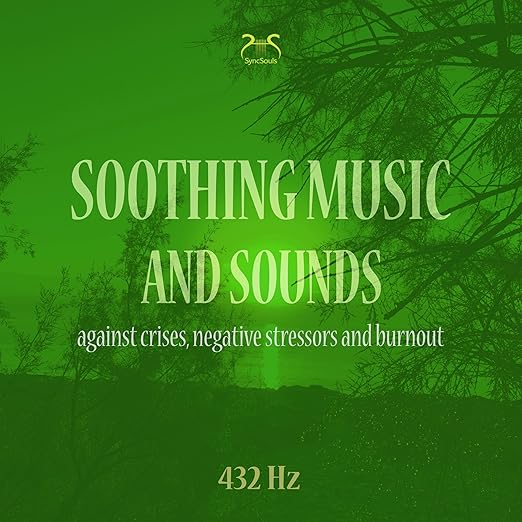
This is a different kind of audiobook entry. Torsten Abrolat describes himself as a composer and relaxation guide, and this production, self-authored and self-presented in the sense that the music is his own, is essentially a curated listening session rather than a traditional spoken-word audiobook. The runtime is one hour and thirteen minutes of music and nature sounds, with an introductory framing from Abrolat that sets context for how the session is designed and what the 432 Hz tuning is intended to accomplish. The result sits somewhere between an ambient album and a guided relaxation program.
The 432 Hz Question and What to Make of It
Abrolat centers the production on the claim that music tuned to 432 Hz rather than the standard 440 Hz has specific physiological benefits, reduced stress, greater inner peace, more efficient emotional processing. This is a claim with a significant following in wellness and alternative music communities, and it has a significant body of skepticism in academic music theory and psychoacoustics. The honest answer is that the difference between the two tunings is subtle enough that most listeners cannot reliably distinguish them in blind tests, and the peer-reviewed evidence for specific 432 Hz health benefits is thin. What isn’t thin is the relaxation response to slow piano, nature sounds, and singing bowl compositions regardless of their tuning. Abrolat’s music is genuinely calming. Whether the 432 Hz specification is doing additional work or the production quality is doing all of it is a question the evidence doesn’t resolve definitively, and listeners can decide for themselves how much the framing matters to their experience.
The Composition Itself
The musical content combines gentle piano and harp melodies with nature recordings, specifically the sound of the sea, babbling brooks, and birdsong, alongside singing bowl compositions. Abrolat describes the design as a journey that ends with music fading slowly away, providing a gentle transition rather than an abrupt stop. That fading structure is well-suited to sleep use in particular; the production’s gradual withdrawal of sonic attention models the process of drifting off rather than interrupting it. For meditation and yoga contexts, the pace is deliberate enough to support focus without demanding it, and the nature sounds provide enough texture to prevent the silence gaps from feeling empty.
The piano and harp work is tasteful without being remarkable, this is not music for close listening but for peripheral listening, and it behaves accordingly. The singing bowl sections have a particular quality of sustained resonance that works well for breath-focused practices. The sea sounds are a consistent undercurrent rather than a dramatic feature, which is the right call for sustained listening at the length Abrolat has composed.
The Personal Framing and What It Adds
What distinguishes this slightly from anonymous ambient productions is Abrolat’s personal voice in the framing text and the evident care of single-creator composition. The synopsis reads like a letter from a practitioner to a listener rather than product copy, and that quality translates into the listening experience as a sense of intentionality. This isn’t algorithmic wellness content; it’s a composer presenting work he clearly believes in. Whether or not you accept the 432 Hz framework, there’s a difference between content made for the category and content made for the purpose, and this is the latter.
Who Should Listen and Who Should Skip
This is for regular meditators, yoga practitioners, light sleepers who use ambient audio for sleep onset, and anyone who wants background music calibrated for genuine relaxation rather than productivity. It’s also appropriate for burnout recovery contexts where the goal is deceleration rather than stimulation. Skip it if you need spoken content to stay engaged, if you’re skeptical of wellness tuning claims and find them distracting rather than neutral, or if you’re looking for a more instructional relaxation guide. At three ratings, the data is insufficient to draw on statistically, but the 4.0 average suggests a satisfied niche audience.
Frequently Asked Questions
Is there any spoken narration in this production, or is it entirely music?
The production is primarily music and nature sounds, with a brief spoken framing from Abrolat at the beginning that introduces the session and its design. The vast majority of the seventy-three minute runtime is purely musical.
Does the 432 Hz tuning require any special equipment or headphones to experience?
No. The production plays through standard headphones or speakers. The 432 Hz tuning is a compositional choice rather than a format requiring specific hardware. Headphones will provide a more immersive experience with the binaural and nature sound layering, but the content is accessible through any playback device.
Is this suitable for sleep, meditation, or focused work, or does it serve one purpose better than others?
Abrolat designs it for multiple contexts: meditation, sleep onset, yoga, wellness, and background focus work. The gradually fading structure at the end makes it particularly well-suited for sleep onset. For meditation, the pace and sound texture support sustained attention without demanding it. For focused work, it functions as non-distracting background audio.
The rating is based on only 3 reviews, is there enough information to assess this confidently?
Three data points is insufficient for confident statistical assessment. The 4.0 average suggests early listeners found it effective, but prospective listeners should weight the ratings lightly and make their decision based on whether the described format, 432 Hz piano and nature sounds for relaxation, matches their needs.