In Brief
- Voice: Dylan Jones holds the only credit, and the material swings between chemistry, encouragement and a founder's memoir inside three hours.
- Big ideas: Small-batch soap chemistry, hobby-to-business conversion, blending as a competitive edge, one founder's exit.
- Atmosphere: Brisk, chatty, faintly infomercial.
- Worth it?: Worth the afternoon for the business half, provided you ignore everything the star column claims.
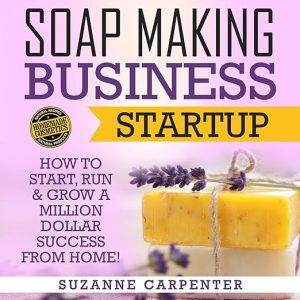
How many people have actually graded this audiobook? The badge above the title reads 4.5 and the counter beside it reads one, and those two figures cannot both be describing the same event, because a single vote can only be a whole number of stars, four or five, with nothing available in between. Underneath the badge sit five written responses, and one of them is not about this book at all. Somewhere below that mess is a three-hour recording about making soap well enough that strangers will pay for it, written by someone who did exactly that and then sold the company she built. The recording deserves better bookkeeping than the page gives it.
A Five-Star Count That Belongs to Another Book
That stray response deserves a minute of attention. Filed on January 30, 2024 and carrying five stars, its headline names a different product, a general guide to starting, running and growing a business, and its opening paragraph credits that guide to "[Author's Name]". The brackets are not my paraphrase. The brackets are what the page prints. Somebody pushed a review through a template, never filled the slot where a name belongs, published it regardless, and the platform hung the result on a soap manual. Suzanne Carpenter is not mentioned once inside it. A buyer scanning the star column would count that text as evidence about this book, and it is evidence about nothing at all.
One rating, five texts, and one of the texts imported from somewhere else: that is the whole evidentiary base on offer. The oldest response, posted December 21, 2017, makes the counter look stranger still, because its writer describes weighing this purchase carefully, counting roughly four harsh reviews against forty, and deciding the odds favored buying. Forty. Whatever loaded for that reader in 2017 is not what loads now, and no explanation appears anywhere on the record. None of this reflects on the writing. What it does decide is whether the page can be used to judge the writing, and the answer is that it cannot, so the copy has to carry the entire job.
Making Soap Versus Creating a Signature Blend
Carpenter's framing is the real reason to press play, and it is more honest than the category usually manages. The copy opens by promising not to hand over a few quick steps and a handful of recipes, then immediately admits it does that anyway, because a beginner needs somewhere to start. What the author wants is for you to understand how the ingredients behave together, well enough to build a blend nobody else sells, since carbon copies of soaps already stocked in local stores will never support a business. That distinction, between making soap and creating soap, is the spine of the first part, and having it explained properly is worth more than another recipe count.
A March 2018 five-star describes the result as two books in one: scent, color and a step-by-step process in the first part, then the turn toward a home-based business in the second, which that reader treats as the more valuable half. The March 2026 response says something similar in fewer words, recommending it to any beginner moving from hobby to business and calling it short but genuinely helpful. Short is accurate. Three hours and five minutes is a single afternoon, and the ambition sketched in the copy runs from a first batch to a local brand to a regional and eventually national one, which is a great deal of horizon for one afternoon.
Wrong Shelf Hides the Stronger Business Chapters
The only dissenting grade on the page is also the shortest text on it. The May 2023 four-star calls this an ok book for a soap business with good points, then explains the missing star plainly: that writer already owns a better one. No title is offered, which limits how much a buyer can do with the complaint, but its shape is fair enough. Soap manuals are not scarce, and this one wins on its second part rather than its first. If a solid technical reference already sits on your shelf, you are paying three hours for the business chapters and getting the craft chapters as revision.
Shelving is the other thing to flag. The record files this under home and garden with a crafts and hobbies tag, while roughly half the running time concerns testing a product, working out what sells, turning a passion into profit and growing a label. Anyone browsing small business audio will never meet it. Anyone browsing crafts arrives expecting formulas and gets a founder's account of building something and selling it on. Add a publication stamp of April 2017, which ages the commercial half considerably faster than it ages the chemistry, and the listing ends up hiding its stronger material behind the wrong shelf and a broken counter.
Dylan Jones Narrates a Woman's Kitchen Story
Reach for it if you already make soap for friends and family and have begun wondering whether the kitchen operation could pay for itself. The second part is written precisely for that person, by someone who describes herself as an average housewife and who came out the other end with a company worth selling, and the encouragement in the copy stays specific rather than sliding into motivational filler. It also suits anyone who wants a cheap orientation before committing to a thicker reference, since three hours costs an afternoon and settles whether the commercial side holds your interest at all, a question most craft manuals never think to raise.
Look elsewhere if you want recipes in volume or a deep technical education in ingredients, because the craft half is an on-ramp and not a reference. It suits nobody who needs current costs and current selling conditions either, since a 2017 recording cannot know what a small maker pays for anything now. Dylan Jones reads it, which puts a male voice on a chatty, self-interrupting first person belonging to a woman describing her own kitchen and her own risk, and nobody on the page has said a word about how that lands, so sample before you buy. What the listing cannot give you, an afternoon of listening can.