Quick Take
- Narration: Em Eldridge brings understated warmth to Becca’s disoriented first-person experience, keeping the comedy and the genuine vulnerability in balance.
- Themes: Midlife identity transformation, sapphic community and belonging, protection as purpose
- Mood: Gently eerie with community warmth at its center
- Verdict: A genuinely original werewolf novel that earns its central conceit by treating midlife transformation as the beginning of something rather than the end.
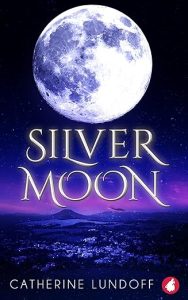
I came across Silver Moon during a stretch when I was looking specifically for werewolf fiction that did something the genre had not already done twenty times over. Catherine Lundoff’s premise delivers immediately on originality: in Wolf’s Point, Wyoming, menopause is the trigger for lycanthropy. Not all women. Not always. But enough that the local wolf pack, whose purpose is the protection of the town, is made up entirely of women in or past the change. Becca Thornton, the novel’s protagonist, was not expecting this development when she started experiencing hot flashes.
The book was originally published in English by Lethe Press and has since found new distribution. This audio edition narrated by Em Eldridge represents a welcome way into a novel that has been quietly influential in LGBTQ+ horror and paranormal fiction for over a decade. Lundoff’s approach is fundamentally comic in the literary sense: this is a story about transformation that finds possibility where the surrounding culture finds only loss.
Our Take on Silver Moon
The werewolf mythology in Silver Moon is built around community rather than isolation. The pack is not a pack in the traditional horror-genre sense of a threat or a metaphor for bestial violence: it is a mutual aid organization with monthly meetings and a genuine duty of care to the town. Becca’s integration into this structure is the novel’s primary arc, and it runs alongside her slowly developing feelings for her neighbor Erin with satisfying parallel momentum. Both the lycanthropy and the sapphic romance are treated as welcome complications to a life Becca had more or less stopped expecting to change.
Em Eldridge’s narration captures Becca’s particular mix of competence and bewilderment. This is a character who is not young, who has practical skills and a stable life, and who finds all of that context completely useless in her new situation. The comedy comes from that specific gap, and Eldridge plays it with dry affection rather than broad strokes. The werewolf hunters who arrive to threaten the pack are handled with appropriate gravity, though the book never loses its fundamental warmth even in its more dangerous sequences.
Why Listen to Silver Moon
The audio format suits the novel’s conversational, character-focused pace. Reviewers note that the book is not heavy on action or explicit horror, which may disappoint readers expecting the genre’s more frightening registers. What it offers instead is sustained atmosphere and community texture: Wolf’s Point feels like a real place with a real social ecosystem, and the pack’s dynamics have the specificity of something observed rather than invented. Listeners who appreciate werewolf fiction for its transformation-as-metaphor possibilities will find Lundoff working with that tradition thoughtfully.
What to Watch For in Silver Moon
The book is the first in a two-part story, and at least one reader found the wait for the second volume frustrating given the first’s open threads. The sapphic romance with Erin is present and developing but not resolved within this book, and readers who want a complete romantic arc within a single listen should know the relationship continues across volumes. The pacing is gentle by genre standards, which is a feature for some listeners and a limitation for others.
The tension between the werewolf hunters and the pack gives the novel its clearest dramatic through-line, and Lundoff handles it by keeping the threat specific rather than abstract. The hunters are not generic antagonists but figures with particular ideologies about what supernatural women represent and why they must be controlled. That specificity gives the final confrontation actual stakes rather than the genre-conventional showdown momentum. Becca’s role in that confrontation, which she has to earn rather than inherit, forms the emotional backbone of the novel’s resolution.
Who Should Listen to Silver Moon
Readers who specifically want paranormal fiction centered on women over fifty, and sapphic women at that, will find Silver Moon doing something that almost no other book in its genre attempts. Listeners who appreciate the community-focused, cozy side of supernatural fiction will find Wolf’s Point an inviting setting despite its dangers. Horror purists expecting lycanthropic violence and terror will find the book operates at a different frequency entirely. And anyone who has found the genre’s traditional association of werewolves with youth, violence, and masculinity limiting will find Lundoff’s reframe genuinely refreshing.
Frequently Asked Questions
Is Silver Moon the original English text or a translation given the German metadata?
Silver Moon was written in English by Catherine Lundoff and originally published by Lethe Press. This edition narrated by Em Eldridge is the English-language audiobook. The German metadata in some databases reflects a separate German translation published by Ylva Verlag.
How does Em Eldridge handle the dual tones of comedy and genuine peril in Silver Moon?
Eldridge navigates the tonal shifts with control, grounding Becca’s voice in practical bewilderment that makes both the funny and frightening moments feel consistent with the same character.
Is the sapphic romance with Erin a significant part of Silver Moon or more of a background element?
It is present and developing throughout but not resolved within this volume. The emotional arc between Becca and Erin runs alongside the pack storyline and receives genuine attention, though readers wanting full romantic closure should know it continues into the sequel.
Does Silver Moon require familiarity with traditional werewolf fiction conventions?
No. Lundoff establishes her own rules for lycanthropy in Wolf’s Point, and they depart significantly from genre conventions. The book assumes no prior familiarity with werewolf mythology beyond the basic transformation concept.