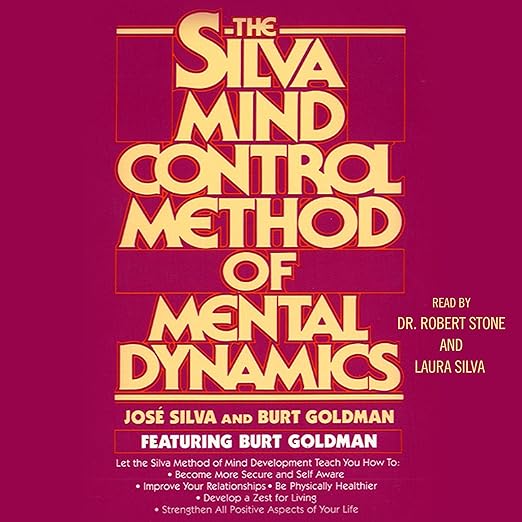
A meditation program that runs two hours and two minutes is either perfectly sized or seriously truncated, and which one it turns out to be depends entirely on what you think you are buying. This audiobook presents the Silva technique, which the publisher's copy says is "carefully taught in this program," and the same copy reports that José Silva had reached "over 5,000,000 people worldwide" since 1966. Two hours is not a lot of room for a method carrying that much history behind it.
One reviewer makes the arithmetic uncomfortable without intending to. Writing at five stars, this reader reports having attended the seminar and found that "the book has most of what was covered." A multi-session course compressed into a printed book is one proposition. The same content arriving inside one hundred and twenty-two minutes of speech is another. My honest inference is that this is a condensed audio program rather than a complete reading of the printed text, and I would settle the abridgement question before parting with any money, because the listing leaves it wide open.
Silva states his claim without a single hedge: "within our minds is the power to solve any problem, overcome any difficulty, and reach a consistent level of dynamic well-being." Six outcomes follow it, and they are worth reading slowly because they establish the register. Breaking addictions and destructive habits "permanently." Undoing negative patterns laid down earlier in life. Overcoming the stress of modern living. Putting untapped mental energy to work in a career, a business or a financial life. What you have here is 1960s self-improvement in its purest form: confident, systematic, and entirely uninterested in qualifying itself.
Reviewers describe something narrower and more practical than any of that, and the gap works in the book's favor. A four-star reader supplies the most useful line on the page: "The steps are deceptively easy and very effective. But it does take practice, not just reading it." Another calls the approach "down to earth and totally uplifting," describes the routine as "a little meditation, a little work every day," and adds that "The exercises are easy & something anyone can do." Set aside the promise of solving any problem and a modest daily practice is what remains, which is a far easier thing to recommend.
Stone's Reading and the Guidance Question
Almost everything about this material argues for audio, and one thing argues sharply against it. Guided meditation is a spoken form to begin with, and reading relaxation instructions off a page while attempting to relax is close to self-defeating. Robert Stone is attached as narrator on a text whose core content is a set of exercises somebody has to talk you through. So the question the format raises is not whether audio suits the subject but whether this recording actually functions as guidance, with the pacing and the silences a practice session requires, or whether it reports the exercises at reading speed and leaves the practising entirely to you. Those are two very different products.
Two hours is also exactly right for a method you intend to repeat rather than to finish. The four-star reviewer is explicit that results come from practice rather than from a single read, which turns a short runtime into an asset: you can run the entire program again on a quiet weekend morning without surrendering an afternoon to it. Self-help at this length is also honest about its own ambitions in a way that a twelve-hour treatment of the same material would not be.
Four Promises Framed as How-To Instructions
Read the review pool with care, because two of its five entries carry no information whatsoever. One five-star notice consists of a headline and an empty body. Another, filed in October 2024, is a block of unattributed promotional language set inside an opening quotation mark that never closes, finishing on a line about the impact left "long after the last page is turned." That text is marketing rather than a reader's report, whoever wrote it, and a 4.4 average resting on 110 ratings deserves to be read with both of those entries discounted.
Look closely at how the six promises are phrased, too. Four of the six open with the words how to: how to break addictions, how to undo negative patterns, how to overcome stress, how to turn unused mental energy toward a career. The remaining two name principles rather than procedures. Predominantly this is an instruction set, which raises the stakes on delivery, since a listener who mishears a step has no page to check it against.
Weigh the claims themselves as well. A promise to break addictions and destructive habits "permanently" is the sort of sentence a contemporary publisher would soften, and this listing does not soften it. Readers who liked the book are talking about goal setting, daily practice and a change in outlook, which is a much more defensible product than the copy is selling. Anyone who needs a clinical intervention should look for one, and nothing in these notices suggests otherwise. Note too that the written pool runs from December 2010 to October 2024, so it is assessing the method across nearly fourteen years rather than assessing this particular edition.
Close to the Source of Modern Visualization Advice
Self-help readers curious about where a large share of modern visualization and goal-setting advice originated should spend two hours here, because this is close to the source rather than a repackaging of it. Listeners who already meditate and want a structured framework with specific applications will find the exercises undemanding, and one reviewer who took the full seminar reckons the book keeps most of what the course covered. People who prefer their self-help brief and repeatable have the runtime itself as an argument, and the daily-practice framing means you are meant to return to it rather than tick it off.
Evidence is not part of the package. Silva asserts rather than argues, and a listener who wants a mechanism or a citation before trying an exercise will spend two hours hearing what is possible instead of why any of it should work. Skeptics of the genre will find nothing here designed to convert them. Anyone expecting the full printed text read start to finish should establish what this edition contains first, since the runtime and the word program in the copy both point the other way. Approached as a compact introduction to a technique with sixty years of practitioners behind it, two hours is a cheap thing to risk.
Before You Listen
Is this the complete book or a condensed program?
Nothing on the listing settles it, and two hours is short for a text one reviewer says holds most of a full seminar. The publisher calls it a program rather than a reading, which points the same way. Establish whether the edition is abridged before buying, because the difference here is large.
Does the audiobook work as guided meditation you can follow along with?
That is the open question. The technique is taught through exercises, and audio is the natural home for spoken guidance, but a recording that merely describes the steps at reading pace is a different product from one paced for practice. Nothing on the listing settles which of the two this is.
What do listeners say the audiobook actually delivers?
Goal setting, mostly. One five-star reader who attended the seminar calls it the best method for that purpose. A four-star reviewer stresses that the steps are easy but need daily repetition rather than a single pass. The concrete praise clusters around routine, not around the larger promises.
Are the reviews on this listing reliable?
Only three of the five carry any information. One is a headline with an empty body, and another reproduces anonymous marketing prose inside a quotation mark that never closes. With 110 ratings behind a 4.4 average, weigh those three substantive notices considerably higher than the score itself.