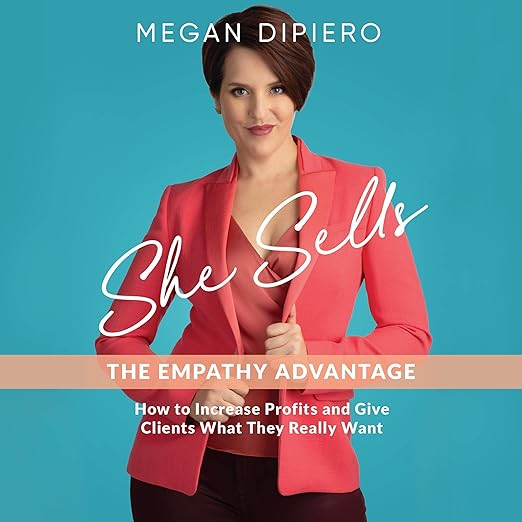
Megan DiPiero built her LUXE sales system after her own transition from stay-at-home mom to seven-figure earner, and She Sells compresses that system into a tight three hour and twenty-two minute audiobook aimed squarely at business owners who flinch at the idea of selling aggressively. The central question driving the book, whether genuinely good people can also be good at sales, sets up DiPiero's real argument: the 'shark' model of selling, greedy and manipulative, is not the only path to a seven-figure business, and may not even be the most effective one for creatives specifically.
Demi Dawn Sneaking Off During a Work Shift
DiPiero's LUXE framework gets its clearest real-world validation from the reviews themselves, all three of which come from photographers applying her pricing and positioning advice directly to their own businesses. Reviewer Athansor calls it the book they wish had existed seventeen years ago when starting a portrait photography business, specifically praising the guidance on differentiating from competitors without simply lowering prices. That kind of concrete, industry-specific application is a strong signal for a business book, since it means DiPiero's advice survives contact with an actual, particular market rather than staying abstract.
Reviewer Demi Dawn's account adds real color: admittedly not a frequent reader, she describes being genuinely locked into the material, finishing what she calls a fully read book after starting it just two days earlier, even sneaking off to read during a work shift. That kind of engagement matters for a business audiobook specifically, since dry, jargon-heavy sales material is easy to let stall halfway through; DiPiero's writing, at least for this reader, clearly avoided that trap.
LUXE functions as a branded framework rather than a loose descriptive word, the kind of memorable, trademark-ready name that signals DiPiero has taught this system enough times to know it needs a name people can actually remember and repeat. That branding instinct itself doubles as evidence for the book's central argument: DiPiero is applying the same premium-positioning logic to her own teaching material that she is telling photographers to apply to their client work, treating her own knowledge as a product worth pricing accordingly rather than giving away as generic advice.
A Narration That Avoids Its Own Hard Sell
DiPiero's self-narration is a real asset for a book built on personal transformation, since her own hard-won business trajectory is the credibility underpinning everything else she argues. A hired narrator reading her story secondhand would flatten exactly the lived-experience quality that makes a business memoir like this persuasive. Her voice carries the specific confidence of someone who has taught this system to real clients, not just written about it once and moved on.
At just over three hours, the audiobook is built for a single focused sitting or a couple of commutes, which suits its actual content: a tight, repeatable sales system rather than a sprawling business philosophy. That brevity is a genuine strength here rather than a limitation, since DiPiero's LUXE framework, built around specific, teachable steps, does not need ten hours of padding to land its core argument the way a broader leadership or management book might.
The arc DiPiero builds her credibility around, a parent at home turned seven-figure earner, is a familiar structure within the women's entrepreneurship publishing category, and its recurring popularity says something real about the audience this book is written for: business owners who started with no formal training or outside investment and need to see that path modeled by someone who actually walked it, not theorized about it from a business school seat.
DiPiero's narration also carries a specific register worth naming: energetic without tipping into the hard-sell tone the book is explicitly arguing against, a genuine needle to thread for a sales book that spends real energy distancing itself from pushy tactics while still needing to motivate a listener to actually change their pricing. That she narrates her own material in a voice that itself avoids sounding salesy is a small but real piece of evidence that she practices what the book preaches.
Untested Outside Wedding Planners and Interior Designers
The name LUXE itself signals the book's core thesis before a listener even presses play: positioning a creative business toward luxury-tier clients rather than competing on price with everyone else in a saturated market. That framing works well for the specific audience DiPiero is writing for, photographers and similar creative-services business owners, but listeners in fields where luxury positioning genuinely does not apply, commodity retail, for instance, should know this system is built around a particular kind of business model, not a universal sales philosophy.
All three available reviews come from photographers specifically, which is a useful signal about DiPiero's core audience but also a real limitation for judging how the material lands outside that industry. The underlying principles, pricing confidence, attracting clients willing to spend more, leaning into empathy rather than pressure tactics, are framed broadly enough to apply elsewhere, but listeners outside photography and adjacent creative fields are working with less direct evidence that the specific tactics will translate as cleanly.
The synopsis describes the book as a comprehensive playbook, language that sits in some tension with a three hour and twenty-two minute runtime, comprehensive usually implies more exhaustive coverage than that length allows. In practice, based on the reviews, DiPiero appears to resolve that tension by keeping the material tightly practical rather than theoretical, prioritizing directly applicable steps over extended case studies or industry history, a reasonable trade for a business owner who wants to apply new pricing strategy this week rather than study the subject for a month.
A 4.7 rating across 271 reviews, with every review in the sample specifically from photographers, suggests DiPiero's marketing and audience-building have stayed remarkably focused on that one industry rather than diffusing broadly, which cuts both ways: deep credibility within photography, but less evidence available for how the LUXE system performs when applied by a wedding planner, an interior designer, or another creative-services business entirely outside that specific niche.
Three Hours That Feel Like a Focused Workshop
She Sells is built for creative business owners, photographers especially but not exclusively, who feel genuine discomfort with traditional high-pressure sales tactics and want a system that lets them charge premium prices without adopting a mindset that feels dishonest to who they are. DiPiero's self-narration and the tight runtime make this an easy, practical listen for anyone looking to apply new pricing and positioning strategy immediately rather than study sales theory abstractly.
Business owners outside creative or service-based industries, or those already comfortable with aggressive sales tactics and specifically looking to sharpen that approach, will likely find less direct value here, since DiPiero's entire framework is built around an alternative to that model. Listeners wanting a long, deeply researched business book should also know three hours is a genuinely tight runtime, closer to a focused workshop than a comprehensive text.
Frequently Asked Questions
Is She Sells useful outside the photography industry, or mainly for photographers specifically?
All three available reviews come from photographers, so that is clearly the core audience, though the underlying pricing and positioning principles are framed broadly enough to apply to other creative and service businesses.
Does this audiobook's three-hour runtime cover a full sales system or just an overview?
It covers DiPiero's full LUXE system, just delivered efficiently. The brevity fits a tight, teachable framework rather than a sprawling business philosophy that would need a longer runtime.
Does Megan DiPiero's self-narration add credibility to this audiobook's sales advice?
Yes, since her own path from stay-at-home mom to seven-figure earner is the credibility underpinning her argument, and a hired narrator reading it secondhand would flatten that lived-experience quality.
Is this audiobook aimed at business owners who already dislike traditional 'salesy' tactics?
Exactly that audience. DiPiero opens by rejecting the 'shark' model of selling directly, building her entire system around an alternative for business owners who lead with empathy.