Quick Take
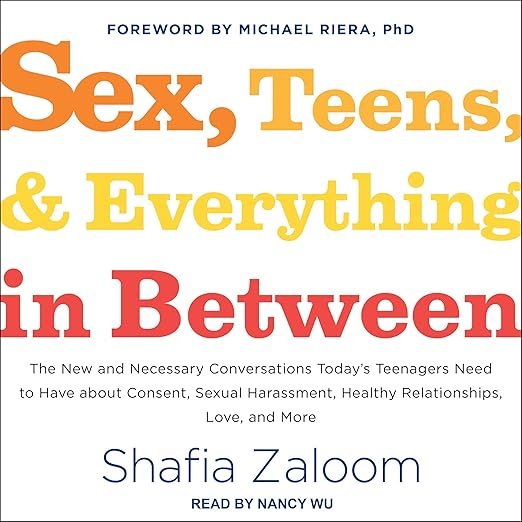
- Narration: Nancy Wu reads with even, approachable steadiness, which is exactly right for a book parents will use as a conversation-starter rather than solo entertainment.
- Themes: Consent education, sexual harassment and assault prevention, navigating pornography’s influence on teenagers
- Mood: Calm and unflinching, like a very well-prepared school counselor
- Verdict: For parents who want to have real conversations with teenagers about consent, assault, and sexual culture, this is a practical and unusually thorough guide.
I listened to most of this one during a week when several different news cycles had converged on questions of consent, campus assault, and what teenagers actually understand about all of it. The timing felt less coincidental and more like the book had been waiting. Shafia Zaloom spent years working as a health and human development teacher at a private school in San Francisco, and this is the book that grew from that work. It shows: in how it’s organized, in the specific scenarios it offers, and in the refusal to pretend that parents can simply have one conversation and consider themselves done.
What Zaloom has produced is, essentially, a field manual for parents and educators who know they need to talk about sex, consent, and digital culture with teenagers but aren’t sure how. That’s a more specific problem than it might sound. Most parents have some version of the foundational talk. Very few have had a substantive conversation about what consent actually looks like under social pressure, what sexting involves legally, how pornography is shaping teenagers’ expectations of sex, or what to do if their child is accused of assault. Zaloom addresses all of it.
The Consent Chapters Do the Work
The book’s treatment of consent is its strongest and most necessary section. Zaloom goes well beyond the yes-means-yes basics to show what consent negotiation actually sounds like in the real situations teenagers face: parties, relationships where power is uneven, cases where pressure accumulates gradually. The real-life scenarios in each chapter aren’t hypothetical. They’re drawn from the kinds of situations Zaloom encountered in her teaching, and they read as such. Parents who’ve wondered how to translate the abstract principle into something a sixteen-year-old can actually use will find this section genuinely useful.
The chapters on sexual harassment and assault are handled with both clarity and care. Zaloom covers legal consequences in language teenagers can understand, offers specific guidance for what to do if a teen experiences assault, and addresses the genuinely difficult situation of what to do if your child is accused. That last one is rarely handled directly in books of this type, and the fact that she goes there makes the whole book more honest.
Pornography, Social Media, and What’s Actually Changed
Several reviewers noted how comprehensively the book covers the contemporary sexual landscape for teenagers, and the pornography section stands out. Zaloom doesn’t moralize. She describes, with specificity and evidence, how normalization of pornography is changing teenagers’ scripts about what sex looks like, what bodies should look like, and what they’re supposed to want. She then offers parents frameworks for having those conversations rather than simply prohibiting access and hoping for the best.
The digital culture material is well-integrated rather than tacked on, which matters because for most teenagers these topics can’t actually be separated. A conversation about consent that doesn’t address sexting, screenshots, and digital pressure is a partial conversation.
Nancy Wu’s Narration and the Nine-Hour Arc
Nancy Wu’s reading is competent and steady. For a book that parents might share with teenagers, or listen to while driving their kids somewhere, the measured tone is an asset. She doesn’t dramatize the difficult material or treat it with the stiff formality that often makes health education content feel clinical and off-putting. The nine and a half hours is a real commitment, but the book is organized in chapter-sized sections that work well for interrupted listening. You can return to a specific topic when a relevant conversation opens up rather than needing to re-enter a continuous narrative.
Who This Is For
Parents of teenagers between roughly 13 and 18 are the obvious primary audience. Educators and school counselors will also find it useful, particularly the chapters on how to structure discussions rather than monologues. This is not a book for teenagers to listen to alone: it’s designed for adults who want to be better equipped for conversations with young people, not as a substitute for those conversations. Readers who want something more narrowly focused on a single aspect of teen sexuality will find this broad rather than deep in any one area. The breadth is a feature, not a flaw, but worth knowing.
Frequently Asked Questions
Is the book appropriate to listen to with your teenager, or is it aimed at parents preparing for conversations?
It’s designed primarily for adults who want to be better equipped for conversations with teens. The discussion questions at the end of each chapter are genuinely useful conversation-starters, but the framing is adult-to-adult. Listening with a teenager present could work for some families depending on your dynamic.
Does the book address same-sex relationships and LGBTQ+ teenagers, or does it focus primarily on heterosexual scenarios?
Zaloom includes LGBTQ+ teenagers in her framing, and the consent and safety material applies across relationship types. It’s not the central focus but it isn’t ignored: the book is aware that not all teenagers are heterosexual and adjusts accordingly.
How does the book handle the situation where a teenager has already been exposed to significant amounts of pornography?
Zaloom devotes specific attention to the effects of pornography exposure and offers parents language for talking about it after the fact, not just as prevention. The approach is non-shaming and practical, less about eliminating exposure and more about helping teenagers develop critical frameworks for what they’ve seen.
Does the book cover the legal consequences of sexting, and are those sections US-specific?
Yes, the legal material is US-focused and covers sexting consequences, including how images can be treated as child pornography under law depending on the ages involved. Readers in other countries should verify applicable laws locally, but the ethical and relational framing of those sections transfers.