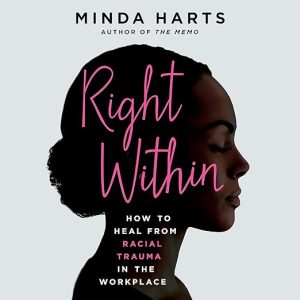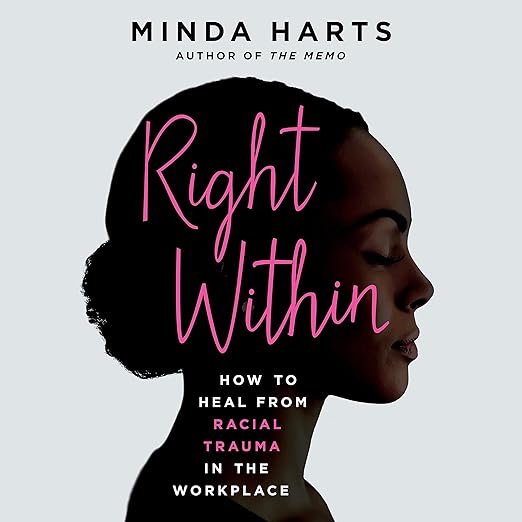
Minda Harts does not soften the workplace stories in Right Within, and that refusal is exactly what makes this audiobook land the way it does for women of color navigating corporate America. Following her earlier book The Memo, Harts builds a more explicitly healing-centered framework here, one aimed less at career strategy alone and more at the accumulated toll of microaggressions, racialized trauma, and invisible workplace burdens that strategy alone never addresses. The shift from advice-giving to something closer to guided healing is a meaningful evolution in her work, and it comes through clearly across this audiobook's seven and a half hours. The title itself does real work: Right Within plays on two meanings at once, being right, correct and justified, within a system that often gaslights women of color about their own perceptions, and finding what's right, healthy and whole, within yourself despite that system's pressure. Harts builds the entire book around holding both meanings simultaneously rather than picking one.
Janine Says Read This Like the Bible
The book moves through concrete strategies for speaking up during racialized moments with managers and clients, working through past triggers listeners may not even recognize as still active, and reframing old career disappointments as openings toward a different path. Harts brings in advice from therapists and faith leaders of color throughout, which broadens the book's register beyond typical corporate self-help into something closer to a holistic support structure. Reviewer Janine's reaction captures the intensity of that approach: 'this book right here is one EVERY black working woman... should read like the bible,' she writes, describing an instinct to 'highlight, write notes in the margin then discuss with your girlfriends,' a ritual the audio format inevitably changes even as the content itself still lands. Where The Memo focused primarily on career strategy and advancement tactics, Right Within moves the center of gravity toward healing and interior repair, treating the accumulated psychological cost of workplace racism as a subject worth addressing directly rather than an obstacle to simply push past on the way to the next promotion. That's a meaningful shift in emphasis for readers who found The Memo useful but wanted Harts to go further into the emotional toll itself.
Reviewer Mama12's review title frames this as 'must read and purchase for HR, DEI, ERG leaders, women of color and everyone looking to be an ally,' which signals a book with real utility beyond individual reading, into professional-development and training contexts specifically. That range, from personal healing to organizational application, is part of what makes Right Within feel like more than a typical career-advice title.
Closer to a Friend's Counsel Than a Corporate Audiobook
Harts narrates her own book with raw, unflinching directness that a hired narrator simply could not replicate on material this personal. Her delivery carries real wit and warmth alongside the harder material, and that combination is part of what readers already associate with her voice on the page. Bringing in advice from therapists and faith leaders of color specifically, rather than generic wellness voices, matters here: it signals Harts is building a support structure calibrated to the cultural and spiritual contexts many of her readers already draw on, rather than importing a one-size-fits-all self-help framework that ignores those differences. Hearing her read her own account of racialized workplace pain, rather than a stranger's interpretation of it, changes the register of the whole book: this becomes closer to a trusted friend's direct counsel than a polished corporate-training audiobook, which is exactly the tone the content itself is reaching for throughout.
Reviewer Rhonda Dixon's short, direct reaction, 'I could relate to everything,' is worth taking at face value as evidence of the book's core strength: specificity. Harts isn't writing in vague generalities about workplace difficulty; she's naming exact patterns precisely enough that readers with very different jobs and industries still recognize themselves immediately in her stories. Harts's own career, moving from corporate roles into consulting and now authorship, gives her workplace examples a specificity that secondhand research alone couldn't replicate; she isn't reconstructing racialized workplace dynamics from interviews and surveys exclusively, she's describing patterns she's navigated directly across multiple professional environments herself. The book's structure moves deliberately from naming harm to processing it to acting differently going forward, a three-part arc that mirrors a lot of clinical trauma-recovery frameworks without ever using overly clinical language to describe it, which keeps the material accessible to listeners without a therapy background. That accessibility matters given how broad Right Within's stated audience is, from individual readers processing personal experience to HR departments building formal training programs, since heavy jargon would serve the second group while alienating the first.
4.8 Stars Serving Two Very Different Uses
The book is built around action points, exercises, and coaching prompts meant to be worked through actively, and audio alone can't replicate the experience of a workbook page you fill in and return to later. Listeners who want the full exercise-based value here should pair the audiobook with the print or digital edition for the hands-on sections, while trusting that the core narrative and coaching content still translates cleanly to listening on its own. This is emotionally heavy, specific-trauma-adjacent material for some listeners, and the audio format means you can't skim ahead the way print allows if a particular story hits close to home.
At 4.8 stars across 306 ratings, the consumer response here is about as strong as ratings get for a book in this category, which is worth noting alongside the content itself: this isn't a niche or divisive title within its intended audience, it's a book that consistently delivers on what it promises for the readers it's written for. Reviewer Janine's church-adjacent framing of reading it 'like the bible' and reviewer Mama12's more institutional, professional-development framing point toward two genuinely different ways listeners use this book, as deeply personal sustenance on one hand and workplace training material on the other. Both uses coexist within the same text, which speaks to how deliberately Harts built multiple entry points into the same underlying material.
The Natural Next Chapter After The Memo
Women of color working in corporate or office environments, DEI and HR professionals building training curricula, and allies genuinely trying to understand workplace racial dynamics will all find real value in this audiobook. It's also a strong pick for anyone who read and connected with The Memo and wants Harts's next chapter.
Skip it if you're looking for a broad-audience workplace book not centered specifically on the experience of women of color, or if you know from experience that you need to physically write through exercises rather than just listen to them described. Pairing this with the print edition solves that second concern for most listeners.
In Brief
- Performance: Minda Harts narrates her own book with raw, unflinching directness that no hired voice could replicate.
- What it covers: racialized workplace trauma, healing, professional resilience
- Feel: Candid and empowering
- Our call: A vital listen for women of color in corporate spaces, best paired with the print edition for its exercises.
Does Minda Harts narrate the Right Within audiobook herself?
Yes, and her raw, unflinching delivery is a genuine asset given how personal the workplace material is throughout.
Can I complete the exercises in Right Within through the audiobook alone?
Not fully. The book includes action points and workbook-style exercises that work better with the print or digital edition alongside the audiobook's narrative content.
Who is the intended audience for the Right Within audiobook?
Primarily women of color navigating corporate workplaces, along with HR, DEI, and ERG leaders and allies who want to better understand racialized workplace dynamics.