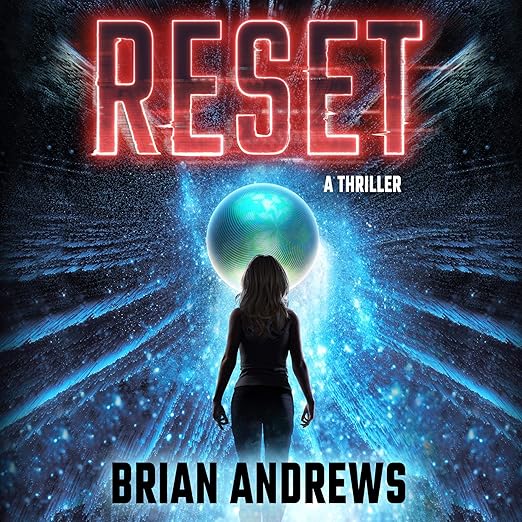
Before You Press Play
- Performance: Ray Porter's controlled, tension-holding delivery elevates a competent thriller into something more memorable, per direct reviewer praise.
- What it covers: Government conspiracy, unexplained technology, a soldier's altered mind.
- Feel: Tense and steadily unspooling, built for sustained curiosity.
- Our call: A solid science-fiction thriller worth hearing for Porter's narration alone, but disregard the Dan Heath byline entirely.
Sergeant Michael Pitcher's discovery in the Afghan mountains is the kind of opening that hooks a listener fast, but this audiobook carries a byline problem worth flagging immediately, before you spend a credit on it: the credited author on this listing is Dan Heath, known for behavior-change business books like Switch and Upstream, while the actual content is a science-fiction conspiracy thriller with no connection to that work at all. Every attached review names the real author as Harlene Pruitt, and the plot they describe, Pitcher's mysterious seizure after handling an unexplained object, his wife Josie, CIA agent Dean Ninemeyer, a vanished team of scientists, matches the synopsis exactly. Treat the Dan Heath byline as a catalog error and evaluate this purely as Pruitt's thriller, because that is what you will actually be listening to.
A Register Porter Rarely Gets to Use
Structurally, this sits in the same genre neighborhood as military-adjacent science fiction where an ordinary soldier becomes a vector for something much larger than himself, and Josie's arc gets more narrative weight than that setup might suggest, she is not sidelined as a worried spouse waiting at home but becomes an active investigator alongside Ninemeyer once her husband disappears. That dual-protagonist structure, a CIA agent and a civilian spouse working the same mystery from different angles, gives the book more texture than a single-POV thriller would have, and it also gives Porter's narration more range to work with across the eleven-hour runtime, distinct voices for a career intelligence officer and a woman improvising her way through a crisis she never trained for.
A more measured reviewer, Luv2read, landed at three and a half stars, engaged throughout but not fully swept away, a useful counterweight to the five-star enthusiasm elsewhere in the review set. That middle assessment suggests a book that executes its central mystery competently and holds attention reliably without necessarily reinventing the conspiracy-thriller formula it works within. If you have read widely in this specific subgenre, an ordinary person changed by contact with something unexplained, a government conspiracy trailing behind them, some of the beats here will feel familiar rather than surprising, even if the execution itself remains solid throughout.
It is worth noting how this book differs tonally from the material that built Porter's reputation. Much of his best-known science-fiction work leans on dry, self-deprecating humor carried by a first-person protagonist who is fundamentally likable even under pressure. Reset offers him almost none of that register to work with: Pitcher spends most of the book as either a menacing absence or a genuinely altered, colder version of himself, and Josie and Ninemeyer's chapters stay in fairly straight thriller mode throughout. Porter adapts well to that shift, proving his range extends past the witty-protagonist mode he is best known for, though listeners who specifically came to him for that humor should know this book asks for something more austere.
Karen's Library Titled the Review After Porter
Ray Porter's narration is the single most consistent praise point across the attached reviews, and it lines up exactly with his established strengths elsewhere in the genre. Reviewer Karen's Library titled her review around his performance specifically, calling the underlying story decent but crediting Porter's narration with elevating it into something considerably more compelling, an assessment that matches his track record on other science-fiction and military-thriller material, where his control of tension through pacing and restraint rather than vocal theatrics has been confirmed repeatedly. A story built around a soldier whose personality shifts after contact with something inexplicable needs a narrator who can modulate subtly between the pre- and post-incident versions of the same character, and Porter has exactly that kind of range.
The plot mechanics lean hard into slow-reveal structure: Pitcher disappears after emptying his and Josie's bank account, the scientific team connected to his case vanishes without explanation, and CIA agent Dean Ninemeyer's investigation keeps circling back to questions the book withholds answers to until deep into the runtime. Reviewer Luv2read specifically mentioned staying engaged while wondering when 'the Reveal' would actually arrive, and that kind of sustained curiosity is a good sign for a mystery-driven thriller told across eleven hours, since a weaker structure would have tipped its hand or lost momentum well before the ending most reviewers seem to find satisfying.
Search Pruitt's Name Directly, Skip the Listing
Beyond the byline issue already flagged, listeners searching specifically for Dan Heath's actual nonfiction catalog should look elsewhere entirely, his real books, Switch, Decisive, Upstream, The Power of Moments, deal with organizational behavior and decision-making, not science fiction. If you arrived here expecting that kind of content, this will be a genuine surprise, pleasant or not depending on what you were hoping for. Conversely, if you are specifically hunting for more of Harlene Pruitt's work after finishing this one, search under her name directly rather than trusting the catalog listing, since the mismatched byline here would not surface her other titles correctly given this particular error.
On the story itself, the CIA-conspiracy machinery that drives the back half occasionally prioritizes momentum over full explanation, a common tradeoff in this subgenre, and listeners who want every mechanism of the mysterious object fully accounted for by the final chapter may come away with a few lingering questions. That is consistent with how this kind of conspiracy thriller typically operates, answers arrive in service of forward momentum rather than exhaustive world-building logic, and Porter's confident narration does a lot of work smoothing over any gaps that a more skeptical reading of the plot mechanics might otherwise expose.
Skip This If You Wanted Dan Heath
Fans of science-fiction thrillers with a military throughline, readers who enjoyed the Bobiverse-adjacent blend of tension and momentum that Ray Porter has built a reputation narrating, will find this a satisfying entry in that general category. Anyone who picks audiobooks primarily by narrator, and Porter has earned that kind of loyal following through consistently strong performances across science fiction and military-thriller titles, should add this one to the list without hesitation, the reviewer consensus here specifically credits his performance with elevating decent material into something more memorable. Listeners who enjoy a slow-reveal conspiracy structure with a dual-protagonist investigation will also find the eleven-hour runtime well used.
Skip this one immediately if you came looking for Dan Heath's actual work, you will not find it here despite the byline, and redirect toward his real titles instead. Readers who need hard science-fiction rigor, a fully mechanistic explanation for the central mysterious object, should also temper expectations, since this book prioritizes thriller momentum over scientific plausibility throughout. For listeners comfortable with those tradeoffs, though, and willing to look past a genuinely confusing catalog listing, Reset delivers a competently constructed conspiracy thriller elevated meaningfully by one of audiobook narration's more reliable genre performers.