Quick Take
- Performance: Lily Nichols narrating her own research-dense text is the right call. She delivers complex nutritional science without clinical distance, keeping the material warm and navigable across a 20-hour runtime.
- What it covers: preconception nutrition, menstrual cycle literacy, fertility as whole-body investment
- Feel: Thorough, evidence-grounded, and supportive without being sentimental
- Our call: For anyone preparing for pregnancy or navigating fertility challenges, Nichols's audiobook is the most comprehensive nutrition-focused resource in its category, though the accompanying PDF companion is essential for full value.
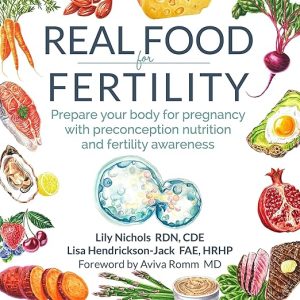
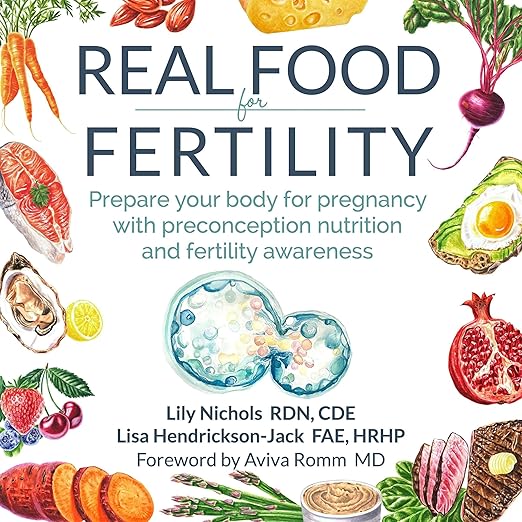
Lily Nichols built her reputation as a registered dietitian and nutrition researcher through Real Food for Gestational Diabetes, and this audiobook, narrated by Nichols herself across just over 20 hours, applies the same evidence-first rigor to the preconception period. Real Food for Fertility is not a fertility diet book in the usual sense. It is a systematic examination of how nutrition, menstrual cycle health, birth control history, stress physiology, toxin exposure, and reproductive technology interact in the months before conception, and it makes the case, backed by the research Nichols has spent years reviewing, that what you eat before pregnancy matters at least as much as what you eat during it. Please note that this audiobook includes a PDF companion available in your library alongside the audio, and the visual reference material it contains is worth accessing for full benefit.
The Bank Account Analogy for Fertility Prep
The bank account analogy Nichols uses as an organizing metaphor is both simple and precise: pregnancy is a period of massive withdrawals from nutrient reserves, and the question is whether you have made sufficient deposits before the withdrawal begins. That framing cuts through the common advice to start taking a prenatal vitamin and immediately establishes a more demanding and more useful framework. The book addresses egg and sperm quality, menstrual cycle regulation, the nutritional aftermath of hormonal birth control, and the specific deficiencies most likely to compromise fertility outcomes. None of this is speculative; Nichols cites her sources extensively and distinguishes between well-established findings and emerging research.
Reviewer Booky, a registered dietitian in women's health, gave the book the highest possible praise from a professional perspective, calling it the most comprehensive, evidence-rooted resource she had found across years of reading in the field. That kind of endorsement from within the clinical community is unusual and meaningful. Reviewer Ashley noted that the book covers far more territory than she expected, extending into lifestyle factors well beyond diet, and that the depth made it a resource to return to rather than read once and set aside. At 20 hours, that is the right relationship to have with it.
Lily Nichols's Clinical Voice Across Twenty Hours
Nichols's self-narration is an asset that grows more significant as the runtime extends. A 20-hour audiobook on reproductive nutrition could easily become an endurance test in the hands of a professional narrator reading someone else's work. Nichols's voice carries the authority of a clinician who has worked with real patients on these exact questions, and that authority makes the density of the material feel less like a lecture and more like a well-organized consultation. She paces the information well, and the structure of the book, which builds from foundational nutrition through cycle-specific topics to clinical interventions, means the complexity accumulates logically rather than landing all at once.
Reviewer Andrea Torres described the book as dense but written in a way that anyone can understand, and the audiobook sustains that accessibility across its full length. The topics the book covers, including fertility awareness methods, the effects of specific nutrients on egg quality, the research on preconception supplementation, and the assessment of common reproductive health conditions, are handled with the specificity needed to be genuinely useful rather than the vagueness that characterizes most wellness content in this space.
This 20-Hour Guide Needs Its PDF Companion
The PDF companion is not optional for full engagement with this audiobook. The book contains charts, food lists, nutritional reference tables, and supplementation guidance that are difficult to absorb purely through audio. Listeners who do not access the PDF will get the full conceptual framework but miss the practical reference material that makes the book actionable on a day-to-day basis. Download and have the companion open, or plan to access it separately as you listen to specific sections.
The 20-hour length also warrants comment for expectation management. This is a reference text as much as a narrative read, and it is not designed to be consumed in a few sessions. Listeners who approach it as background listening may find they need to replay sections when they want to act on specific recommendations. Active listening, with the ability to pause and take notes or cross-reference the PDF, will produce better outcomes than passive absorption. Reviewer Ashley's observation that the book is a resource to have on hand rather than simply read through captures the right relationship to its density.
Birth Control's Overlooked Nutritional Aftermath
The book's coverage of hormonal birth control and its nutritional aftermath is one of the areas where Nichols adds the most value relative to general fertility advice. Most preconception guidance treats the question of prior contraceptive use as irrelevant to current fertility status. Nichols argues, with specific reference to the research, that certain hormonal methods deplete key nutrients over time and that the replenishment of those stores is a measurable part of preconception preparation. This is clinically nuanced territory that general wellness content almost never addresses, and the audiobook handles it with the same evidence-grounded care as the rest of the text.
For PCOS, Endometriosis, and Thyroid Concerns Specifically
This audiobook is most directly valuable for people who are actively preparing for pregnancy in the next one to two years and want a comprehensive, evidence-based framework rather than generic prenatal advice. It is also valuable for healthcare providers in reproductive health who want to update their nutritional counseling with current research. Listeners navigating specific reproductive health conditions, including PCOS, endometriosis, and thyroid disorders, will find dedicated sections that most fertility books do not cover in depth.
Skip it if you are looking for a quick-start guide or a simple food list. The value of the book is in its comprehensive approach, and that value requires engagement with the full structure. Listeners who want Nichols's framework in a more compressed form may want to start with her earlier work on gestational diabetes to assess whether her style and depth suit them before committing to 20 hours.
Does this audiobook of Real Food for Fertility work without accessing the PDF companion?
The audiobook delivers the full conceptual framework without the PDF, but the companion contains charts, food lists, and supplementation reference tables that are difficult to absorb through audio alone. For full practical value, accessing the PDF alongside the audio is strongly recommended. It is included free in your library with the purchase.
Does the audiobook address male fertility as well as female fertility?
Yes. Real Food for Fertility covers preconception nutrition for both partners, including the effects of specific nutrients on sperm quality and the research on male preconception supplementation. The book frames fertility optimization as a shared preparation rather than solely a women's health issue.