Quick Take
- Narration: Caroline McLaughlin brings a pleasant, encouraging tone well matched to the beginner-focused material, never condescending, consistently clear.
- Themes: Soil health and raised bed construction, organic growing on a budget, crop rotation and succession planting
- Mood: Practical and encouraging, with the pacing of a good how-to workshop
- Verdict: A solid two-hour foundation for first-time raised-bed gardeners, compact enough to revisit before each growing season.
I have attempted raised-bed gardening twice with mixed results, the second time losing most of my root vegetables to what I eventually identified as a determined family of voles. When I found this one I was in early winter, planning a third attempt with more intentionality than I had brought to the previous two. Two hours felt like exactly the right commitment for a book in this genre, long enough to cover the fundamentals properly, short enough to stay actionable.
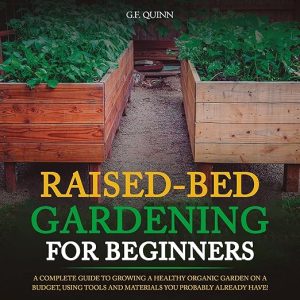
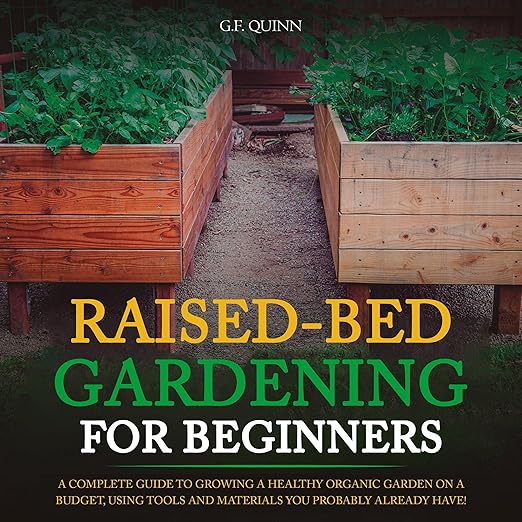
Tammy Wylie’s guide draws on the work of G. F. Quinn, whose background spans both childhood and adult gardening experience, and the result is a book that feels like advice from someone who has actually worked soil rather than synthesized information from other books. Caroline McLaughlin narrates with the kind of warm competence that suits instructional material, neither overly enthusiastic nor flat.
Our Take on Raised-Bed Gardening for Beginners
The content covers the five essential planning points, the no-dig method and its tradeoffs, materials and soil selection, spacing and watering, crop rotation, and a section on the most costly mistakes to avoid. There is also a dedicated question about coffee grounds in the garden, which sounds trivial until you realize how consistently that question comes up among new gardeners. These small, specific inclusions are what distinguish a guide written from actual experience from one assembled at a distance from the practice.
Reviewers consistently highlight the practical clarity of the approach. One came to the book after a failed first attempt at raised beds and described finally understanding the planning and planting process after reading it. Another was preparing for spring after critters took her root vegetables, a situation I recognize personally. The book meets readers at those specific points of frustration and gives them a path forward.
Why Listen to Raised-Bed Gardening for Beginners
The two-hour format makes this an easy re-listen at the start of each growing season. The succession planting section and the drip tape irrigation guidance are the kinds of details that become useful at specific moments in the gardening cycle, and having them available in audio means you can return to the relevant chapter when the moment arrives rather than hunting through a physical book with soil-covered hands.
The claim that a raised bed can be built and planted within two days is reasonable if the planning has been done beforehand, which is exactly what this audiobook facilitates. One reviewer described the step-by-step structure as demystifying what had previously felt overwhelming. For first-time gardeners, that demystification is the core value of the recording.
What to Watch For in Raised-Bed Gardening for Beginners
This is a foundational text, not a comprehensive reference. More experienced gardeners who have already built and maintained raised beds will find the material elementary. The discussion of pest management is limited, and topics like companion planting, which becomes important once the basics are established, are not covered in depth. Think of this as the first season guide, useful for building the initial framework and avoiding the most common early mistakes, with the expectation that you will move on to more specialized resources once you have that foundation in place.
The series title, Gardening for Beginners, signals the scope accurately. There are no surprises about what the book attempts to do, and it does what it sets out to do effectively.
One thing the book gets right that many beginner guides miss is the honest treatment of cost. Wylie and Quinn make the case that a raised bed garden can be built using materials you likely already have, and the budget framing runs throughout. That accessibility is genuine, not marketing language, and it matters to the audience this book is aimed at.
Who Should Listen to Raised-Bed Gardening for Beginners
First-time raised-bed gardeners and anyone who has had a previous attempt fail without fully understanding why will get the most out of this recording. It is a reliable, friendly introduction that prioritizes action over theory. If you want to build something this spring and you are not sure where to start, this audiobook gives you enough to begin with confidence. Experienced growers looking for advanced technique should look elsewhere.
Frequently Asked Questions
Does the audiobook cover the no-dig method and is it recommended for beginners?
Yes, the no-dig method is covered including both its advantages and its limitations. The book discusses it as one option among several rather than prescribing it universally, which is the right approach for beginners who may have varying soil conditions and physical constraints.
Is two hours enough time to cover raised-bed gardening meaningfully?
For the fundamentals, yes. The book covers planning, construction, soil selection, planting, maintenance, and common mistakes at a pace that is efficient without being superficial. It is a starting point rather than a complete reference, and it is best understood in that context.
Does Caroline McLaughlin’s narration work well for instructional gardening content?
Yes. Her tone is encouraging without being patronizing, and her pacing makes the sequential, step-by-step content easy to follow. The format rewards listeners who will re-listen to specific chapters at relevant points in the gardening season.
Does the book address pest and critter management for raised beds?
Only briefly. The focus is on foundational topics like soil health, construction, and planting rather than on pest control strategies. Listeners with specific pest problems, particularly burrowing animals, will want to supplement this with a more specialized resource.