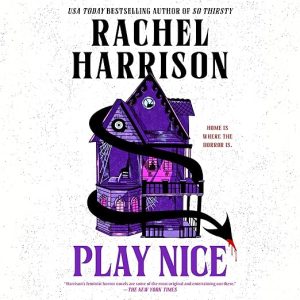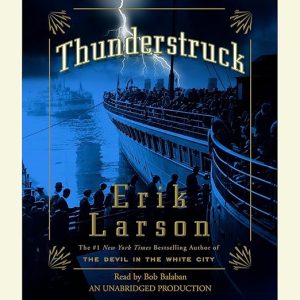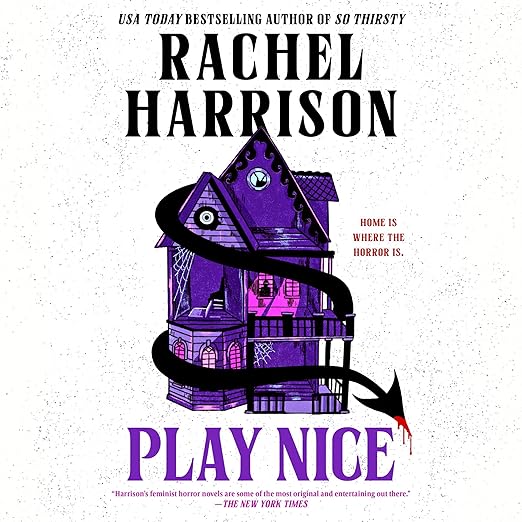
Two different books are competing for this listing, and only one of them has a description. The byline reads Jason Schreier. The category is computers and technology, tagged for programming and software development. Then the description arrives, and it concerns a stylist and influencer named Clio Louise Barnes who inherits the house her mother insisted was occupied by a demon. Every written response describes that second book, and several name Rachel Harrison as the person who wrote it. Ten hours and seventeen minutes of audiobook credited to Alex Finke, sitting under a byline that matches nothing else on the page.
A Horror Novel Filed Under Software Development
Headed Haunted by Our Ghosts, a four-star response from October 27, 2025 supplies what the catalog record does not. It names Rachel Harrison as the author, files the book under feminist horror, family drama and haunted house, and lays out the plot: an influencer inherits the childhood home her mother once claimed was haunted by a demon, sees a content opportunity in renovating it, and watches the line between trauma and possession start to blur. That is a coherent novel. It is not a programming title.
Premise is strong on its own terms. Clio's mother, Alex, moved her daughters into a house she said was occupied by a demon, lost custody after going off the deep end, and wrote a book about the experience before dying suddenly. The sisters inherit the place. Clio finally reads what her mother wrote, and a presence in the house begins turning up things she would rather stayed buried. Haunted house as inherited paperwork is a genuinely good idea.
Three Ratings Cannot Produce This 4.2 Average
Both halves of the counter break here. The listing records three ratings and displays 4.2, while five written responses carry grades of four, five, three, four and five. Those five average out to exactly 4.2. Three whole-star votes cannot produce 4.2 at all, since twelve gives 4.0 and thirteen gives 4.3. The displayed average looks computed from five graded responses while the counter reports three, and neither number describes the other.
Alex Finke Voices an Influencer's Curated Life
Nobody expected much, and one buyer says so outright. A five-star response from September 23, 2025, headed with a line about the title saying everything, came in braced for mediocre horror and met intense psychological horror instead, the kind that felt personally relatable. That account calls the haunting itself wild and thoroughly worth the time, and closes by crediting the book with holding attention captive right through to the final page.
Influencer horror could easily have been insufferable and reportedly is not. The premise drops a woman who monetizes her own life into the house that holds the part of her life she would never monetize, which is a sharper conflict than the setup implies. Renovation content as a method of processing childhood trauma works as a joke and as a thesis simultaneously. The description also invokes Black Sheep and So Thirsty for anyone deciding on track record.
Alex Finke holds the reader credit, and the register that job requires is specific: a contemporary voice for a protagonist whose entire personality is curated, plus whatever the house becomes later on. Penguin Audio produced it. None of which resolves the byline problem. A recording credited to one reader, described as one novel and bylined to a different author is a listing worth verifying before purchase, because the file you receive may not be the file the credits describe.
Two Readers Call the Ending Unresolved and Rushed
Endings are where the disagreement concentrates. A four-star response from November 10, 2025 enjoyed the book, liked Clio considerably more than expected, and then reports that things felt very unfinished, unresolved and anticlimactic, which for a horror reader who prefers grim, dark endings registers as a real letdown. It still intends to pick up another of the author's books afterward. That is a reservation about one element rather than a rejection of the whole.
Lowest grade on the page comes headed It was good. Three stars on October 18, 2025, and the least forgiving verdict available: characters that were not likable, an ending that felt rushed, and a plot with more in it than the book made use of. It states plainly that a first encounter with this author has not encouraged a second. So two of the five graded verdicts land on the ending, from opposite temperaments entirely.
Category placement compounds everything else. A haunted house novel filed under programming and software development will never surface for horror buyers and will irritate the technology buyers it does surface for. Anyone searching by the bylined author lands on a description that does not match, and anyone searching by the author the responses name will not reach this page at all. That is a discovery failure running in both directions, and no listener can work around it.
Fans of Horror Leavened With a Comedic Register
Haunted-house readers who like their horror leavened are the audience. A five-star response from December 25, 2025, from somebody who has read nearly everything this author has published, expected the usual comedic register and found something funnier and more frightening at the same time, singling out the short chapters and calling it a tie for a personal top two. Family drama with a hint of a haunted house is the phrase used, and it is fair.
Check the sample and the credits before spending anything, because this page is describing at least two products. Walk away as well if an anticlimax will ruin a book for you, because that is the specific risk this one carries. And anyone who arrived from the technology category on the strength of the byline and the tag should stop right here, because whatever the description is selling involves no software at all.
Until the credits agree with the description, treat the whole listing as unverified. The novel outlined here sounds worth hearing, the responses are consistent with one another, and the reader credit is a real one attached to a real publisher. But a byline matching nothing else on the page is not a small clerical detail. It is the distance between the book you meant to buy and the book that turns up. Confirm first, then spend.