Quick Take
- Narration: Dr. Will Bulsiewicz narrates with the enthusiasm of a clinician who has been waiting to tell you this, conversational, accessible, and genuinely energized by the gut-immune science he has spent his career studying.
- Themes: gut-immune connection, anti-inflammatory lifestyle, plant-forward eating for chronic disease prevention
- Mood: Hopeful and practically grounded, with the momentum of a three-phase program
- Verdict: A worthy successor to Fiber Fueled that expands the gut health argument into immunology and chronic inflammation. The PDF companion is essential for the recipes and checklists that make the three-phase protocol actionable.
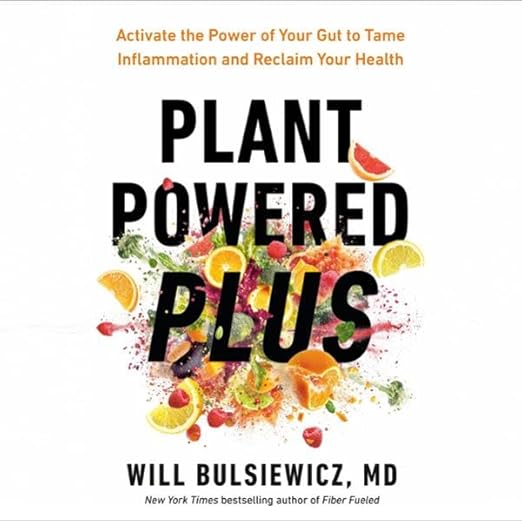
I encountered Dr. Will Bulsiewicz for the first time not through his books but through a podcast clip that a colleague sent me, the kind of short excerpt where someone explains a complex biological mechanism so clearly that you immediately want to hear what else they know. That clip was about the gut microbiome’s role in regulating immune response, which is essentially the central argument of Plant Powered Plus extended to book length. I started listening on a Wednesday evening and finished by Friday morning, in the kind of sustained engagement that tells you a book is doing something right at the sentence level.
The premise is an expansion of Bulsiewicz’s first book, Fiber Fueled, which established his reputation as a gastroenterologist who could explain the microbiome to a general audience without oversimplifying the science. Where Fiber Fueled focused on gut health as its primary outcome, Plant Powered Plus makes the argument that chronic inflammation is the connective tissue linking conditions that appear unrelated, ulcerative colitis and depression and thyroid dysfunction and menopausal symptoms, and that the gut is the primary site at which inflammation is generated or suppressed. This is not a fringe position in current gastroenterology and immunology research. Bulsiewicz synthesizes it effectively.
The Three-Phase Framework and What It Actually Demands
The book’s structure is a progressive three-phase program designed to restore gut balance, reduce inflammation, and build sustainable anti-inflammatory habits. Bulsiewicz is careful not to present this as a rigid protocol. The program is explicitly customizable, acknowledging that the gut microbiome is individual and that dietary interventions produce different responses in different people. This epistemological humility is one of the book’s strengths. He is not selling a single answer. He is providing a framework for testing and adjusting based on personal response.
The four pillars of an anti-inflammatory diet that he identifies, diversity of plant foods, reduction of ultra-processed inputs, fermented food inclusion, and strategic polyphenol consumption, are grounded in the current evidence and explained with enough detail to inform practice without requiring a gastroenterology background. The discussion of chronotherapy, the use of meal timing to synchronize the gut microbiome with circadian rhythms, is one of the more novel sections and drew positive response from reviewers who had not encountered the research before.
The Supplement Stack Discussion
Bulsiewicz includes a section on supplements he has designed for peak gut and immune health, a component that requires clear-eyed evaluation from listeners. The supplement stack recommendations are more specific than a general audience nutrition book typically offers, and while the physiological rationale for each is explained, listeners should note that this section represents a commercial intersection between the author’s clinical practice and his book. The recommendations are consistent with the evidence as he presents it, but they warrant the same critical scrutiny as any supplement guidance, particularly for listeners already taking medications that might interact.
The PDF companion, downloadable through the Audible library, is load-bearing for this book in a way that goes beyond standard supplementary material. The recipes, checklists, and informational content described in the synopsis represent the practical scaffolding of the three-phase program. The audio covers the science and the principles comprehensively, but the protocol’s day-to-day implementation lives in the PDF.
The Fiber Fueled Connection
Several reviewers explicitly describe this as a sequel, and it functions as one. The core microbiome science from the first book is revisited but not repeated in full. Bulsiewicz assumes some familiarity or at least provides enough context that new readers are not lost. Readers who loved Fiber Fueled will recognize the authorial voice and the enthusiasm for the subject, with the expanded scope of inflammation science adding significant new territory. New readers can start here without the predecessor, but the companion book adds depth to the gut health foundation that Plant Powered Plus builds on.
Who Should Listen, Who Should Skip
Anyone managing chronic inflammatory conditions, autoimmune disease, IBS, recurring headaches, persistent low energy with no clear cause, will find this more actionable than most of the reading available to them. People already on a plant-forward diet who want to optimize for gut and immune health will find the three-phase framework a useful refinement tool. Skip it if you want a simple meal plan or a quick dietary fix. This is a substantive program that requires engagement with the science to motivate the changes, and the 10-hour runtime plus PDF companion constitute a serious commitment that the book earns.
Frequently Asked Questions
Is the companion PDF essential for following the three-phase program, or is the audio sufficient on its own?
The PDF companion, downloadable from your Audible library, contains the recipes, checklists, and protocol details that make the three phases practically navigable. The audio covers the science and principles comprehensively, but the day-to-day implementation structure is in the PDF.
Do I need to have read Fiber Fueled first to get value from Plant Powered Plus?
No, but the earlier book adds depth to the gut health foundation that this one builds on. Bulsiewicz provides enough context for new readers, but existing fans of Fiber Fueled will recognize the expanded scope and find the inflammation science a significant addition.
Does the book address specific inflammatory conditions, or is the framework general?
Both. Bulsiewicz names specific conditions, including ulcerative colitis, Crohn’s disease, IBS, and autoimmune diseases, and discusses the shared inflammatory mechanism behind them. The framework is designed to be general enough to adapt to individual situations.
How specific are the supplement recommendations, and should I follow them without consulting a doctor?
Bulsiewicz provides rationale for each recommendation in his supplement stack, but these sections represent clinical guidance that should be evaluated in the context of your own health and any medications you take. Consulting your physician before implementing the supplement protocol is advisable, particularly for anyone managing chronic conditions.